Localization in Flutter Data Grid
18 Nov 201824 minutes to read
Localization in Flutter Data Grid
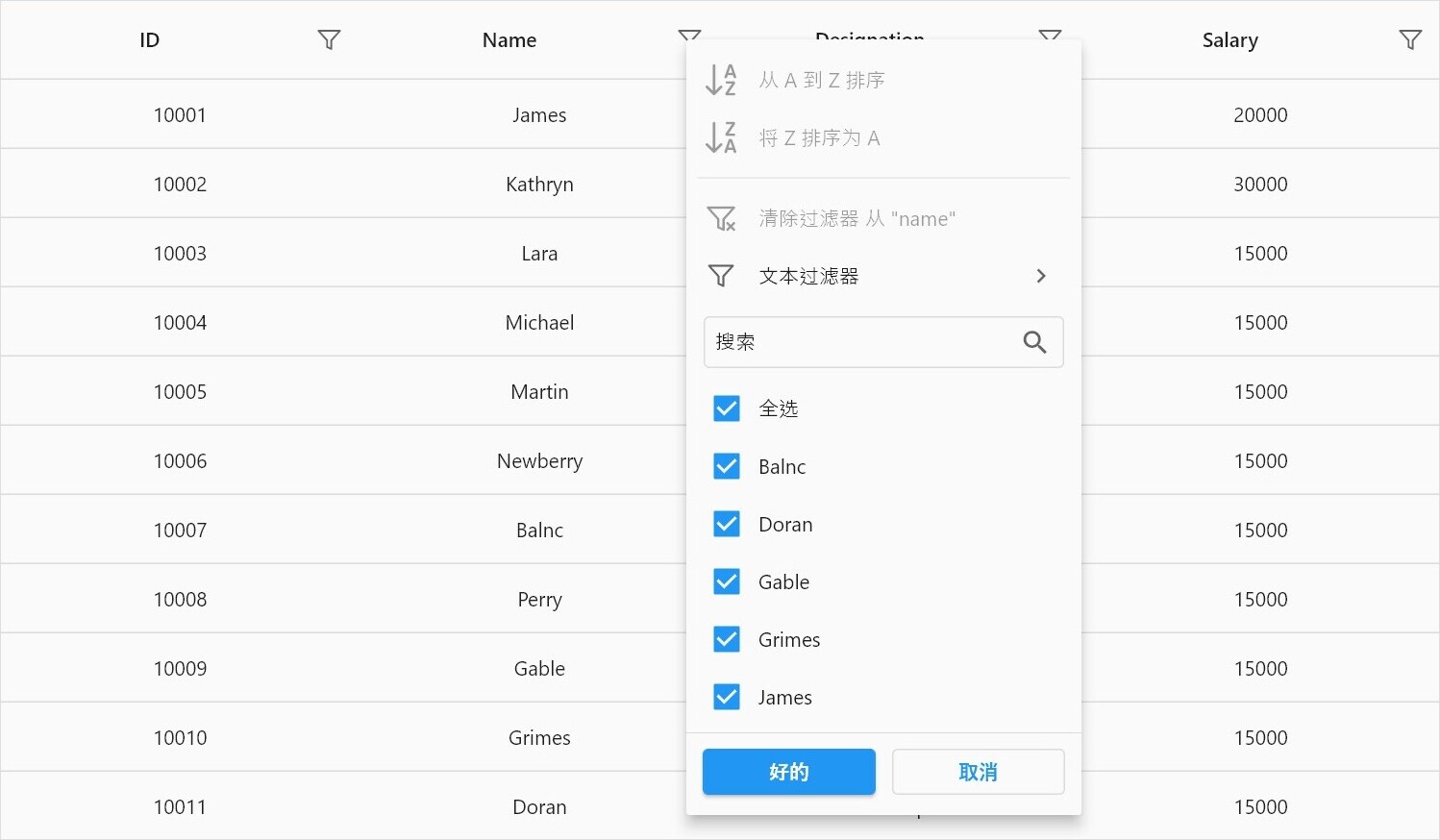
Localization in filter pop-up menu
By default, the SfDataGrid filter popup menu supports US English localizations. You can change the other languages by specifying the MaterialApp properties and adding the flutter_localizations and syncfusion_localizations package to your application.
The following locales are supported: Chinese (zh), Arabic (ar), Japanese (ja), Hindi (hi), French (fr), German (de), Spanish (es), Portuguese (pt), Russian (ru), and more. If a locale is not specified in supportedLocales, the app defaults to the first supported locale.
To use flutter_localizations and syncfusion_localizations, add the package as a dependency to the pubspec.yaml file.
dependencies:
flutter_localizations:
  sdk: flutter
syncfusion_localizations: ^34.1.29
Note: Run
flutter pub getto fetch the newly added dependencies.
Next, import the flutter_localizations and syncfusion_localizations library.
import 'package:flutter_localizations/flutter_localizations.dart';
import 'package:syncfusion_localizations/syncfusion_localizations.dart';
Then, declare the SfGlobalLocalizations.delegate in the localizationsDelegates, which is used to localize the static strings available in the filter popup and specify the supportedLocales as well.
@override
  Widget build(BuildContext context) {
    return MaterialApp(
      localizationsDelegates: const [
        GlobalMaterialLocalizations.delegate,
        GlobalWidgetsLocalizations.delegate,
        SfGlobalLocalizations.delegate,
      ],
      supportedLocales: const [Locale('zh'), Locale('ar'), Locale('ja')],
      locale: const Locale('ar'),
      home: Scaffold(
        appBar: AppBar(
          elevation: 0,
          title: const Text('Syncfusion Flutter Data Grid'),
        ),
        body: SfDataGrid(
          source: _employeeDataSource,
          columnWidthMode: ColumnWidthMode.fill,
          gridLinesVisibility: GridLinesVisibility.both,
          headerGridLinesVisibility: GridLinesVisibility.both,
          allowFiltering: true,
          columns: <GridColumn>[
            GridColumn(
              columnName: 'id',
              label: Container(
                padding: const EdgeInsets.all(16.0),
                alignment: Alignment.center,
                child: const Text('ID'),
              ),
            ),
            GridColumn(
              columnName: 'name',
              label: Container(
                padding: const EdgeInsets.all(8.0),
                alignment: Alignment.center,
                child: const Text('Name'),
              ),
            ),
            GridColumn(
              columnName: 'designation',
              label: Container(
                padding: const EdgeInsets.all(8.0),
                alignment: Alignment.center,
                child: const Text(
                  'Designation',
                  overflow: TextOverflow.ellipsis,
                ),
              ),
            ),
            GridColumn(
              columnName: 'salary',
              label: Container(
                padding: const EdgeInsets.all(8.0),
                alignment: Alignment.center,
                child: const Text('Salary'),
              ),
            ),
          ],
        ),
      ),
    );
  }
Note: After adding the packages, hot reload or restart your app to apply the localization changes.
Localization in Flutter DataPager (SfDataPager)
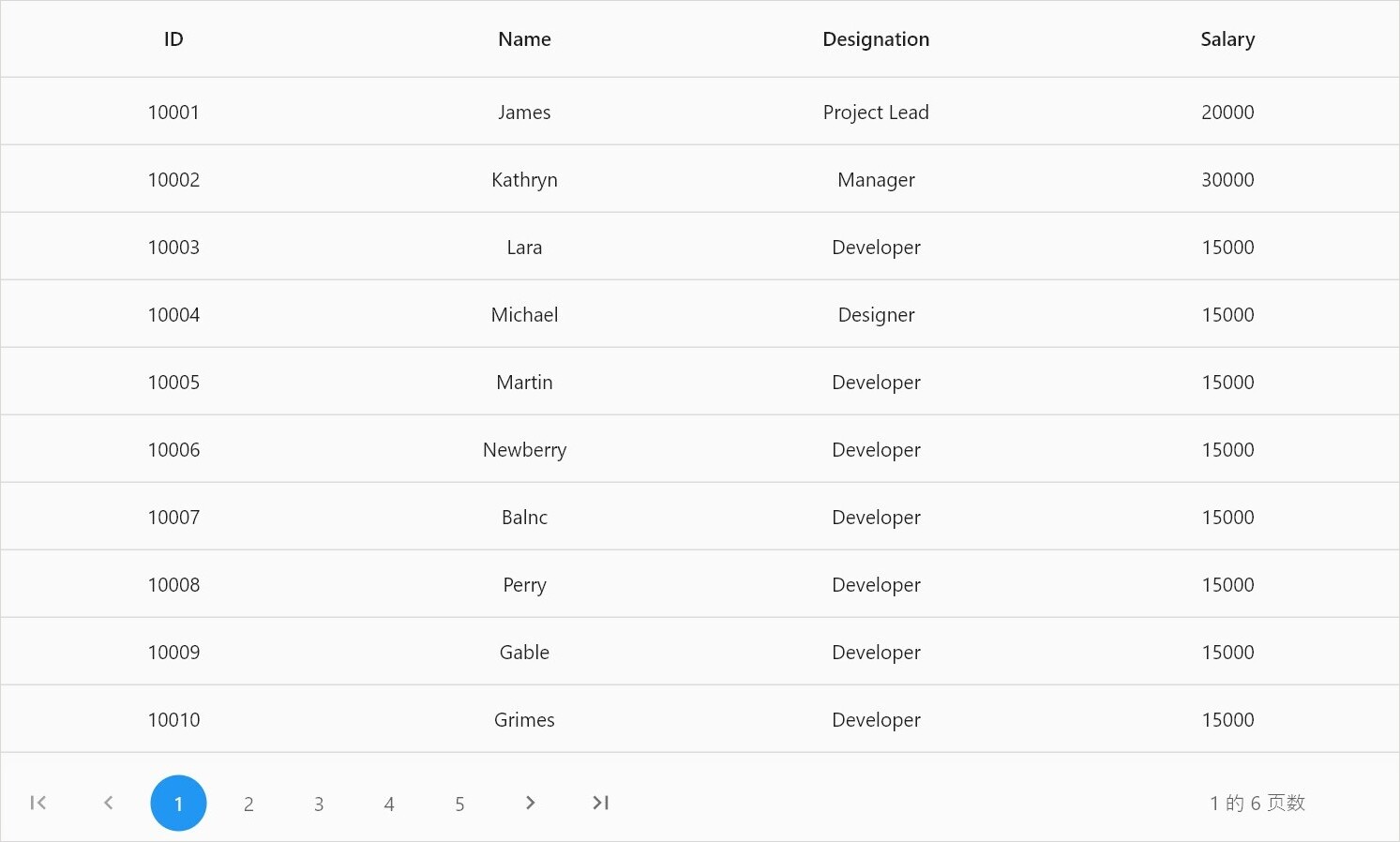
By default, the SfDataPager widget supports US English localizations. You can change the language by specifying the MaterialApp properties and adding the necessary localization packages to your application.
The SfDataPager supports two localization scenarios:
-
Basic localization (UI labels) - Using
flutter_localizations -
Complete localization (static strings) - Using both
flutter_localizationsandsyncfusion_localizations
Basic DataPager Localization
To localize the basic UI elements, add flutter_localizations to your pubspec.yaml file:
dependencies:
flutter_localizations:
  sdk: flutter
Note: Run
flutter pub getto fetch the newly added dependency.
Next, import the flutter_localizations library and specify localizationsDelegates and supportedLocales for MaterialApp:
import 'package:flutter_localizations/flutter_localizations.dart';

  List<Employee> _employees = <Employee>[];
  late EmployeeDataSource _employeeDataSource;
  final int rowsPerPage = 15;

  @override
  void initState() {
    super.initState();
    _employees = getEmployeeData();
    _employeeDataSource = EmployeeDataSource(employeeData: _employees);
  }

  @override
  Widget build(BuildContext context) {
    return MaterialApp(
      localizationsDelegates: const [
        GlobalMaterialLocalizations.delegate,
        GlobalWidgetsLocalizations.delegate,
      ],
      supportedLocales: const [Locale('zh'), Locale('ar'), Locale('ja')],
      locale: const Locale('ar'),
      home: Scaffold(
        appBar: AppBar(title: const Text('DataPager')),
        body: LayoutBuilder(
          builder: (context, constraints) {
            return Column(
              children: [
                SizedBox(
                  height: constraints.maxHeight - 60,
                  width: constraints.maxWidth,
                  child: SfDataGrid(
                    source: _employeeDataSource,
                    allowFiltering: true,
                    columns: <GridColumn>[
                      GridColumn(
                        columnName: 'id',
                        label: Center(child: Text('ID')),
                      ),
                      GridColumn(
                        columnName: 'name',
                        label: Center(child: Text('Name')),
                      ),
                      GridColumn(
                        columnName: 'designation',
                        label: Center(child: Text('Designation')),
                      ),
                      GridColumn(
                        columnName: 'salary',
                        label: Center(child: Text('Salary')),
                      ),
                    ],
                  ),
                ),
                SizedBox(
                  height: 60,
                  width: constraints.maxWidth,
                  child: SfDataPager(
                    delegate: _employeeDataSource,
                    pageCount: _employeeDataSource.rows.length / rowsPerPage,
                    visibleItemsCount: 5,
                    direction: Axis.horizontal,
                  ),
                ),
              ],
            );
          },
        ),
      ),
    );
  }

class EmployeeDataSource extends DataGridSource {
  EmployeeDataSource({required List<Employee> employeeData}) {
    _employeeData = employeeData;
  }

  late List<Employee> _employeeData;

  @override
  List<DataGridRow> get rows => _employeeData
      .map<DataGridRow>(
        (dataRow) => DataGridRow(
          cells: [
            DataGridCell<int>(columnName: 'id', value: dataRow.id),
            DataGridCell<String>(columnName: 'name', value: dataRow.name),
            DataGridCell<String>(
              columnName: 'designation',
              value: dataRow.designation,
            ),
            DataGridCell<int>(columnName: 'salary', value: dataRow.salary),
          ],
        ),
      )
      .toList();

  @override
  DataGridRowAdapter? buildRow(DataGridRow row) {
    return DataGridRowAdapter(
      cells: row.getCells().map<Widget>((dataCell) {
        return Container(
          alignment: Alignment.center,
          padding: const EdgeInsets.all(8.0),
          child: Text(dataCell.value.toString()),
        );
      }).toList(),
    );
  }
}
Note: After adding the packages, hot reload or restart your app to apply the localization changes.
Localize Static Strings in DataPager
Static strings in the SfDataPager (such as pagination labels and navigation text) can be localized using the syncfusion_localizations package.
To use syncfusion_localizations, add it as a dependency to the pubspec.yaml file:
dependencies:
flutter_localizations:
  sdk: flutter
syncfusion_localizations: ^34.1.29
Note: Run
flutter pub getto fetch the newly added dependencies.
Next, import both flutter_localizations and syncfusion_localizations libraries:
import 'package:flutter_localizations/flutter_localizations.dart';
import 'package:syncfusion_localizations/syncfusion_localizations.dart';
Then, declare the SfGlobalLocalizations.delegate in the localizationsDelegates, which is used to localize the static strings available in the DataPager and specify the supportedLocales as well:
final int rowsPerPage = 15;

class Employee {
  Employee(this.id, this.name, this.designation, this.salary);

  final int id;
  final String name;
  final String designation;
  final int salary;
}

  @override
  Widget build(BuildContext context) {
    return MaterialApp(
      localizationsDelegates: const [
        GlobalMaterialLocalizations.delegate,
        GlobalWidgetsLocalizations.delegate,
        SfGlobalLocalizations.delegate,
      ],
      supportedLocales: const [Locale('zh'), Locale('ar'), Locale('ja')],
      locale: const Locale('zh'),
      home: Scaffold(
        appBar: AppBar(title: const Text('DataPager')),
        body: LayoutBuilder(
          builder: (context, constraints) {
            return Column(
              children: [
                SizedBox(
                  height: constraints.maxHeight - 60,
                  width: constraints.maxWidth,
                  child: SfDataGrid(
                    source: _employeeDataSource,
                    columns: <GridColumn>[
                      GridColumn(
                        columnName: 'id',
                        label: Center(child: Text('ID')),
                      ),
                      GridColumn(
                        columnName: 'name',
                        label: Center(child: Text('Name')),
                      ),
                      GridColumn(
                        columnName: 'designation',
                        label: Center(child: Text('Designation')),
                      ),
                      GridColumn(
                        columnName: 'salary',
                        label: Center(child: Text('Salary')),
                      ),
                    ],
                  ),
                ),
                SizedBox(
                  height: 60,
                  width: constraints.maxWidth,
                  child: SfDataPager(
                    delegate: _employeeDataSource,
                    pageCount: _employeeDataSource.rows.length / rowsPerPage,
                    visibleItemsCount: 5,
                    direction: Axis.horizontal,
                  ),
                ),
              ],
            );
          },
        ),
      ),
    );
  }

class EmployeeDataSource extends DataGridSource {
  EmployeeDataSource({required List<Employee> employeeData}) {
    _employeeData = employeeData;
  }

  late List<Employee> _employeeData;

  @override
  List<DataGridRow> get rows => _employeeData
      .map<DataGridRow>(
        (dataRow) => DataGridRow(
          cells: [
            DataGridCell<int>(columnName: 'id', value: dataRow.id),
            DataGridCell<String>(columnName: 'name', value: dataRow.name),
            DataGridCell<String>(
              columnName: 'designation',
              value: dataRow.designation,
            ),
            DataGridCell<int>(columnName: 'salary', value: dataRow.salary),
          ],
        ),
      )
      .toList();

  @override
  DataGridRowAdapter? buildRow(DataGridRow row) {
    return DataGridRowAdapter(
      cells: row.getCells().map<Widget>((dataCell) {
        return Container(
          alignment: Alignment.center,
          padding: const EdgeInsets.all(8.0),
          child: Text(dataCell.value.toString()),
        );
      }).toList(),
    );
  }
}
Note: After adding the packages, hot reload or restart your app to apply the localization changes. Supported locales include Chinese (zh), Arabic (ar), Japanese (ja), Hindi (hi), French (fr), German (de), Spanish (es), Portuguese (pt), Russian (ru), and more. See SfGlobalLocalizations for the complete list.