Scrolling in MAUI DataGrid (SfDataGrid)
7 Jul 202619 minutes to read
Programmatic scrolling
The SfDataGrid allows scrolling to a particular row and column index programmatically. It also enables and disables the scrolling animation when changing the view. By default, scrolling is animated.
You can set position of item in view while scrolling by passing ScrollToPosition to ScrollToRowIndex, ScrollToColumnIndex and ScrollToRowColumnIndex method. The following are the four different types of positions with guidelines on when to use each:
-
MakeVisible: Scrolls a specific item to make visible in the view. If the item is already in view, scrolling will not occur. -
Start: Scrolls a specific item to be positioned at the begin of the view. -
End: Scrolls a specific item to be positioned at the end of the view. -
Center: Scrolls a specific item to be positioned at the center of the view.
Scrolling to the row and column index
You can scroll programmatically to a particular row and column using the SfDataGrid.ScrollToRowColumnIndex method by passing the row and column index.
using Syncfusion.Maui.DataGrid;

public partial class MainPage : ContentPage
{
    SfDataGrid dataGrid = new SfDataGrid();

    public MainPage()
    {
        InitializeComponent();

        var grid = new Grid();
        grid.RowDefinitions.Add(new RowDefinition() { Height = GridLength.Star });
        grid.RowDefinitions.Add(new RowDefinition() { Height = 50 });

        Button button = new Button();
        button.Text = "Scroll To RowColumnIndex";

        grid.Children.Add(dataGrid);
        grid.Children.Add(button);
        grid.SetRow(dataGrid, 0);
        grid.SetRow(button, 1);

        OrderInfoViewModel orderInfoViewModel = new OrderInfoViewModel();
        dataGrid.ItemsSource = orderInfoViewModel.Orders;

        button.Clicked += Button_Clicked;
        this.Content = grid;
    }

    private void Button_Clicked(object? sender, EventArgs e)
    {
        // Scroll to row 15, column 4, positioning both at the start of view with animation
        dataGrid.ScrollToRowColumnIndex(15, 4, ScrollToPosition.Start, ScrollToPosition.Start, true);
    }
}
Scrolling to the row index
You can scroll programmatically to a particular row using the SfDataGrid.ScrollToRowIndex method by passing the row index.
<Grid>
    <Grid.RowDefinitions>
        <RowDefinition Height="Auto"/>
        <RowDefinition Height="*"/>
    </Grid.RowDefinitions>

    <Button Text="Scroll To RowIndex"
            Grid.Row="0"
            Clicked="ScrollToRowIndex_Mothod"/>

    <syncfusion:SfDataGrid x:Name="dataGrid"
                           Grid.Row="1"
                           ItemsSource="{Binding Orders}"/>
</Grid>
private void ScrollToRowIndex_Mothod(object sender, EventArgs e)
{
dataGrid.ScrollToRowIndex(30, ScrollToPosition.End, true);
}Scrolling to the column index
You can scroll programmatically to a particular column using the SfDataGrid.ScrollToColumnIndex method by passing the column index.
<Grid>
    <Grid.RowDefinitions>
        <RowDefinition Height="Auto"/>
        <RowDefinition Height="*"/>
    </Grid.RowDefinitions>

    <Button Text="Scroll To ColumnIndex"
            Grid.Row="0"
            Clicked="ScrollToColumnIndex_Mothod"/>

    <syncfusion:SfDataGrid x:Name="dataGrid"
                           Grid.Row="1"
                           ItemsSource="{Binding Orders}"/>
</Grid>
private void ScrollToColumnIndex_Mothod(object sender, EventArgs e)
{
dataGrid.ScrollToColumnIndex(4, ScrollToPosition.MakeVisible, true);
}Scrolling to the row
You can scroll programmatically to a particular row using the SfDataGrid.ScrollToRow method by passing a row data object.
<Grid>
    <Grid.RowDefinitions>
        <RowDefinition Height="Auto"/>
        <RowDefinition Height="*"/>
    </Grid.RowDefinitions>

    <Button Text="Scroll To Row"
            Grid.Row="0"
            Clicked="ScrollToRow_Method"/>

    <syncfusion:SfDataGrid x:Name="dataGrid"
                           Grid.Row="1"
                           ItemsSource="{Binding Orders}"/>
</Grid>
private void ScrollToRow_Method(object sender, EventArgs e)
{
// Find the order with OrderID "1002" and scroll to it
var order = viewModel.Orders.FirstOrDefault(o => o.OrderID == "1002");
if (order != null)
{
dataGrid.ScrollToRow(order, ScrollToPosition.Start, true);
}
}Scrolling to the column
You can scroll programmatically to a particular column using the SfDataGrid.ScrollToColumn method by passing a DataGridColumn object.
<Grid>
    <Grid.RowDefinitions>
        <RowDefinition Height="Auto"/>
        <RowDefinition Height="*"/>
    </Grid.RowDefinitions>

    <Button Text="Scroll To Column"
            Grid.Row="0"
            Clicked="ScrollToColumn_Method"/>

    <syncfusion:SfDataGrid x:Name="dataGrid"
                           Grid.Row="1"
                           ItemsSource="{Binding Orders}"/>
</Grid>
private void ScrollToColumn_Method(object sender, EventArgs e)
{
var column = dataGrid.Columns.FirstOrDefault(col => col.MappingName == "UnitPrice");
if (column != null)
{
dataGrid.ScrollToColumn(column, ScrollToPosition.Start, true);
}
}Scrolling Mode
The SfDataGrid allows you to customize three different scrolling modes using the SfDataGrid.ScrollingMode property. By default, the control scrolls content based on pixel values. The ScrollingMode property supports both vertical and horizontal scrolling. The available scrolling modes are:
- Pixel
- Line
- PixelLine
Pixel
In the DataGridScrollingMode.Pixel mode, users can scroll through the data based on pixel values. The view updates with each change in the offset, and a row or column may appear cropped when the offset exceeds the origin of the row or column.
<syncfusion:SfDataGrid x:Name="dataGrid"
                       ItemsSource="{Binding Orders}"
                       ScrollingMode="Pixel">
</syncfusion:SfDataGrid>
using Syncfusion.Maui.DataGrid;
SfDataGrid dataGrid = new SfDataGrid();
OrderInfoViewModel orderInfoViewModel = new OrderInfoViewModel();
dataGrid.ItemsSource = orderInfoViewModel.Orders;
dataGrid.ScrollingMode = DataGridScrollingMode.Pixel;
this.Content = dataGrid;
Line
The DataGridScrollingMode.Line mode allows users to scroll the DataGrid’s contents by lines. The view updates only when the offset values reach the origin of a row or column in the bound collection. This mode ensures complete rows and columns are always visible.
<syncfusion:SfDataGrid x:Name="dataGrid"
                       ItemsSource="{Binding Orders}"
                       ScrollingMode="Line">
</syncfusion:SfDataGrid>
using Syncfusion.Maui.DataGrid;
SfDataGrid dataGrid = new SfDataGrid();
OrderInfoViewModel orderInfoViewModel = new OrderInfoViewModel();
dataGrid.ItemsSource = orderInfoViewModel.Orders;
dataGrid.ScrollingMode = DataGridScrollingMode.Line;
this.Content = dataGrid;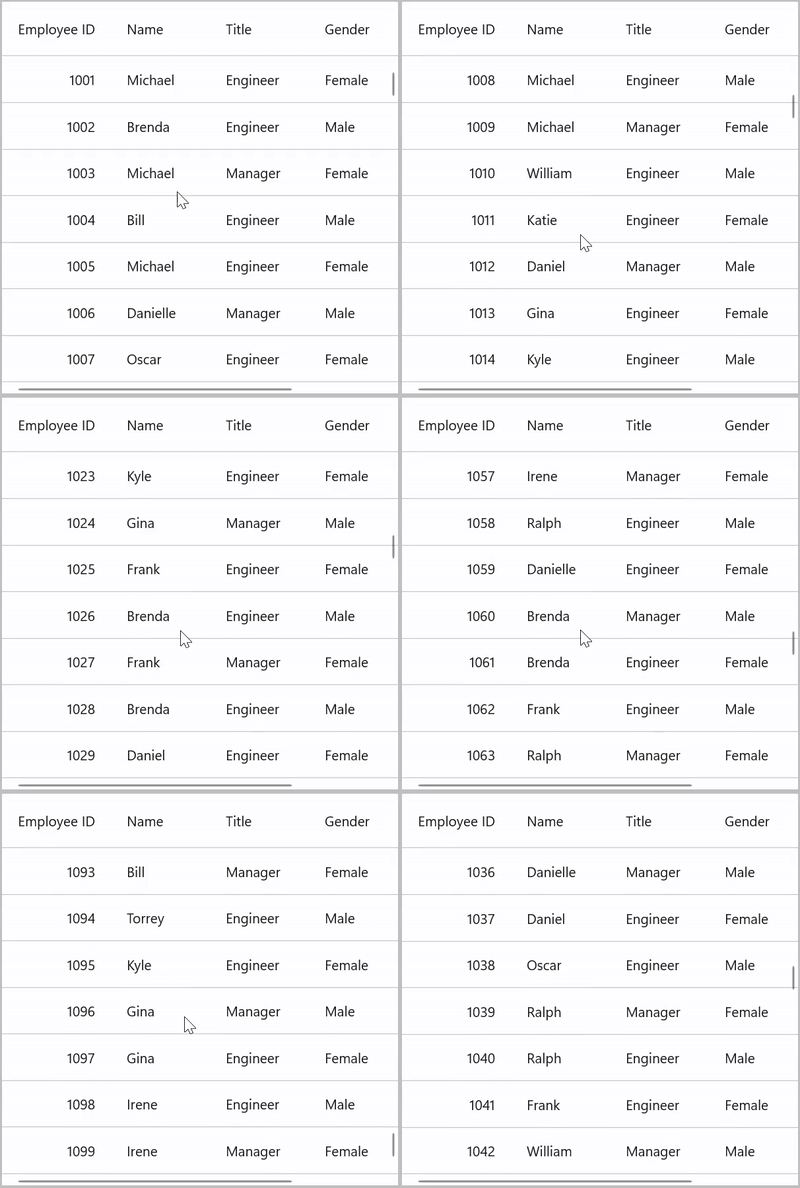
PixelLine
The DataGridScrollingMode.PixelLine mode allows users to scroll the contents like an Excel sheet. If a row or column is clipped at the top, it will automatically scroll to display the entire row or column. This mode combines smooth pixel-based scrolling with automatic alignment to row and column boundaries.
<syncfusion:SfDataGrid x:Name="dataGrid"
                       ItemsSource="{Binding Orders}"
                       ScrollingMode="PixelLine">
</syncfusion:SfDataGrid>
using Syncfusion.Maui.DataGrid;
SfDataGrid dataGrid = new SfDataGrid();
OrderInfoViewModel orderInfoViewModel = new OrderInfoViewModel();
dataGrid.ItemsSource = orderInfoViewModel.Orders;
dataGrid.ScrollingMode = DataGridScrollingMode.PixelLine;
this.Content = dataGrid;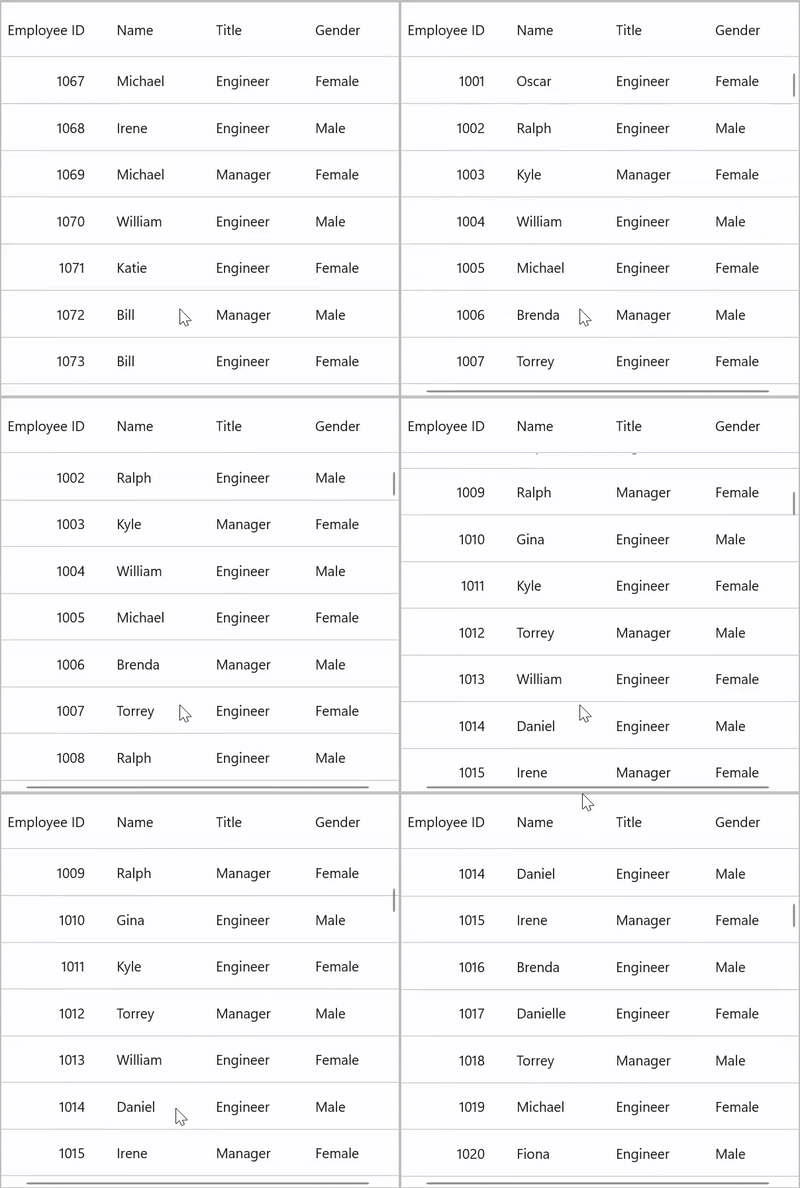
Limitations
The ScrollingMode has certain limitations that should be considered:
- Switching between modes at runtime is not supported.
- The
DataGridScrollingMode.Linedoes not support master details view. - The
DataGridScrollingMode.Linewill not be worked as expected when row height is customized through SfDataGrid.QueryRowHeight event and width is customized through SfDataGrid.ColumnWidthMode property.
Diagonal Scrolling
By default, the SfDataGrid allows both vertical and horizontal scrolling simultaneously (diagonal scrolling). By setting SfDataGrid.AllowDiagonalScrolling to false, you ensure that scrolling happens in only one direction at a time, either horizontally or vertically.
The following code snippets demonstrate how to disable diagonal scrolling:
<syncfusion:SfDataGrid x:Name="dataGrid"
                       ItemsSource="{Binding Orders}"
                       AllowDiagonalScrolling="False">
</syncfusion:SfDataGrid>
using Syncfusion.Maui.DataGrid;
SfDataGrid dataGrid = new SfDataGrid();
OrderInfoViewModel orderInfoViewModel = new OrderInfoViewModel();
dataGrid.ItemsSource = orderInfoViewModel.Orders;
dataGrid.AllowDiagonalScrolling = false;
this.Content = dataGrid;Scrollbar Visibility
The visibility of the horizontal and vertical scrollbars can be customized using the SfDataGrid.HorizontalScrollBarVisibility and SfDataGrid.VerticalScrollBarVisibility properties. By default, the visibility of both the horizontal and vertical scrollbars is set to ScrollBarVisibility.Default.
The following code snippets demonstrate how to hide the vertical and horizontal scrollbars:
<syncfusion:SfDataGrid x:Name="dataGrid"
                       ItemsSource="{Binding Orders}"
                       HorizontalScrollBarVisibility="Never"
                       VerticalScrollBarVisibility="Never">
</syncfusion:SfDataGrid>
using Syncfusion.Maui.DataGrid;
SfDataGrid dataGrid = new SfDataGrid();
OrderInfoViewModel orderInfoViewModel = new OrderInfoViewModel();
dataGrid.ItemsSource = orderInfoViewModel.Orders;
dataGrid.HorizontalScrollBarVisibility = ScrollBarVisibility.Never;
dataGrid.VerticalScrollBarVisibility = ScrollBarVisibility.Never;
this.Content = dataGrid;Note: These properties do not have any effect when the datagrid has no scrollable content in its respective direction. In such cases, the scroll bar will not be displayed.
Over-Scroll Mode
The SfDataGrid supports over-scroll behavior that controls the bounce effect when the user scrolls past the edges of its content. Use the VerticalOverScrollMode and HorizontalOverScrollMode properties to enable or disable bounce effects independently for each axis. Over-scroll behavior is platform-specific: iOS uses Bounce by default, while Android uses None.
Vertical Over-Scroll Mode
The SfDataGrid.VerticalOverScrollMode property customizes the vertical scrolling behavior in the data grid by controlling the bouncing effect when the user scrolls beyond the grid’s boundaries. This property defines whether users experience a smooth, elastic pull effect or a strict stop when reaching the start or end of the scrollable content.
The VerticalOverScrollMode property is of the type DataGridVerticalOverScrollMode and offers the following two modes:
- Bounce: Enables a bounce effect when the user scrolls beyond the boundaries. Users will see an elastic rebound animation.
- None: Prevents the bounce effect; scrolling stops immediately at content edges.
To customize the bouncing effect in the data grid, follow the code example:
<syncfusion:SfDataGrid x:Name="dataGrid"
                       ItemsSource="{Binding Orders}"
                       VerticalOverScrollMode="Bounce">
</syncfusion:SfDataGrid>
using Syncfusion.Maui.DataGrid;
SfDataGrid dataGrid = new SfDataGrid();
OrderInfoViewModel orderInfoViewModel = new OrderInfoViewModel();
dataGrid.ItemsSource = orderInfoViewModel.Orders;
dataGrid.VerticalOverScrollMode = DataGridVerticalOverScrollMode.Bounce;
this.Content = dataGrid;
Horizontal Over-Scroll Mode
The SfDataGrid.HorizontalOverScrollMode property customizes the horizontal scrolling behavior of the data grid by controlling the bounce effect when users scroll past the left or right edges of the grid. This setting determines whether the grid provides an elastic over-scroll experience or stops strictly at the content boundary.
The HorizontalOverScrollMode property is of type DataGridHorizontalOverScrollMode and includes the following modes:
- Bounce: Enables a bounce-back animation when the user scrolls beyond the horizontal limits of the grid (default on iOS). Users will see an elastic rebound animation.
- None: Disables the bounce effect, causing scrolling to stop immediately at the content edges (default on Android).
To customize the bouncing effect in the data grid, follow the code example:
<syncfusion:SfDataGrid x:Name="dataGrid"
                       ItemsSource="{Binding Orders}"
                       HorizontalOverScrollMode="Bounce">
</syncfusion:SfDataGrid>
using Syncfusion.Maui.DataGrid;
SfDataGrid dataGrid = new SfDataGrid();
OrderInfoViewModel orderInfoViewModel = new OrderInfoViewModel();
dataGrid.ItemsSource = orderInfoViewModel.Orders;
dataGrid.HorizontalOverScrollMode = DataGridHorizontalOverScrollMode.Bounce;
this.Content = dataGrid;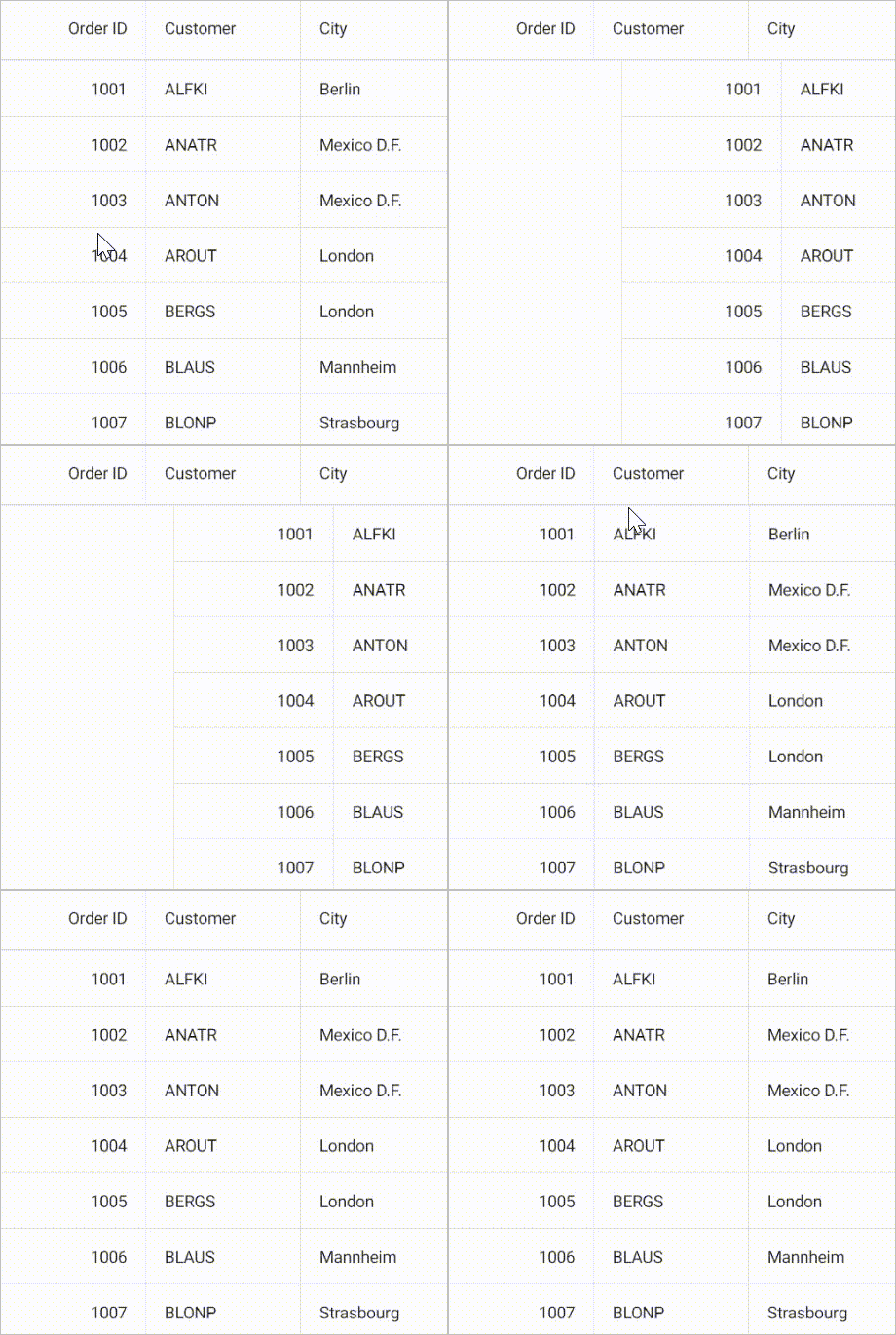
Identifying Scroll State Changes
The SfDataGrid raises the ScrollStateChanged event whenever its scrolling state is changed. This event is useful for monitoring user interactions and triggering actions based on scroll behavior.
The following current states are indicated by the ScrollState property in the event argument.
- Dragging: Indicates that DataGrid is being dragged in the view right now.
- Fling: Indicates that fling action is performed on the DataGrid.
- Idle: Indicates that DataGrid is not currently scrolling.
- Programmatic: Indicates that the ScrollToColumnIndex or ScrollToRowIndex methods are used for scrolling.
<syncfusion:SfDataGrid x:Name="dataGrid"
                       ItemsSource="{Binding Orders}"
                       ScrollStateChanged="dataGrid_ScrollStateChanged">
</syncfusion:SfDataGrid>
using Syncfusion.Maui.DataGrid;
private void dataGrid_ScrollStateChanged(object sender, DataGridScrollStateChangedEventArgs e)
{
switch (e.ScrollState)
{
case DataGridScrollState.Idle:
DisplayAlert("ScrollState", "Scrolling has stopped", "OK");
break;
case DataGridScrollState.Dragging:
// Handle user dragging
break;
case DataGridScrollState.Fling:
// Handle fling/momentum scrolling
break;
case DataGridScrollState.Programmatic:
// Handle programmatic scrolling
break;
}
}