Column Drag and Drop in .NET MAUI Data Grid
18 Nov 20189 minutes to read
The SfDataGrid allows you to drag and drop a column header by setting the SfDataGrid.AllowDraggingColumn property to true. A drag view is displayed while dragging a column header. You can handle drag and drop operations based on your requirements by using the SfDataGrid.QueryColumnDragging event.
To quickly get started with column drag and drop in .NET MAUI Data Grid, watch this video:
To enable column drag and drop functionality, use the following code example:
<syncfusion:SfDataGrid x:Name="dataGrid"
                           ItemsSource="{Binding OrderInfoCollection}"
                           AllowDraggingColumn="True">
</syncfusion:SfDataGrid>dataGrid.AllowDraggingColumn = true;
Column drag and drop events
The QueryColumnDragging event is fired continuously while dragging and dropping a column. By handling this event, you can cancel the dragging of a particular column header.
The QueryColumnDragging event provides the following properties in the DataGridQueryColumnDraggingEventArgs:
- From: Returns the index of the currently dragging column.
- To: Returns the index where you are trying to drop the column.
-
DraggingAction: Returns the column dragging status as a DataGridDragAction enum value. Possible values are
DragStarted,Dragging, andDragEnded. -
DraggingPosition: Returns the position (as a
Point) of the drag view relative to the SfDataGrid during column drag and drop operations. -
CanAutoScroll: Returns whether auto-scrolling should happen when the column drag view reaches the left or right ends of the
SfDataGrid. -
Cancel: Set totrueto cancel the current drag or drop action. When set duringDragStarted, it prevents the column from being dragged. When set duringDraggingorDragEnded, it prevents the column from being dropped at the target position.
Control drag and drop behavior
Use the QueryColumnDragging event to restrict or modify column drag and drop operations. The following table shows common scenarios and how to implement them:
| Scenario | Condition | Code Example |
|---|---|---|
| Prevent dragging a specific column | Check DragStarted action and column index |
if (e.From == 1 && e.DraggingAction == DataGridDragAction.DragStarted) e.Cancel = true; |
| Prevent dropping in a specific range | Check Dragging or DragEnded and target index |
if ((e.To > 3 && e.To < 6) && (e.DraggingAction == DataGridDragAction.DragEnded)) e.Cancel = true; |
| Prevent dropping of a specific column | Check DragEnded action and source column |
if (e.From == 1 && e.DraggingAction == DataGridDragAction.DragEnded) e.Cancel = true; |
| Prevent dropping at specific positions | Check target index | if ((e.To == 3 \|\| e.To == 5) && e.DraggingAction == DataGridDragAction.DragEnded) e.Cancel = true; |
| Prevent dropping at specific coordinates | Check DraggingPosition
|
if (e.DraggingPosition == new Point(100, 100) && e.DraggingAction == DataGridDragAction.DragEnded) e.Cancel = true; |
The following code example demonstrates implementing drag and drop restrictions:
dataGrid.QueryColumnDragging += SfDataGrid_QueryColumnDragging;

private void SfDataGrid_QueryColumnDragging(object? sender, DataGridQueryColumnDraggingEventArgs e)
{
    // Prevent dragging the column at index 1
    if (e.From == 1 && e.DraggingAction == DataGridDragAction.DragStarted)
    {
        e.Cancel = true;
    }

    // Prevent dropping in the range between indices 3 and 5
    if ((e.To > 3 && e.To < 6) && e.DraggingAction == DataGridDragAction.DragEnded)
    {
        e.Cancel = true;
    }
}
Restrict drag and drop between frozen and non-frozen columns
Frozen columns can be restricted from being dragged to non-frozen areas or vice versa. The following code example demonstrates how to prevent dragging and dropping between frozen and non-frozen column regions:
dataGrid.FrozenColumnCount = 2;  // First 2 columns are frozen
dataGrid.QueryColumnDragging += SfDataGrid_QueryColumnDragging;

private void SfDataGrid_QueryColumnDragging(object? sender, DataGridQueryColumnDraggingEventArgs e)
{
    int frozenCount = dataGrid.FrozenColumnCount;

    // Prevent dragging frozen columns out of the frozen region
    if (e.From < frozenCount && e.To >= frozenCount &&
        e.DraggingAction == DataGridDragAction.DragStarted)
    {
        e.Cancel = true;
    }

    // Prevent dragging non-frozen columns into the frozen region
    if (e.From >= frozenCount && e.To < frozenCount &&
        e.DraggingAction == DataGridDragAction.DragStarted)
    {
        e.Cancel = true;
    }
}
Note: Frozen columns can be reordered among themselves, and non-frozen columns can be reordered among themselves, but dragging between the two regions is prevented by the code above.
Customize the appearance
Customize column drag and drop indicator color
The SfDataGrid allows customizing the column drag and drop indicators using the SfDataGrid.DefaultStyle.ColumnDraggingIndicatorLineColor property.
<syncfusion:SfDataGrid x:Name="dataGrid"
                           ItemsSource="{Binding OrderInfoCollection}"
                           AllowDraggingColumn="True">
        <syncfusion:SfDataGrid.DefaultStyle>
            <syncfusion:DataGridStyle ColumnDraggingIndicatorLineColor="DeepPink"/>
        </syncfusion:SfDataGrid.DefaultStyle>
    </syncfusion:SfDataGrid>
Customize drag view text and background color
The SfDataGrid allows customizing the drag view text and background color using the SfDataGrid.DefaultStyle.ColumnDragViewTextColor and SfDataGrid.DefaultStyle.ColumnDragViewBackgroundColor properties, respectively.
<syncfusion:SfDataGrid x:Name="dataGrid"
                           ItemsSource="{Binding OrderInfoCollection}"
                           AllowDraggingColumn="True">
        <syncfusion:SfDataGrid.DefaultStyle>
            <syncfusion:DataGridStyle ColumnDragViewTextColor="#FFFFFF"
                              ColumnDragViewBackgroundColor="#FFBF69"/>
        </syncfusion:SfDataGrid.DefaultStyle>
    </syncfusion:SfDataGrid>
Column drag-and-drop template
The SfDataGrid allows you to load specific content into the column drag-and-drop template using the SfDataGrid.ColumnDragDropTemplate. The content can be provided through either a DataTemplate or a DataTemplateSelector.
The template’s data context provides access to the dragged column information through the DataGridColumn binding context, allowing you to display the column header text or other properties.
The following code snippet demonstrates how to load a data template into the column drag-and-drop view:
<syncfusion:SfDataGrid x:Name="dataGrid"
                       ItemsSource="{Binding OrderInfoCollection}"
                       AllowDraggingColumn="True">
    <syncfusion:SfDataGrid.ColumnDragDropTemplate>
        <DataTemplate>
            <Grid BackgroundColor="LightBlue" Padding="10">
                <Label Text="{Binding HeaderText}"
                       TextColor="Orange"
                       FontAttributes="Bold"
                       HorizontalTextAlignment="Center"
                       VerticalTextAlignment="Center" />
            </Grid>
        </DataTemplate>
    </syncfusion:SfDataGrid.ColumnDragDropTemplate>
</syncfusion:SfDataGrid>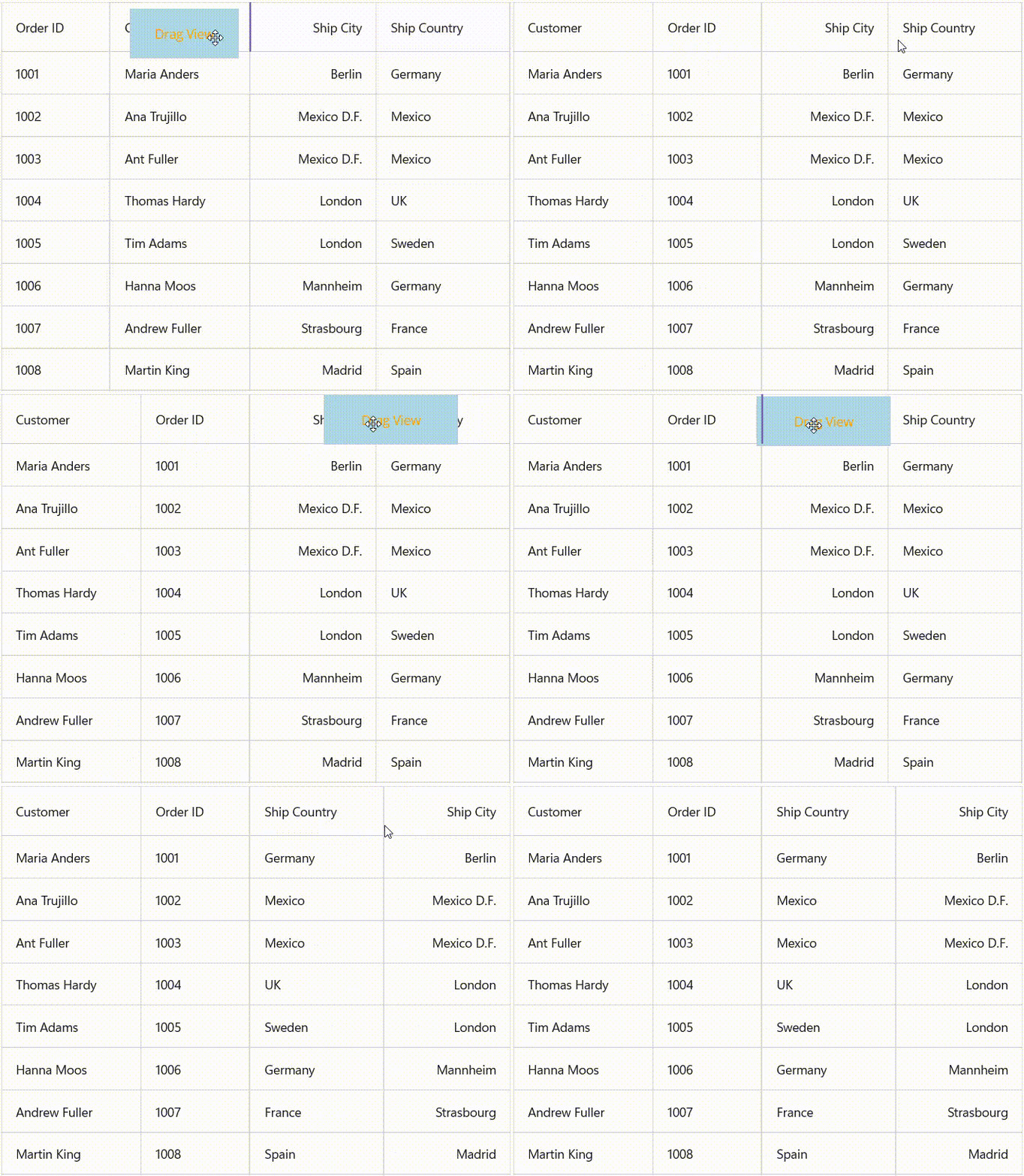
Cancel auto scrolling
Auto-scrolling during column dragging can be disabled using the CanAutoScroll argument in the QueryColumnDragging event.
dataGrid.QueryColumnDragging += SfDataGrid_QueryColumnDragging;

private void SfDataGrid_QueryColumnDragging(object? sender, DataGridQueryColumnDraggingEventArgs e)
{
    // Disable scroll while dragging the columns.
    e.CanAutoScroll = false;
}