Flutter Event Calendar Getting Started (SfCalendar)
18 Nov 201822 minutes to read
This section explains the steps required to add the Flutter Event Calendar widget and populate it with appointments. This section covers only basic features needed to get started with Syncfusion® Flutter Calendar widget.
To get started quickly with our Flutter Event Calendar widget, you can refer to this video.
You can also explore our Flutter Event Calendar example to know how to render and configure the Flutter Examples.
Add Flutter Event Calendar to an application
Create a simple project using the instructions given in the Getting Started with your first Flutter app documentation.
Add dependency
Add the Syncfusion® Flutter Calendar dependency to your pubspec.yaml file.
dependencies:

syncfusion_flutter_calendar: ^xx.x.xx
Here xx.x.xx denotes the current version of Syncfusion® Flutter Calendar package. It is recommended to use the latest available version from pub.dev.
Get packages
Run the following command to get the required packages.
$ flutter pub getImport package
Import the following package in your Dart code.
import 'package:syncfusion_flutter_calendar/calendar.dart';Initialize Flutter Event Calendar
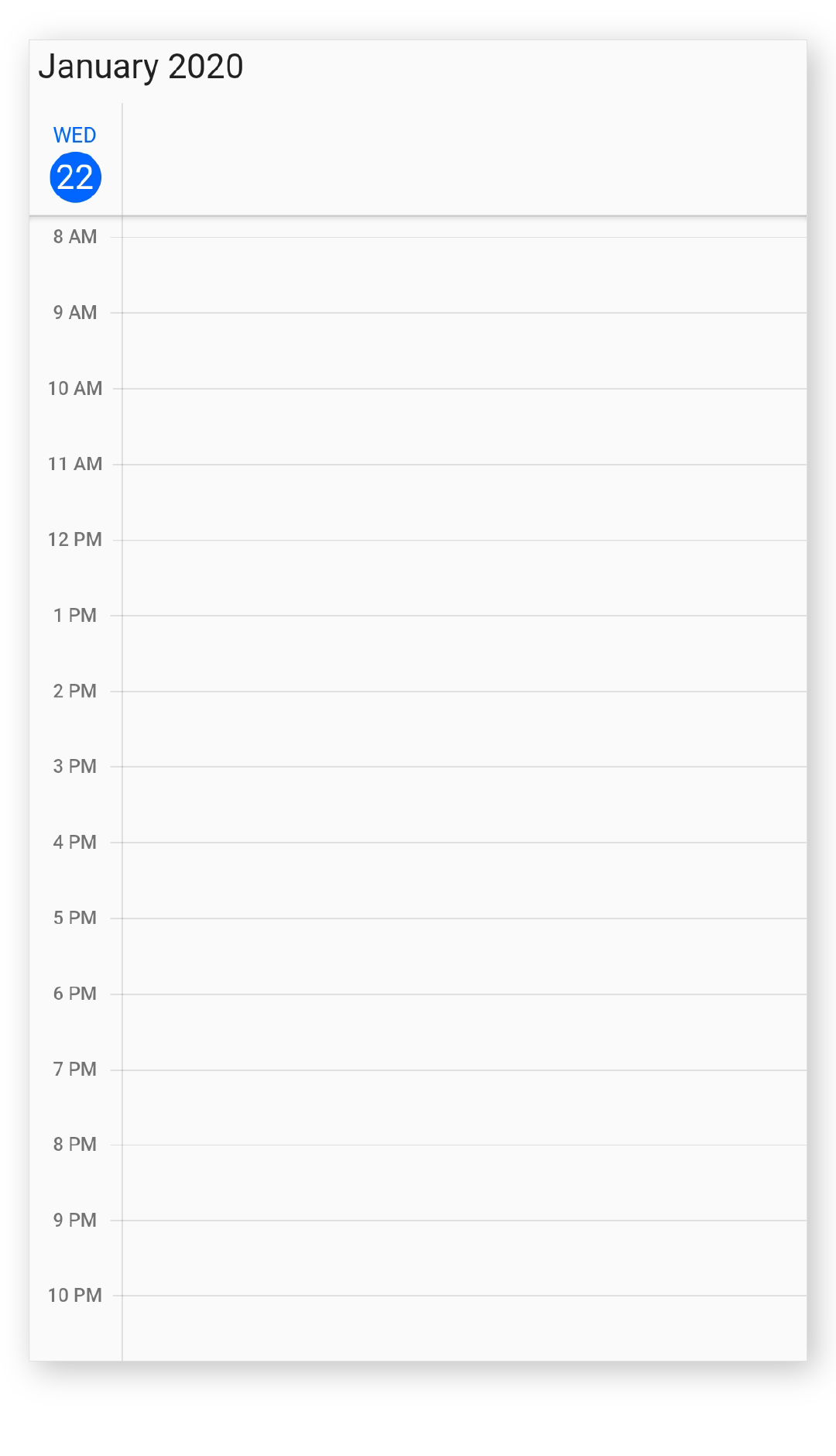
After importing the package, initialize the Flutter Event Calendar widget as a child of any widget. Here, the Flutter Event Calendar widget is added as a child of the scaffold widget.
import 'package:flutter/material.dart';
import 'package:syncfusion_flutter_calendar/calendar.dart';

void main() {
  runApp(const CalendarApp());
}

class CalendarApp extends StatelessWidget {
  const CalendarApp({super.key});

  @override
  Widget build(BuildContext context) {
    return MaterialApp(
      home: Scaffold(
        body: Container(
          child: SfCalendar(),
        ),
      ),
    );
  }
}
Change different calendar views
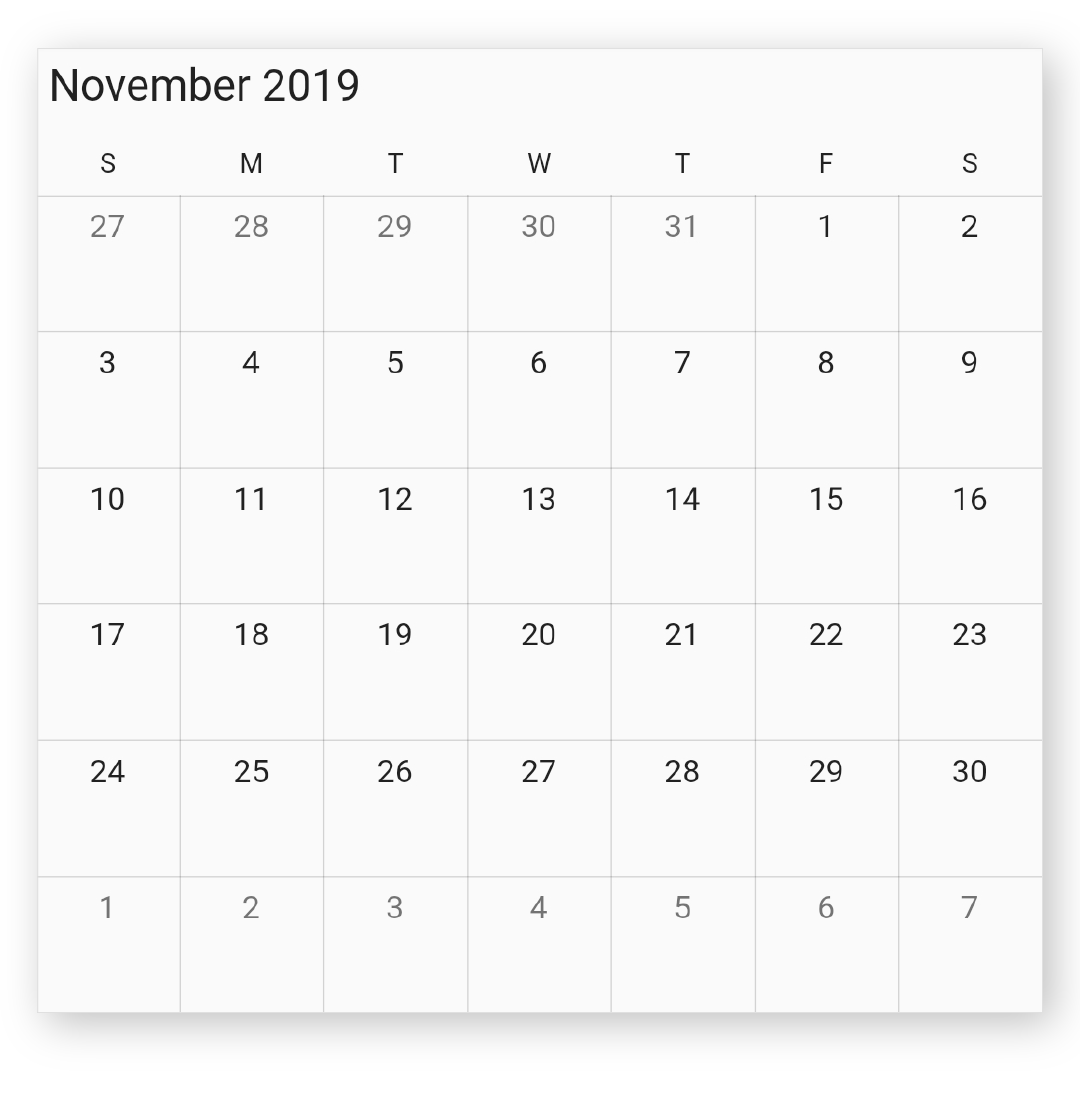
The SfCalendar widget provides nine different types of views to display dates. It can be assigned to the widget constructor by using the view property. By default, the widget is assigned to the day view. The current date will be displayed initially for all the calendar views.
import 'package:flutter/material.dart';
import 'package:syncfusion_flutter_calendar/calendar.dart';

void main() {
  runApp(const CalendarApp());
}

class CalendarApp extends StatelessWidget {
  const CalendarApp({super.key});

  @override
  Widget build(BuildContext context) {
    return MaterialApp(
      home: Scaffold(
        body: SfCalendar(
          view: CalendarView.month,
        ),
      ),
    );
  }
}
Add data source
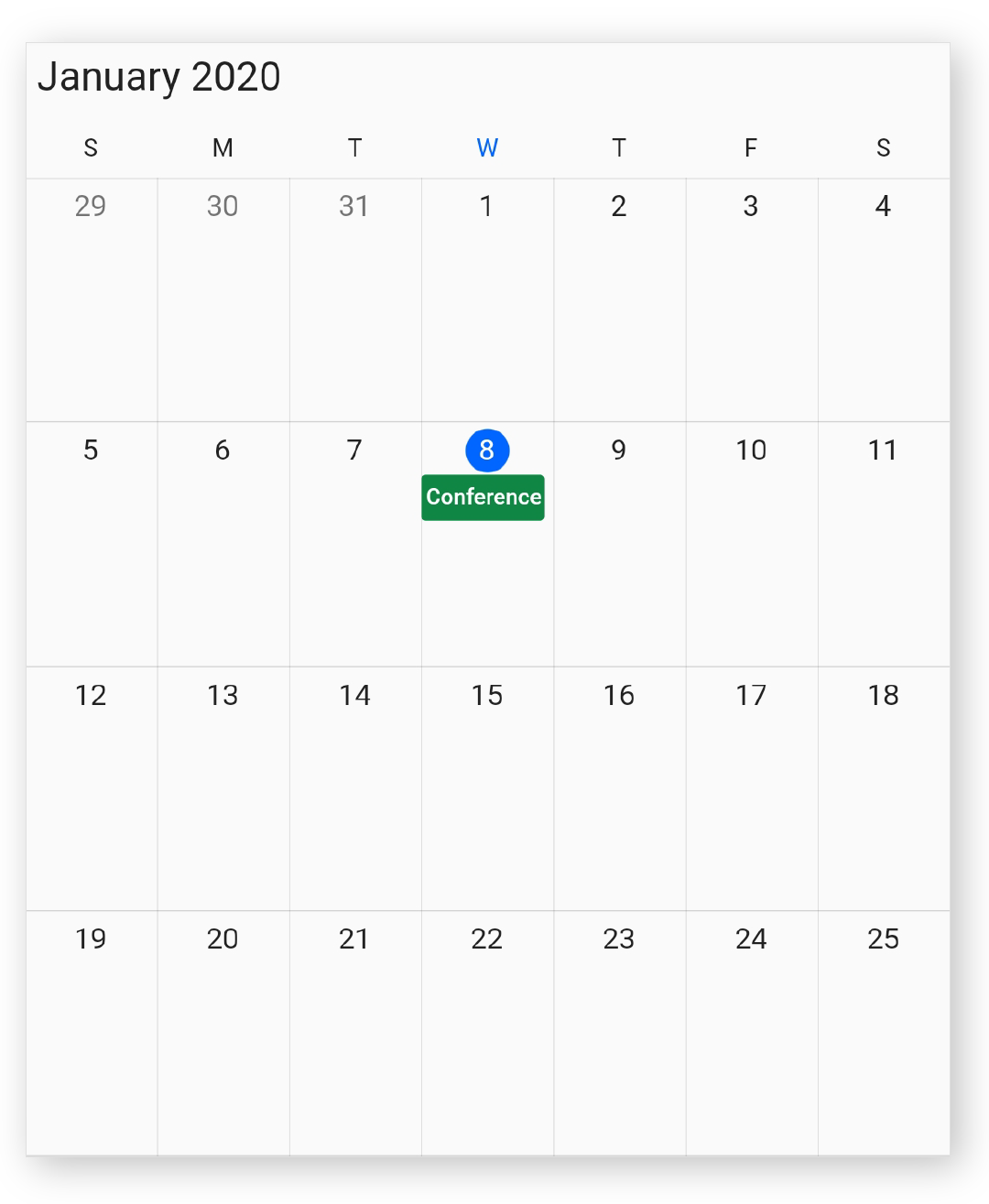
The Flutter Event Calendar widget has a built-in capability to handle appointment arrangement internally based on the appointment collections. You need to assign the created collection to the dataSource property.
You can also map custom appointment data to our Flutter Event Calendar.
import 'package:flutter/material.dart';
import 'package:syncfusion_flutter_calendar/calendar.dart';

void main() {
  runApp(const CalendarApp());
}

class CalendarApp extends StatelessWidget {
  const CalendarApp({super.key});

  @override
  Widget build(BuildContext context) {
    return MaterialApp(
      home: Scaffold(
        body: SfCalendar(
          view: CalendarView.month,
          dataSource: MeetingDataSource(_getDataSource()),
          monthViewSettings: const MonthViewSettings(
              appointmentDisplayMode: MonthAppointmentDisplayMode.appointment),
        ),
      ),
    );
  }
}

List<Meeting> _getDataSource() {
  final List<Meeting> meetings = <Meeting>[];
  final DateTime today = DateTime.now();
  final DateTime startTime =
      DateTime(today.year, today.month, today.day, 9, 0, 0);
  final DateTime endTime = startTime.add(const Duration(hours: 2));
  meetings.add(Meeting(
      'Conference', startTime, endTime, const Color(0xFF0F8644), false));
  return meetings;
}

class MeetingDataSource extends CalendarDataSource {
  MeetingDataSource(List<Meeting> source) {
    appointments = source;
  }

  @override
  DateTime getStartTime(int index) {
    return appointments![index].from;
  }

  @override
  DateTime getEndTime(int index) {
    return appointments![index].to;
  }

  @override
  String getSubject(int index) {
    return appointments![index].eventName;
  }

  @override
  Color getColor(int index) {
    return appointments![index].background;
  }

  @override
  bool isAllDay(int index) {
    return appointments![index].isAllDay;
  }
}

class Meeting {
  Meeting(this.eventName, this.from, this.to, this.background, this.isAllDay);

  String eventName;
  DateTime from;
  DateTime to;
  Color background;
  bool isAllDay;
}
Change first day of week
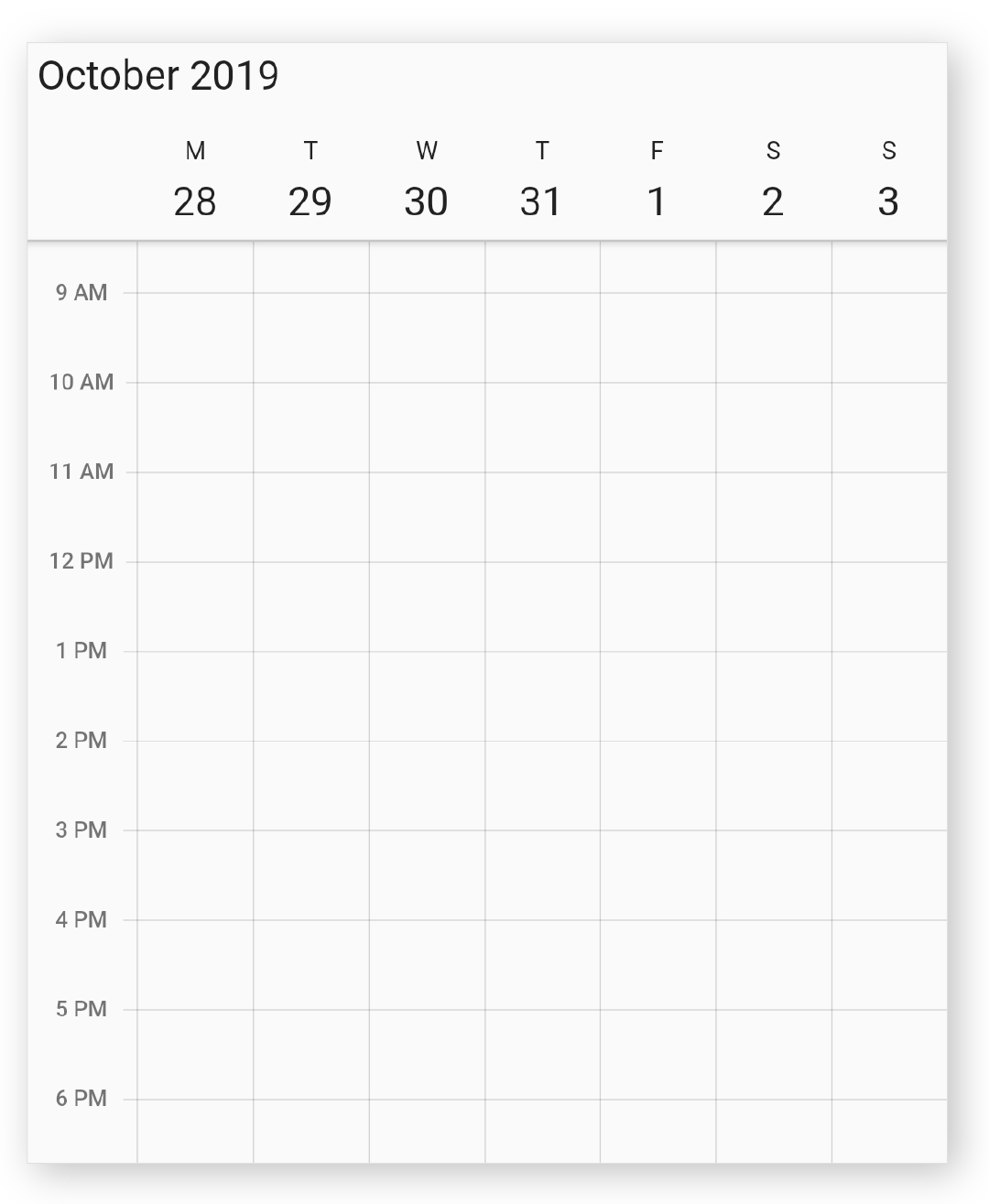
The Flutter Event Calendar widget will be rendered with Sunday as the first day of the week, but you can customize it to any day by using the firstDayOfWeek property.
import 'package:flutter/material.dart';
import 'package:syncfusion_flutter_calendar/calendar.dart';

void main() {
  runApp(const CalendarApp());
}

class CalendarApp extends StatelessWidget {
  const CalendarApp({super.key});

  @override
  Widget build(BuildContext context) {
    return MaterialApp(
      home: Scaffold(
        body: SfCalendar(
          view: CalendarView.week,
          firstDayOfWeek: 1, // Monday
        ),
      ),
    );
  }
}
Initial selected date
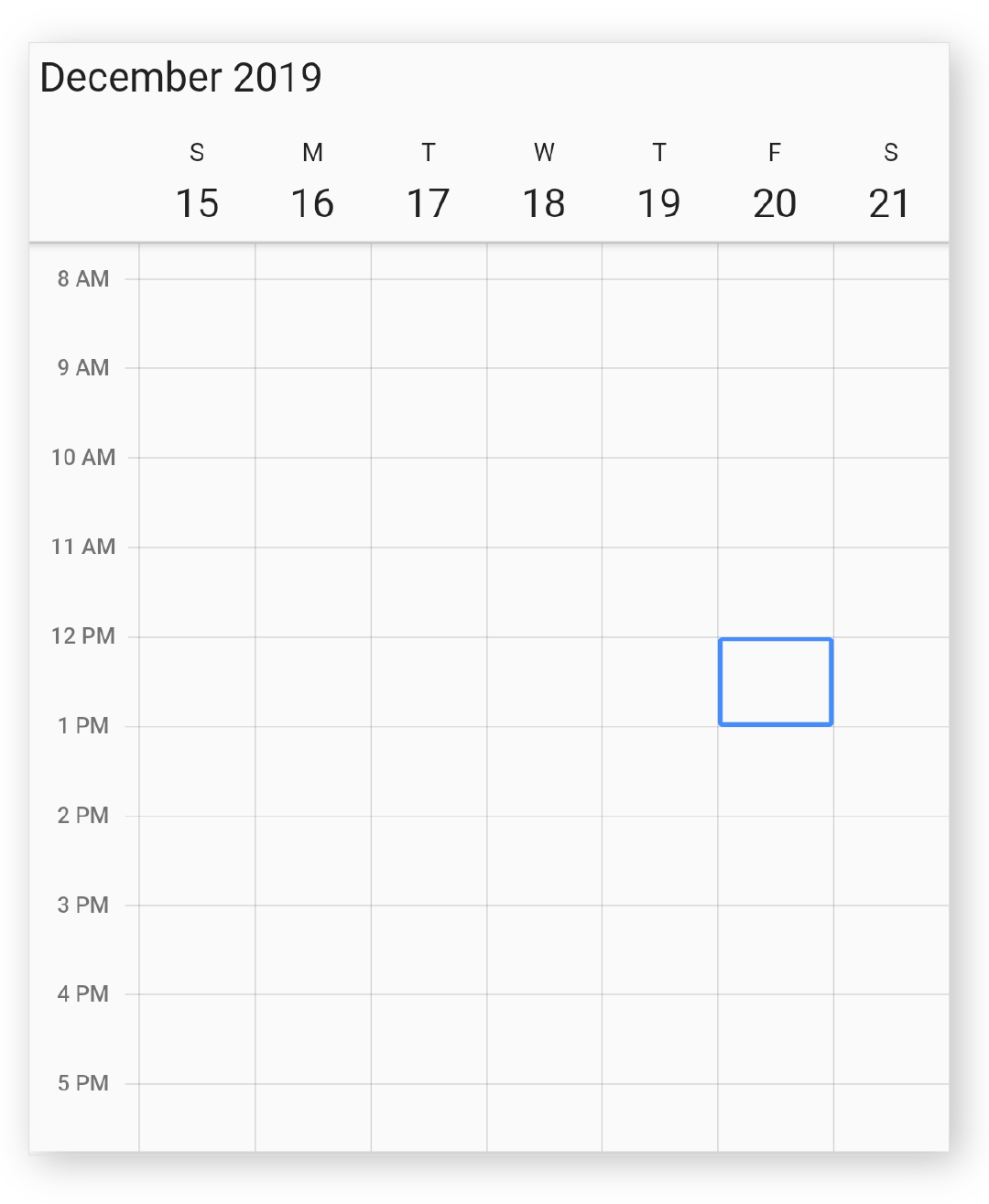
You can programmatically select the specific month cell and time slot in the Flutter Event Calendar by setting corresponding date and time value to the initialSelectedDate property. By default, it is null.
import 'package:flutter/material.dart';
import 'package:syncfusion_flutter_calendar/calendar.dart';

void main() {
  runApp(const CalendarApp());
}

class CalendarApp extends StatelessWidget {
  const CalendarApp({super.key});

  @override
  Widget build(BuildContext context) {
    return MaterialApp(
      home: Scaffold(
        body: Container(
          child: SfCalendar(
            view: CalendarView.week,
            initialSelectedDate: DateTime(2019, 12, 20, 12),
          ),
        ),
      ),
    );
  }
}
Initial display date
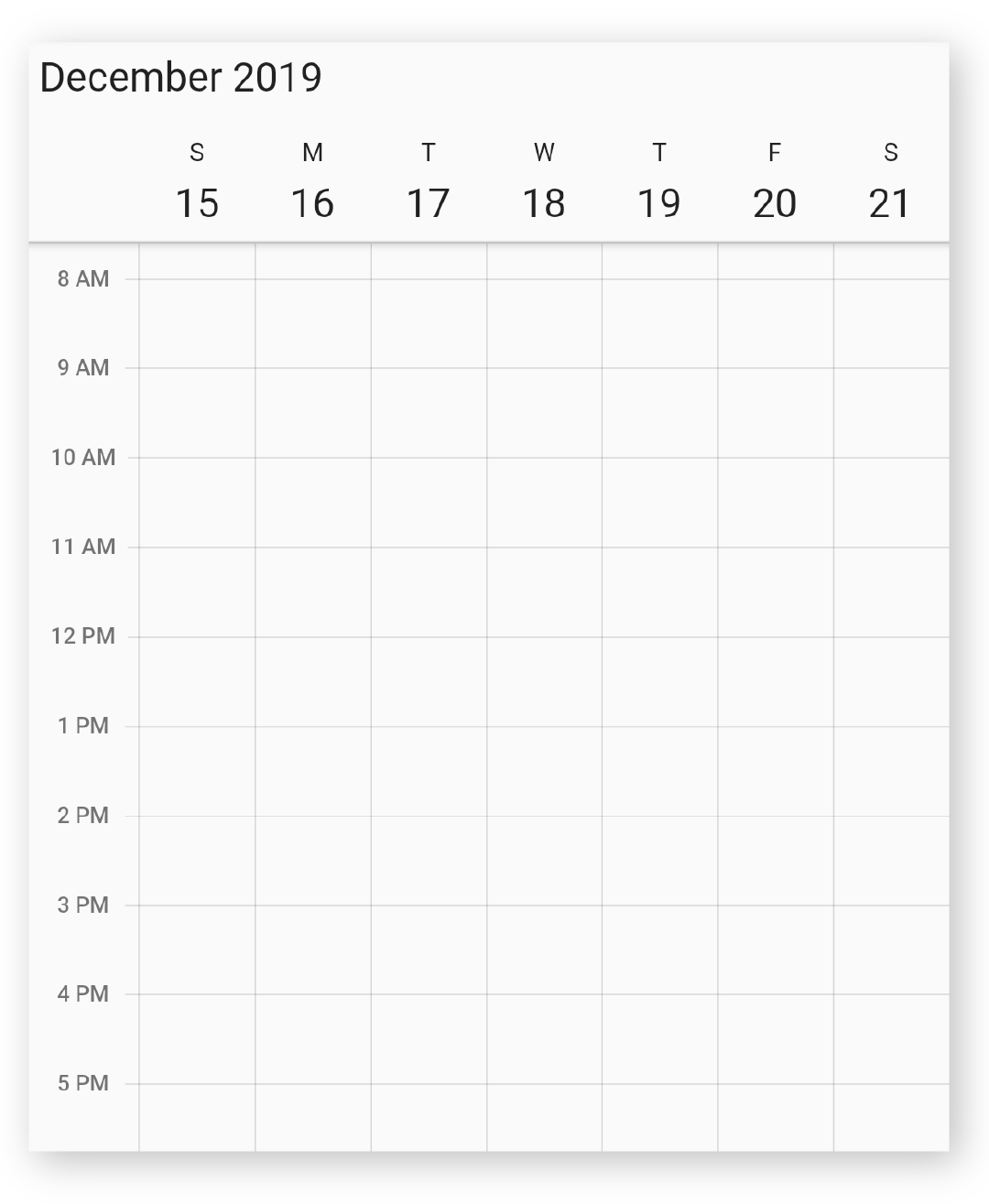
You can change the initial display date of the Flutter Event Calendar by using the initialDisplayDate property, which displays the calendar based on the given date time. By default, current date will be set as initialDisplayDate.
import 'package:flutter/material.dart';
import 'package:syncfusion_flutter_calendar/calendar.dart';

void main() {
  runApp(const CalendarApp());
}

class CalendarApp extends StatelessWidget {
  const CalendarApp({super.key});

  @override
  Widget build(BuildContext context) {
    return MaterialApp(
      home: Scaffold(
        body: Container(
          child: SfCalendar(
            view: CalendarView.week,
            initialDisplayDate: DateTime(2019, 12, 20, 7, 30),
          ),
        ),
      ),
    );
  }
}
Selection decoration
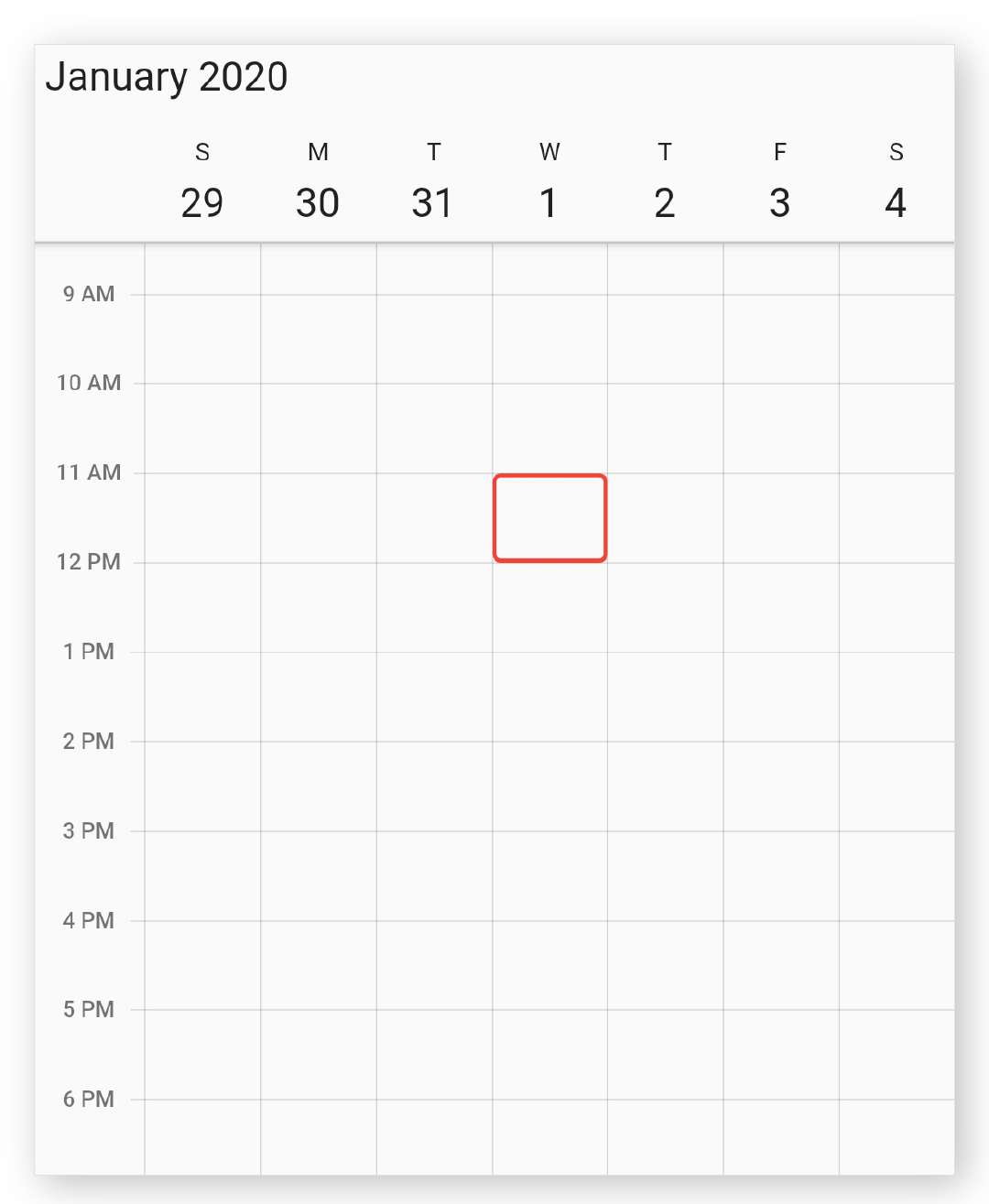
You can decorate the selection view of the Flutter Event Calendar by using the selectionDecoration property.
import 'package:flutter/material.dart';
import 'package:syncfusion_flutter_calendar/calendar.dart';

void main() {
  runApp(const CalendarApp());
}

class CalendarApp extends StatelessWidget {
  const CalendarApp({super.key});

  @override
  Widget build(BuildContext context) {
    return MaterialApp(
      home: Scaffold(
        body: Container(
          child: SfCalendar(
            view: CalendarView.week,
            selectionDecoration: BoxDecoration(
              color: Colors.transparent,
              border: Border.all(color: Colors.red, width: 2),
              borderRadius: const BorderRadius.all(Radius.circular(4)),
              shape: BoxShape.rectangle,
            ),
          ),
        ),
      ),
    );
  }
}
Today highlight color
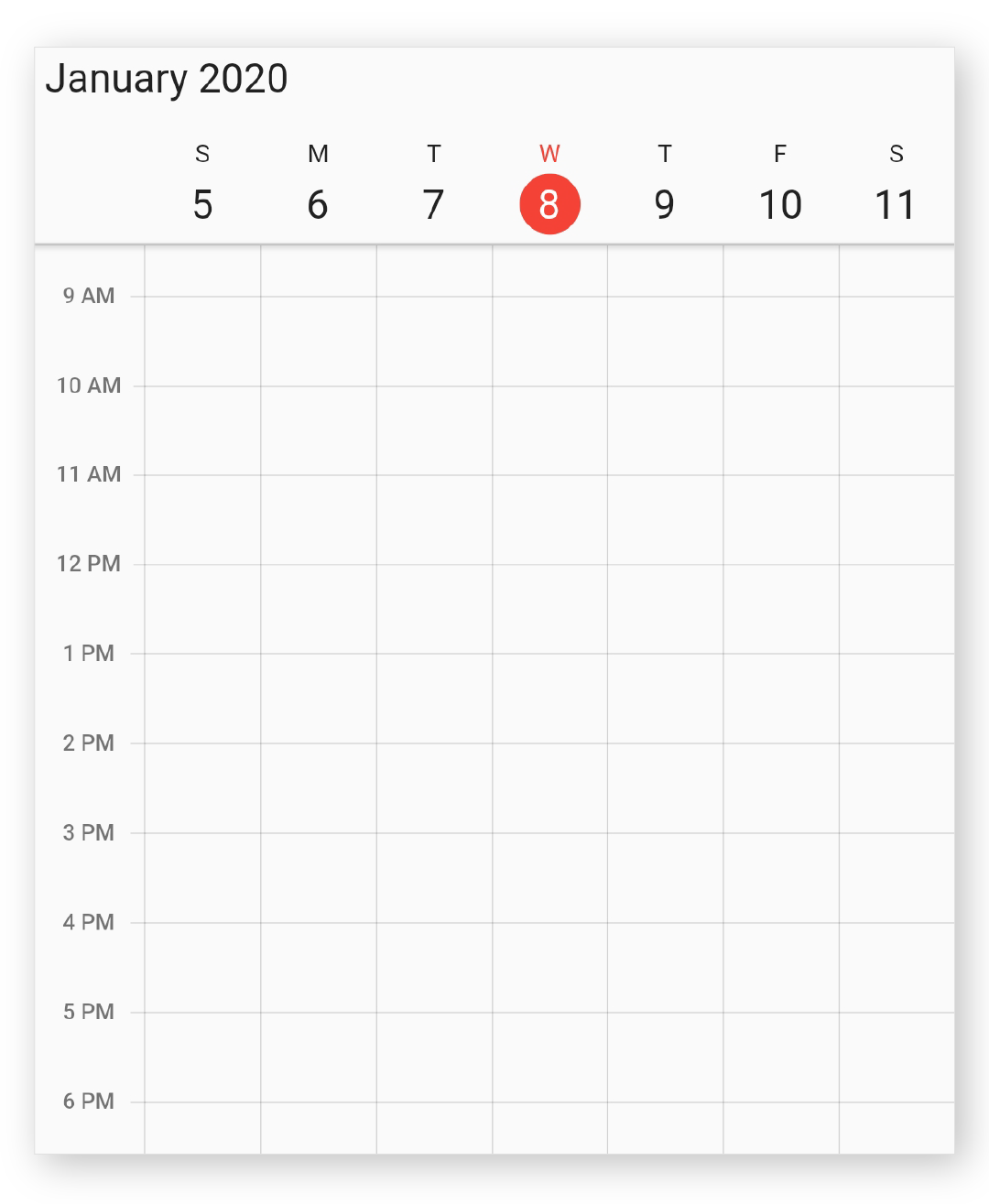
You can customize the today highlight color of the Flutter Event Calendar by using the todayHighlightColor property. This property highlights the today text in the view header, month cell, and agenda view.
import 'package:flutter/material.dart';
import 'package:syncfusion_flutter_calendar/calendar.dart';

void main() {
  runApp(const CalendarApp());
}

class CalendarApp extends StatelessWidget {
  const CalendarApp({super.key});

  @override
  Widget build(BuildContext context) {
    return MaterialApp(
      home: Scaffold(
        body: Container(
          child: SfCalendar(
            view: CalendarView.week,
            todayHighlightColor: Colors.red,
          ),
        ),
      ),
    );
  }
}
Cell border color
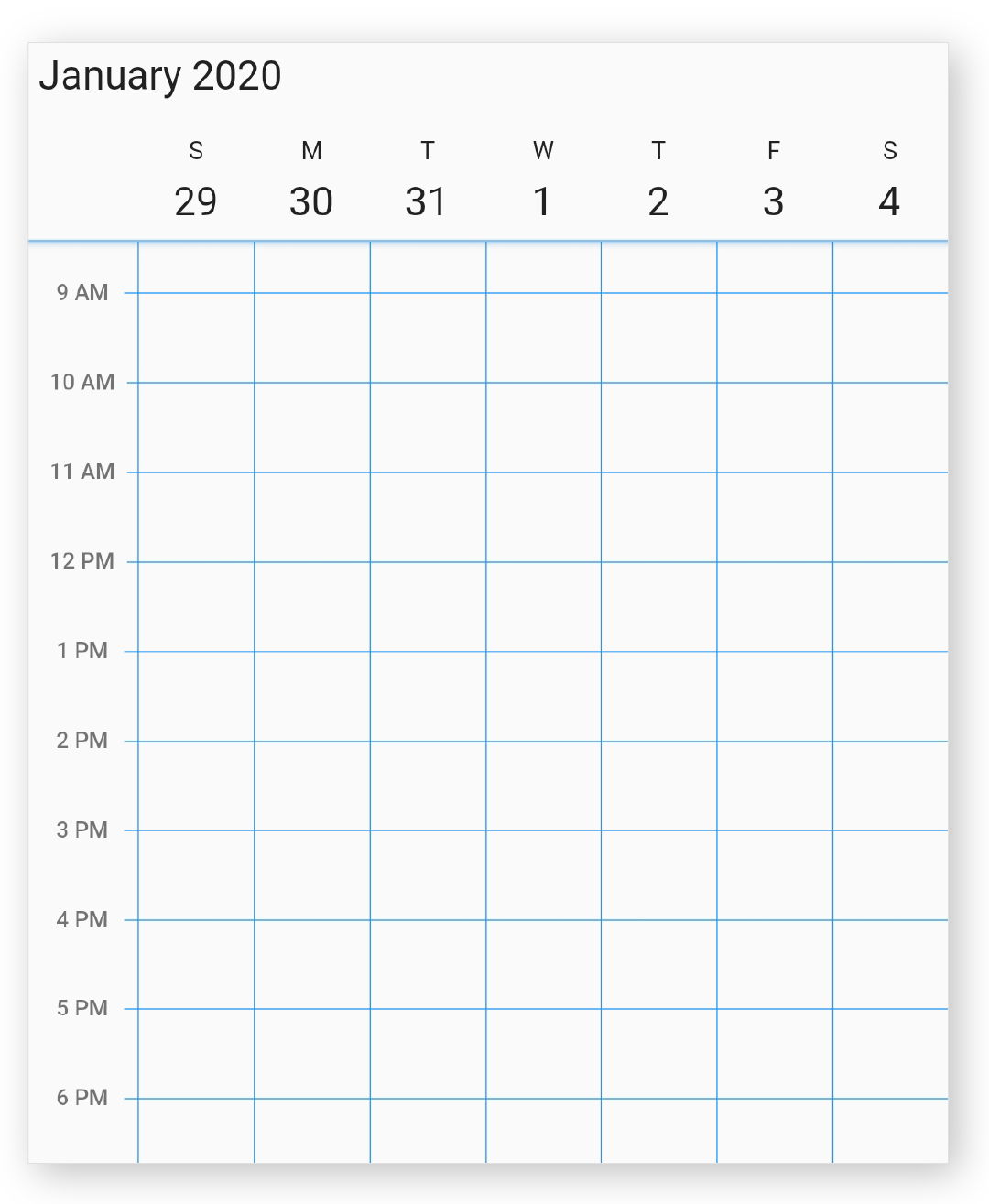
You can customize the vertical and horizontal line color of the Flutter Event Calendar by using the cellBorderColor property.
import 'package:flutter/material.dart';
import 'package:syncfusion_flutter_calendar/calendar.dart';

void main() {
  runApp(const CalendarApp());
}

class CalendarApp extends StatelessWidget {
  const CalendarApp({super.key});

  @override
  Widget build(BuildContext context) {
    return MaterialApp(
      home: Scaffold(
        body: Container(
          child: SfCalendar(
            view: CalendarView.week,
            cellBorderColor: Colors.blue,
          ),
        ),
      ),
    );
  }
}
Background color
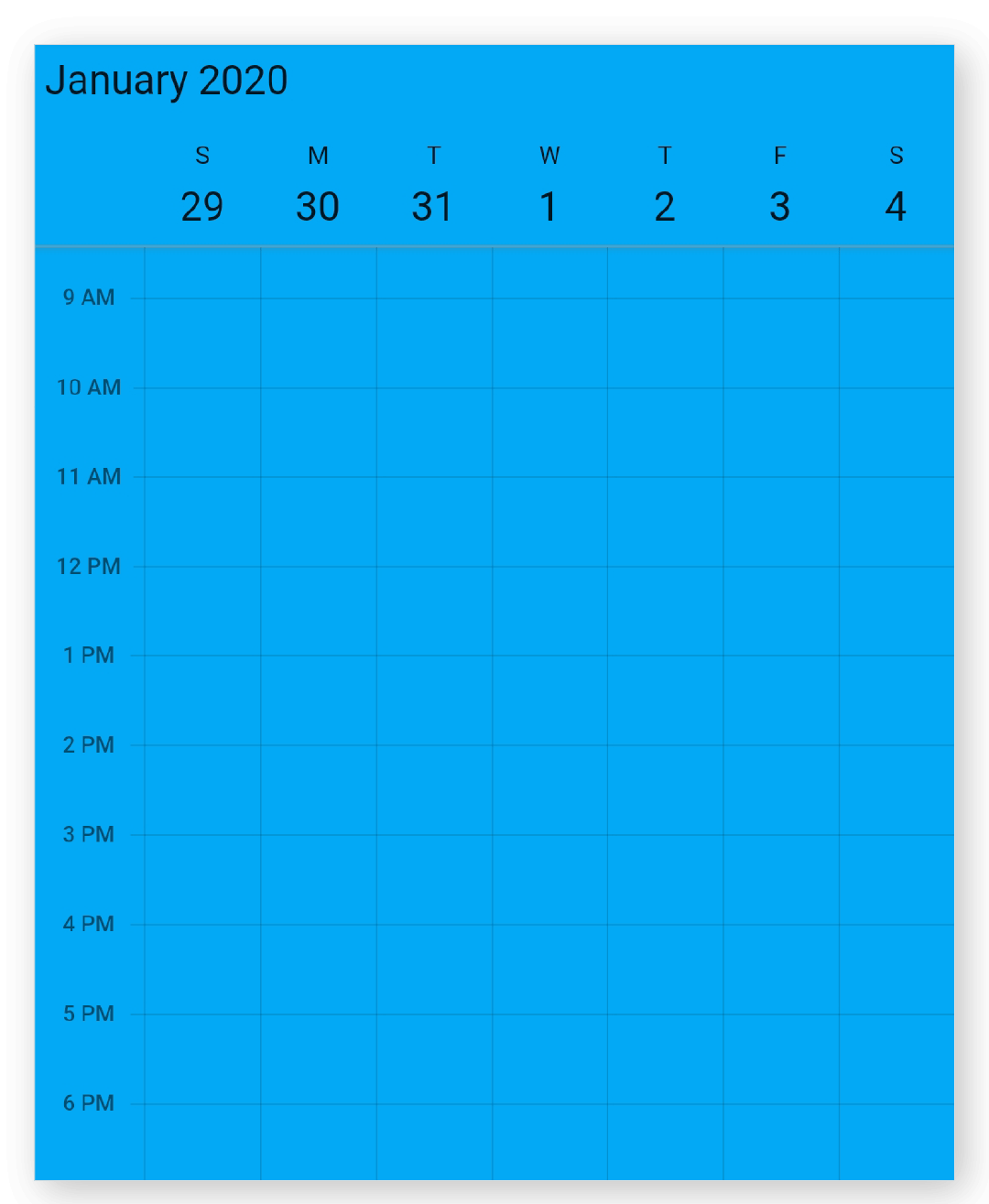
The background color of the Flutter Event Calendar can be customized by using the backgroundColor property.
import 'package:flutter/material.dart';
import 'package:syncfusion_flutter_calendar/calendar.dart';

void main() {
  runApp(const CalendarApp());
}

class CalendarApp extends StatelessWidget {
  const CalendarApp({super.key});

  @override
  Widget build(BuildContext context) {
    return MaterialApp(
      home: Scaffold(
        body: Container(
          child: SfCalendar(
            view: CalendarView.week,
            backgroundColor: Colors.lightBlue,
          ),
        ),
      ),
    );
  }
}
Navigation arrow
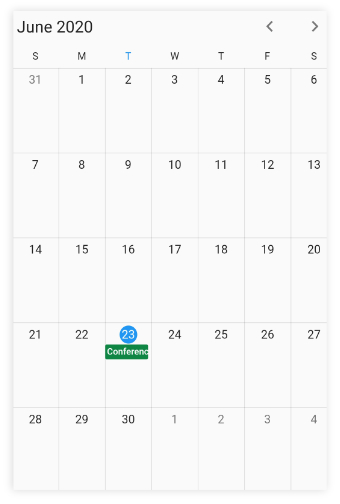
Using the showNavigationArrow property of the SfCalendar, you can navigate to the next or previous views of the Flutter Event Calendar without swiping.
import 'package:flutter/material.dart';
import 'package:syncfusion_flutter_calendar/calendar.dart';

void main() {
  runApp(const CalendarApp());
}

class CalendarApp extends StatelessWidget {
  const CalendarApp({super.key});

  @override
  Widget build(BuildContext context) {
    return MaterialApp(
      home: Scaffold(
        body: SfCalendar(
          view: CalendarView.month,
          showNavigationArrow: true,
        ),
      ),
    );
  }
}
NOTE
- The showNavigationArrow property is not applicable when the view is set to CalendarView.schedule.
Cell end padding
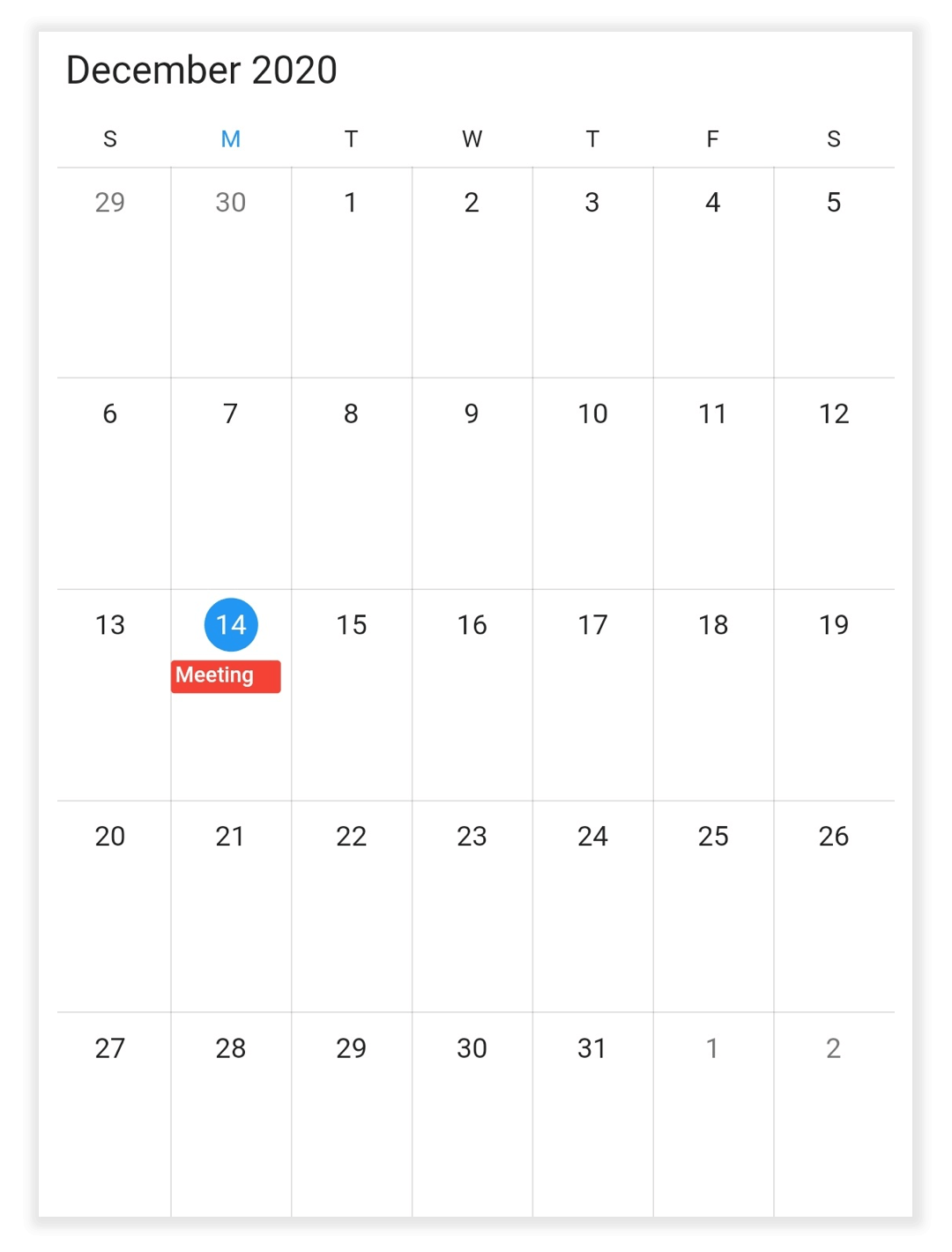
You can customize the padding of appointment view end to make touch position for timeslot and month cell by using the cellEndPadding property in the Flutter Event Calendar, which allows you to tap the calendar cell when the cell has appointments.
import 'package:flutter/material.dart';
import 'package:syncfusion_flutter_calendar/calendar.dart';

void main() {
  runApp(const CalendarApp());
}

class CalendarApp extends StatelessWidget {
  const CalendarApp({super.key});

  @override
  Widget build(BuildContext context) {
    return MaterialApp(
      home: Scaffold(
        body: SfCalendar(
          view: CalendarView.month,
          cellEndPadding: 5,
          dataSource: _getCalendarDataSource(),
          monthViewSettings: const MonthViewSettings(
              appointmentDisplayMode:
                  MonthAppointmentDisplayMode.appointment),
        ),
      ),
    );
  }
}
Current time indicator
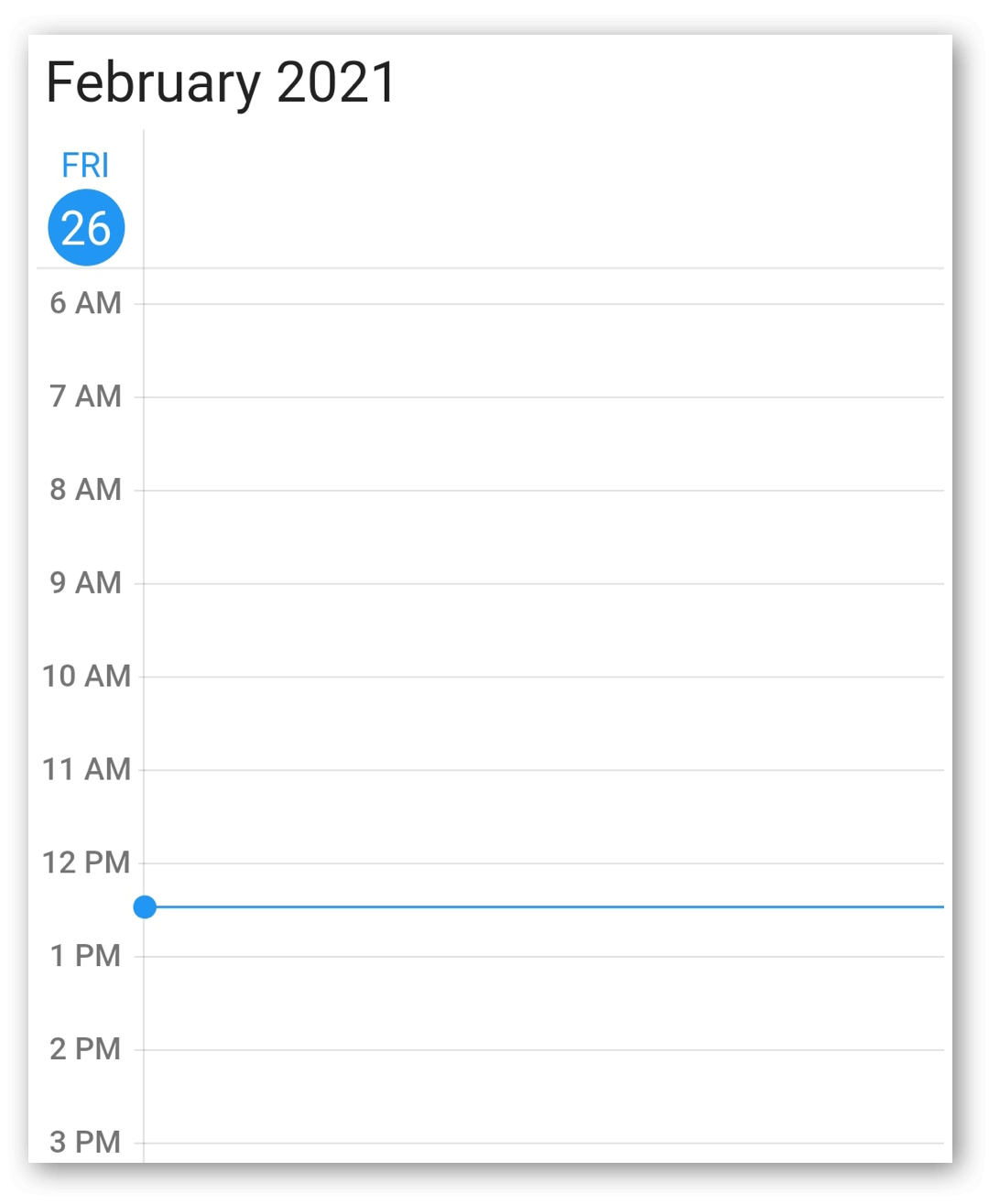
You can display the current time indicator in all timeslot views of SfCalendar by using the showCurrentTimeIndicator property and you can also customize the color of current time indicator by using the todayHighlightColor property.
import 'package:flutter/material.dart';
import 'package:syncfusion_flutter_calendar/calendar.dart';

void main() {
  runApp(const CalendarApp());
}

class CalendarApp extends StatelessWidget {
  const CalendarApp({super.key});

  @override
  Widget build(BuildContext context) {
    return MaterialApp(
      home: Scaffold(
        body: SfCalendar(
          view: CalendarView.day,
          showCurrentTimeIndicator: true,
        ),
      ),
    );
  }
}
Week number
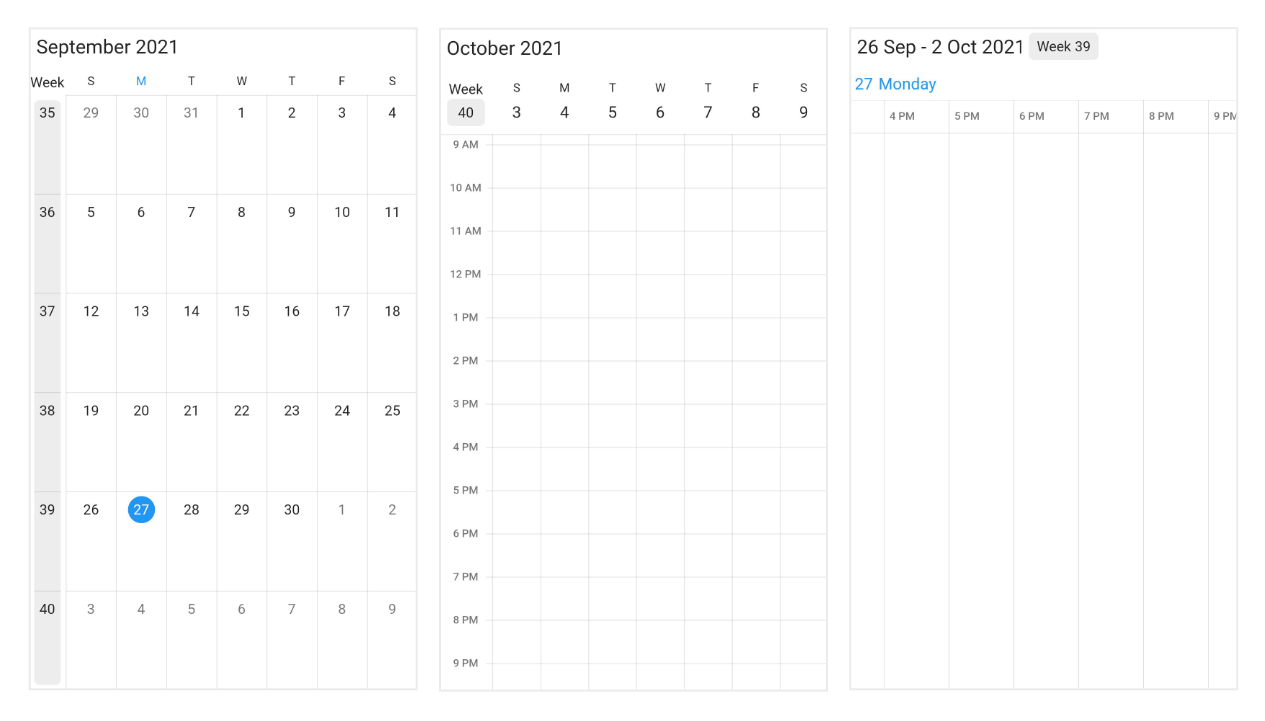
Display the Week number of the year in all views except schedule view of the SfCalendar by setting the showWeekNumber property as true and by default it is false. Week numbers will be displayed based on the ISO standard.
import 'package:flutter/material.dart';
import 'package:syncfusion_flutter_calendar/calendar.dart';

void main() {
  runApp(const CalendarApp());
}

class CalendarApp extends StatelessWidget {
  const CalendarApp({super.key});

  @override
  Widget build(BuildContext context) {
    return MaterialApp(
      home: Scaffold(
        body: SfCalendar(
          view: CalendarView.month,
          showWeekNumber: true,
        ),
      ),
    );
  }
}
Week number appearance
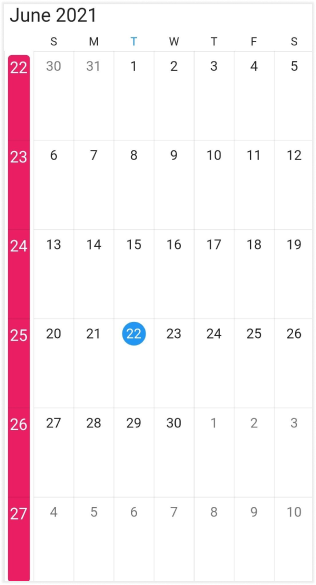
Customize the Week number text style of the Flutter Event Calendar by using the WeekNumberStyle property. Allows to customize the textStyle and the backgroundColor in the Week number of the Flutter Event Calendar.
import 'package:flutter/material.dart';
import 'package:syncfusion_flutter_calendar/calendar.dart';

void main() {
  runApp(const CalendarApp());
}

class CalendarApp extends StatelessWidget {
  const CalendarApp({super.key});

  @override
  Widget build(BuildContext context) {
    return MaterialApp(
      home: Scaffold(
        body: SfCalendar(
          view: CalendarView.month,
          showWeekNumber: true,
          weekNumberStyle: const WeekNumberStyle(
            backgroundColor: Colors.pink,
            textStyle: TextStyle(color: Colors.white, fontSize: 15),
          ),
        ),
      ),
    );
  }
}
Get the complete “getting started” sample from here.
See also
- How to switch between views of the event calendar in Flutter?
- How to update event calendar (SfCalendar) DisplayDate using showDatePicker in flutter
- How can we move to specific time while switching from month to day view in Flutter event calendar
- How to customize the cell border in the Flutter event calendar (SfCalendar)
- How to apply theming in Flutter event calendar (SfCalendar)?
- How to add an image as background in the Flutter event calendar (SfCalendar)
- How to change the first day of week in the Flutter event calendar (SfCalendar)
- How to interact with event calendar cell when appointments loaded in the Flutter (SfCalendar)
- How to customize the selection using decoration in the Flutter event calendar (SfCalendar)
- How to navigate to the previous or next views using navigation arrows in the Flutter event calendar (SfCalendar)
- How to customize the current day color in the Flutter event calendar (SfCalendar)
- How to show a particular week in a day view of Flutter event calendar(SfCalendar)
- How to format the view header day and date in the Flutter event calendar (SfCalendar)