Getting Started with WPF Chromeless Window
18 Nov 20187 minutes to read
This section explains how to add and configure the ChromelessWindow control in a WPF application.
Assembly deployment
Refer to the control dependencies section to get the list of assemblies or NuGet packages that need to be added as references to use the control in any application.
You can find more details about installing the NuGet packages in a WPF application in the following link:
The minimum NuGet package required is Syncfusion.Shared.WPF. Refer to Control Dependencies for the list of additional dependent packages and the supported Syncfusion version.
Creating a simple application with Chromeless Window
You can create a WPF application with ChromelessWindow using the following steps:
- Create a project.
- Add Chromeless Window.
- Customize title bar.
- Customize title bar background.
- Customize title bar font.
- Customize title bar height.
- Customize title bar icon.
- Customize the border of the Chromeless Window.
Creating the project
Create a new WPF project in Visual Studio to display the ChromelessWindow.
Add Chromeless Window
The following steps help you add ChromelessWindow to your project:
- Create a WPF project and add a reference to the following assembly:
Syncfusion.Shared.WPF.dll
You can also install the
Syncfusion.Shared.WPFNuGet package. -
Include an XML namespace for the assembly in the Main window.
<Window x:Class="Chromelesswindow.MainWindow" xmlns="http://schemas.microsoft.com/winfx/2006/xaml/presentation" xmlns:x="http://schemas.microsoft.com/winfx/2006/xaml" Title="MainWindow" Height="350" Width="525" xmlns:syncfusion="clr-namespace:Syncfusion.Windows.Shared;assembly=Syncfusion.Shared.WPF"> </Window> -
Change the
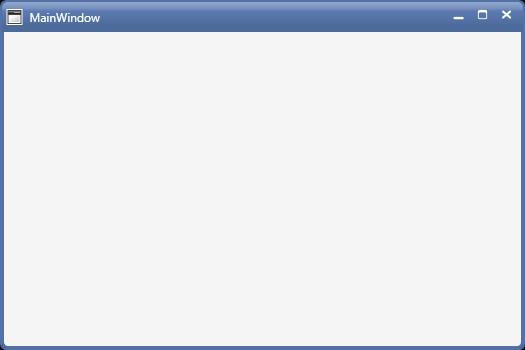
WindowtoChromelessWindow.<syncfusion:ChromelessWindow x:Class="Chromelesswindow.MainWindow" xmlns="http://schemas.microsoft.com/winfx/2006/xaml/presentation" xmlns:x="http://schemas.microsoft.com/winfx/2006/xaml" Title="MainWindow" Height="350" Width="525" xmlns:syncfusion="clr-namespace:Syncfusion.Windows.Shared;assembly=Syncfusion.Shared.WPF"> </syncfusion:ChromelessWindow> -
Add the
Syncfusion.Windows.Sharednamespace and inheritMainWindowfromChromelessWindowin code-behind.using Syncfusion.Windows.Shared; public partial class MainWindow : ChromelessWindow { public MainWindow() { InitializeComponent(); } }
Customizing the title bar
The following sections describe the most common title bar customizations. For a complete list of properties, see Title bar Customization.
Title bar background
You can customize the background of the title bar by setting the TitleBarBackground property of ChromelessWindow.
<syncfusion:ChromelessWindow
    x:Class="WPF_CalendarEdit.MainWindow"
    xmlns="http://schemas.microsoft.com/winfx/2006/xaml/presentation"
    xmlns:x="http://schemas.microsoft.com/winfx/2006/xaml"
    xmlns:d="http://schemas.microsoft.com/expression/blend/2008"
    xmlns:syncfusion="http://schemas.syncfusion.com/wpf"
    TitleBarBackground="Red"
    Title="ChromelessWindow Sample" Height="350" Width="525">
    <Grid>
    </Grid>
</syncfusion:ChromelessWindow>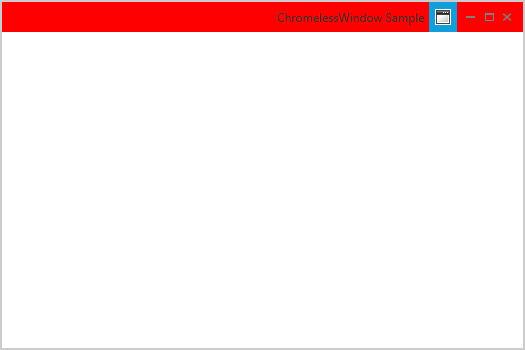
Title bar font
The font size of the caption in the title bar can be customized using the TitleFontSize property.
<syncfusion:ChromelessWindow
    x:Class="WPF_CalendarEdit.MainWindow"
    xmlns="http://schemas.microsoft.com/winfx/2006/xaml/presentation"
    xmlns:x="http://schemas.microsoft.com/winfx/2006/xaml"
    xmlns:d="http://schemas.microsoft.com/expression/blend/2008"
    xmlns:syncfusion="http://schemas.syncfusion.com/wpf"
    TitleFontSize="15"
    Title="ChromelessWindow Sample" Height="350" Width="525">
	<Grid>
	</Grid>
</syncfusion:ChromelessWindow>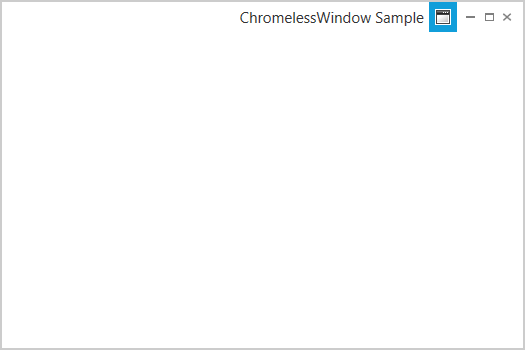
Title bar height
You can customize the caption height by setting the TitleBarHeight property of ChromelessWindow.
<syncfusion:ChromelessWindow
    x:Class="WPF_CalendarEdit.MainWindow"
    xmlns="http://schemas.microsoft.com/winfx/2006/xaml/presentation"
    xmlns:x="http://schemas.microsoft.com/winfx/2006/xaml"
    xmlns:d="http://schemas.microsoft.com/expression/blend/2008"
    xmlns:syncfusion="http://schemas.syncfusion.com/wpf"
    xmlns:local="clr-namespace:WPF_CalendarEdit"
	TitleBarHeight="50"
    Title="ChromelessWindow Sample" Height="350" Width="525">
	<Grid>
    </Grid>
</syncfusion:ChromelessWindow>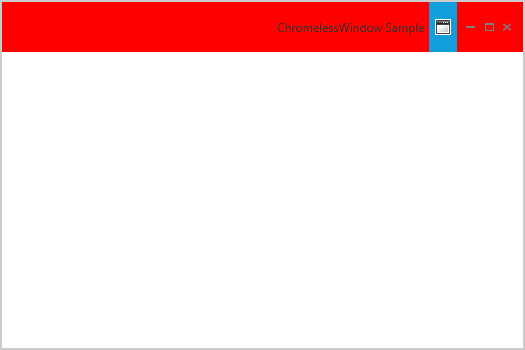
Title bar text alignment
Use the TitleTextAlignment property to set the alignment of the title text in the ChromelessWindow. The following alignment options are available:
-
Left- Aligns the title text to the left. -
Right- Aligns the title text to the right. -
Center- Centers the title text within the title bar. -
Stretch- Stretches the title text to fill the available space between the window icon and the caption buttons.
<syncfusion:ChromelessWindow x:Class="Chromeless_Window_Sample.MainWindow"
        xmlns="http://schemas.microsoft.com/winfx/2006/xaml/presentation"
        xmlns:x="http://schemas.microsoft.com/winfx/2006/xaml"
        xmlns:d="http://schemas.microsoft.com/expression/blend/2008"
        xmlns:mc="http://schemas.openxmlformats.org/markup-compatibility/2006"
        xmlns:local="clr-namespace:Chromeless_Window_Sample"
        mc:Ignorable="d" xmlns:syncfusion="http://schemas.syncfusion.com/wpf"
        TitleTextAlignment="Center"
        Title="Chromeless Window Sample"
        Height="350" Width="550">
    <Grid>
    </Grid>
</syncfusion:ChromelessWindow>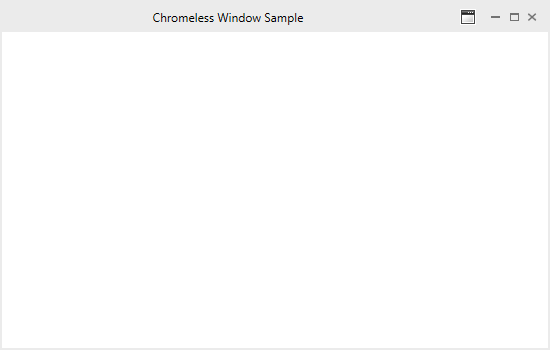
Title bar icon
You can set the caption icon by setting the Icon property. The icon file (for example, App.ico) must be added to the project with its Build Action set to Resource.
<syncfusion:ChromelessWindow
    x:Class="WPF_CalendarEdit.MainWindow"
    xmlns="http://schemas.microsoft.com/winfx/2006/xaml/presentation"
    xmlns:x="http://schemas.microsoft.com/winfx/2006/xaml"
    xmlns:d="http://schemas.microsoft.com/expression/blend/2008"
    xmlns:syncfusion="http://schemas.syncfusion.com/wpf"
	Icon="App.ico"
    Title="ChromelessWindow Sample" Height="350" Width="525">
    <Grid>
    </Grid>
</syncfusion:ChromelessWindow>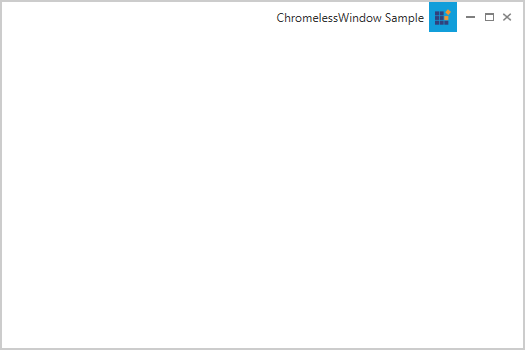
Title bar icon alignment
Use the IconAlignment property to align the title bar icon in the ChromelessWindow.
The following alignment options are available:
-
Left- Aligns the icon to the left side of the title bar. -
Right- Aligns the icon to the right side of the title bar.
<syncfusion:ChromelessWindow x:Class="Chromeless_Window_Sample.MainWindow"
        xmlns="http://schemas.microsoft.com/winfx/2006/xaml/presentation"
        xmlns:x="http://schemas.microsoft.com/winfx/2006/xaml"
        xmlns:d="http://schemas.microsoft.com/expression/blend/2008"
        xmlns:mc="http://schemas.openxmlformats.org/markup-compatibility/2006"
        xmlns:local="clr-namespace:Chromeless_Window_Sample"
        mc:Ignorable="d" xmlns:syncfusion="http://schemas.syncfusion.com/wpf"
        TitleTextAlignment="Center"
        Title="Chromeless Window Sample" IconAlignment="Left"
        Height="350" Width="550">
    <Grid>
    </Grid>
</syncfusion:ChromelessWindow>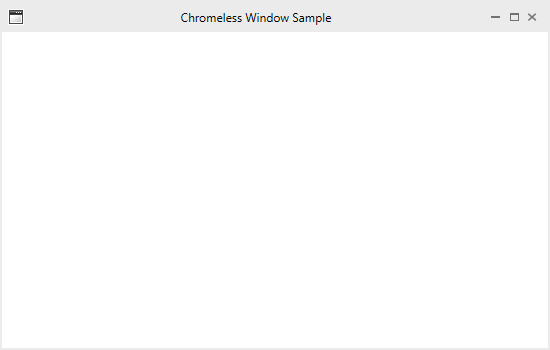
Customizing the border of Chromeless Window
You can change the border color of the ChromelessWindow by setting the ResizeBorderBrush property. For full border customization, see Customizing Border of the Chromeless Window.
<syncfusion:ChromelessWindow
    x:Class="WpfApplication2.MainWindow"
    xmlns="http://schemas.microsoft.com/winfx/2006/xaml/presentation"
    xmlns:x="http://schemas.microsoft.com/winfx/2006/xaml"
    xmlns:d="http://schemas.microsoft.com/expression/blend/2008"
    xmlns:syncfusion="http://schemas.syncfusion.com/wpf"
	ResizeBorderBrush="Red"
    Title="ChromelessWindow Sample" Height="350" Width="525">
	<Grid>
	</Grid>
</syncfusion:ChromelessWindow>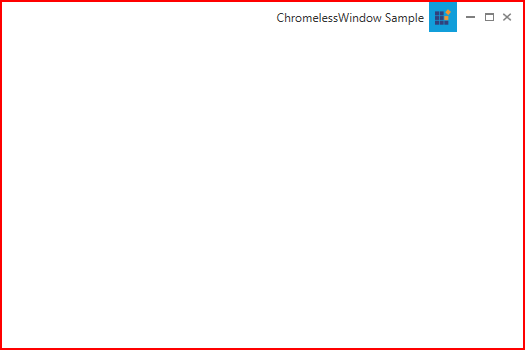
Theme
Chromeless Window supports various built-in themes. Refer to the following links to apply themes to the Chromeless Window: