Excel to PDF Conversion in ASP.NET Core using Excel Library
14 Aug 20267 minutes to read
Syncfusion® XlsIO is a .NET Core Excel library used to create, read, edit, and convert Excel documents programmatically, without Microsoft Excel or interop dependencies.
To quickly get started on converting an Excel document to a PDF in ASP.NET Core, please check out this video:
Steps to convert an Excel document to PDF in C#
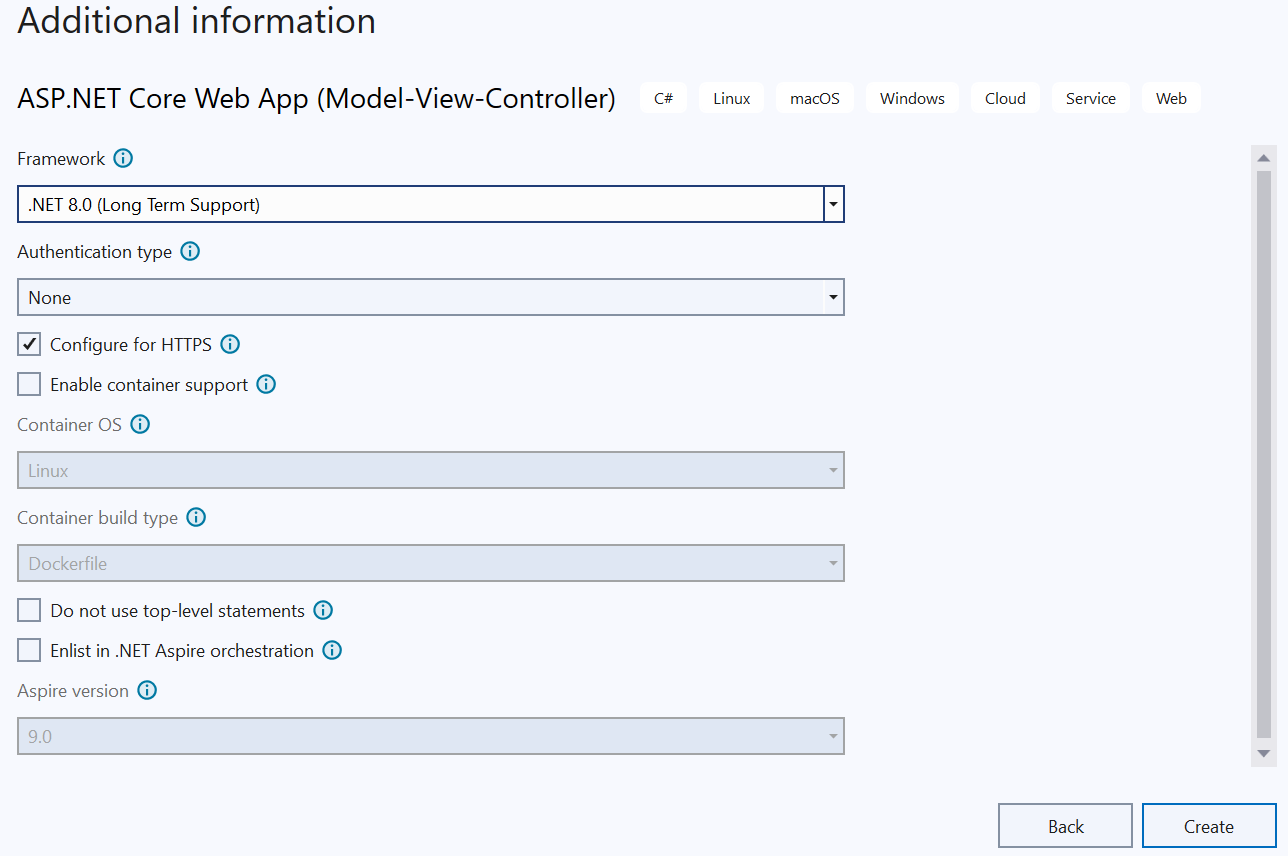
Step 1: Create a new ASP.NET Core Web Application (Model-View-Controller).

Step 2: Name the project.

Step 3: Select .NET Core as the framework (or .NET 6+ on newer Visual Studio versions), choose No Authentication to keep the sample minimal, and click Create.
Step 4: Install the Syncfusion.XlsIORenderer.Net.Core NuGet package as a reference to your project from NuGet.org. This package transitively pulls in the required Syncfusion.XlsIO.Net.Core and Syncfusion.Pdf.Net.Core packages.

Starting with v16.2.0.x, if you reference Syncfusion® assemblies from the trial setup or from the NuGet feed, you must also add the
Syncfusion.Licensingreference and register a license key in your project. Refer to this link to learn how to register the Syncfusion® license key in your applications. The simplest approach is to add a single call at application startup:Syncfusion.Licensing.SyncfusionLicenseProvider.RegisterLicense("YOUR_LICENSE_KEY");
Step 5: Add a new button to Index.cshtml as shown below.
@{Html.BeginForm("ConvertExceltoPDF", "Home", FormMethod.Get);
    {
        <div>
            <input type="submit" value="Convert Excel to PDF" style="width:150px;height:27px" />
        </div>
    }
    Html.EndForm();
}
Step 6: Add the following namespaces in HomeController.cs.
using Syncfusion.XlsIO;
using Syncfusion.XlsIORenderer;
using Syncfusion.Pdf;
Step 7: Add the following code in HomeController.cs to convert an Excel document to PDF. Place a Sample.xlsx file in the project’s wwwroot folder so the relative path resolves.
public IActionResult ConvertExceltoPDF()
{
  using (ExcelEngine excelEngine = new ExcelEngine())
  {
    IApplication application = excelEngine.Excel;
    application.DefaultVersion = ExcelVersion.Xlsx;

    //Open the existing Excel workbook from wwwroot
    IWorkbook workbook = application.Workbooks.Open(Path.Combine(_env.WebRootPath, "Sample.xlsx"));

    //Initialize the XlsIO renderer
    XlsIORenderer renderer = new XlsIORenderer();

    //Convert the Excel document to a PDF document
    PdfDocument pdfDocument = renderer.ConvertToPDF(workbook);

    //Create a MemoryStream to save the converted PDF
    MemoryStream pdfStream = new MemoryStream();

    //Save the converted PDF document to the MemoryStream
    pdfDocument.Save(pdfStream);
    pdfStream.Position = 0;

    //Close the workbook and the PDF document to release resources
    workbook.Close();
    pdfDocument.Close();

    //Return the PDF document for download in the browser
    return File(pdfStream, "application/pdf", "Sample.pdf");
  }
}
The
XlsIORenderer.ConvertToPDF(IWorkbook)overload used above is suitable for the XlsIO renderer; for additional control over page size, orientation, and font embedding, pass anExcelToPdfConverterSettingsinstance to theConvertToPDFoverload. See the Excel-to-PDF conversion settings section.
Step 1: Create a new ASP.NET Core Web Application (Model-View-Controller) using Create .NET Project option.
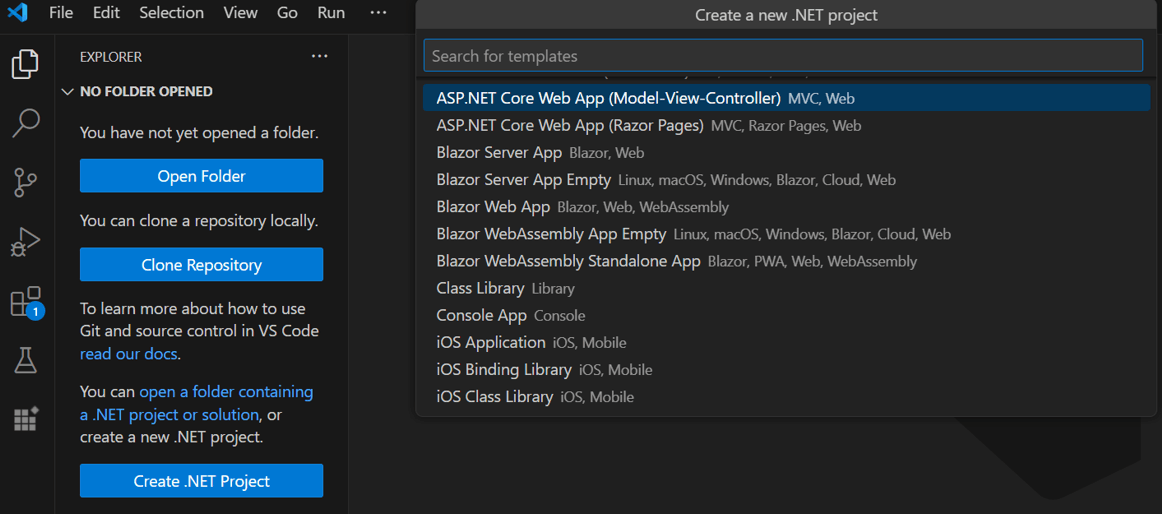
Step 2: Name the project and create the project.

Alternatively, create an ASP.NET Core Web application using the following command in the terminal (Ctrl+`).
dotnet new mvc -o Convert-Excel-to-PDF
Step 3: To convert an Excel document to PDF in ASP.NET Core, run the following command to install the Syncfusion.XlsIORenderer.Net.Core package.

cd Convert-Excel-to-PDF
dotnet add package Syncfusion.XlsIORenderer.Net.Core
Starting with v16.2.0.x, if you reference Syncfusion® assemblies from trial setup or from the NuGet feed, you also have to add “Syncfusion.Licensing” assembly reference and include a license key in your projects. Please refer to this link to know about registering Syncfusion® license key in your applications to use our components.
Step 4: Add a new button to Views/Home/Index.cshtml as shown below.
@{Html.BeginForm("ConvertExceltoPDF", "Home", FormMethod.Get);
    {
        <div>
            <input type="submit" value="Convert Excel to PDF" style="width:150px;height:27px" />
        </div>
    }
    Html.EndForm();
}
Step 5: Add the following namespaces in Controllers/HomeController.cs.
using Syncfusion.XlsIO;
using Syncfusion.XlsIORenderer;
using Syncfusion.Pdf;
Step 6: Add the following code in Controllers/HomeController.cs to convert an Excel document to PDF. Place a Sample.xlsx file in the project’s wwwroot folder so the relative path resolves.
public IActionResult ConvertExceltoPDF()
{
  using (ExcelEngine excelEngine = new ExcelEngine())
  {
    IApplication application = excelEngine.Excel;
    application.DefaultVersion = ExcelVersion.Xlsx;

    //Open the existing Excel workbook from wwwroot
    IWorkbook workbook = application.Workbooks.Open(Path.Combine(_env.WebRootPath, "Sample.xlsx"));

    //Initialize the XlsIO renderer
    XlsIORenderer renderer = new XlsIORenderer();

    //Convert the Excel document to a PDF document
    PdfDocument pdfDocument = renderer.ConvertToPDF(workbook);

    //Create a MemoryStream to save the converted PDF
    MemoryStream pdfStream = new MemoryStream();

    //Save the converted PDF document to the MemoryStream
    pdfDocument.Save(pdfStream);
    pdfStream.Position = 0;

    //Close the workbook and the PDF document to release resources
    workbook.Close();
    pdfDocument.Close();

    //Return the PDF document for download in the browser
    return File(pdfStream, "application/pdf", "Sample.pdf");
  }
}
A complete working example of how to convert an Excel document to PDF in ASP.NET Core is present on this GitHub page.
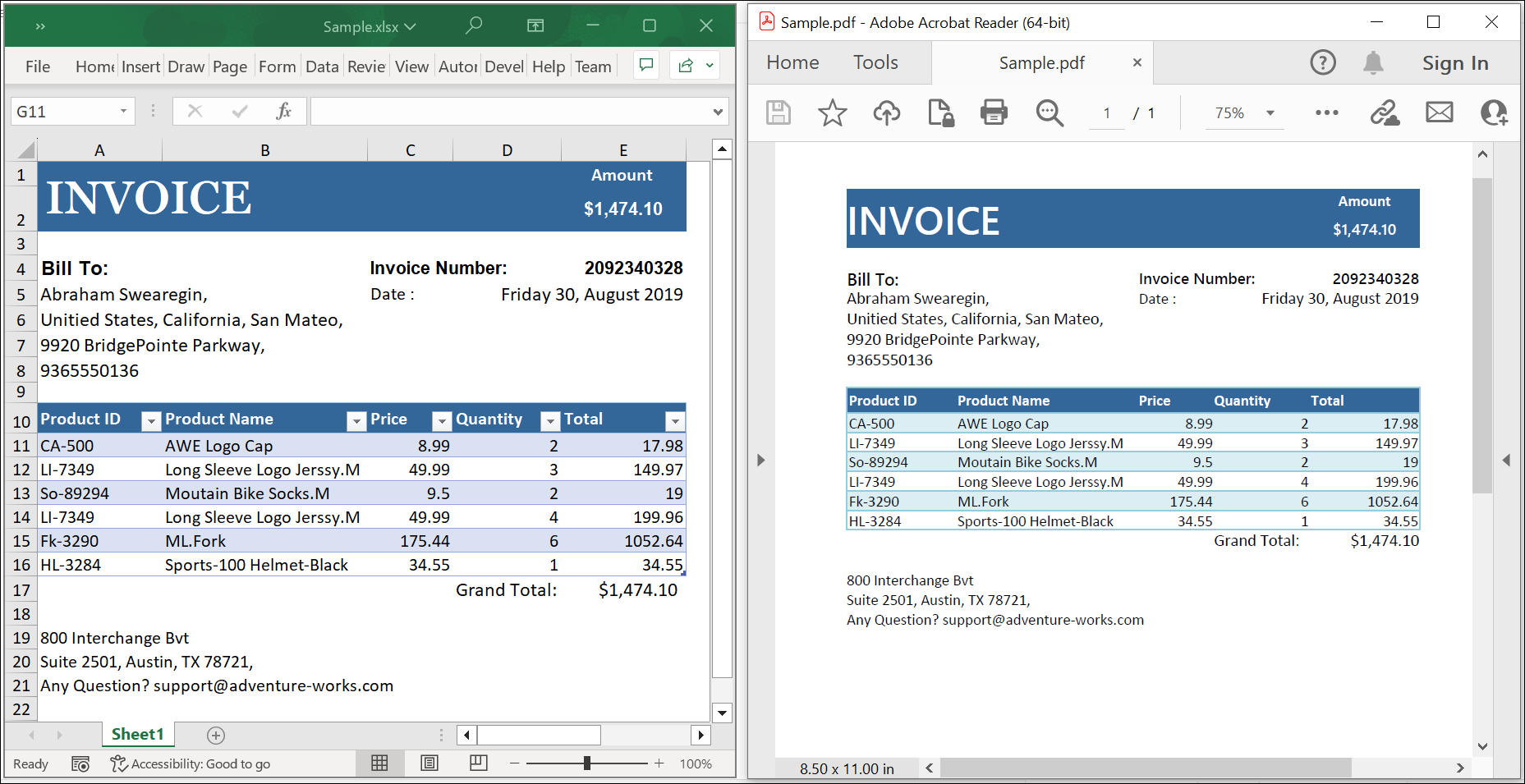
By executing the program, you will get the PDF document as shown below.
Click here to explore the rich set of Syncfusion® Excel library (XlsIO) features.
An online sample link to convert an Excel document to PDF in ASP.NET Core.