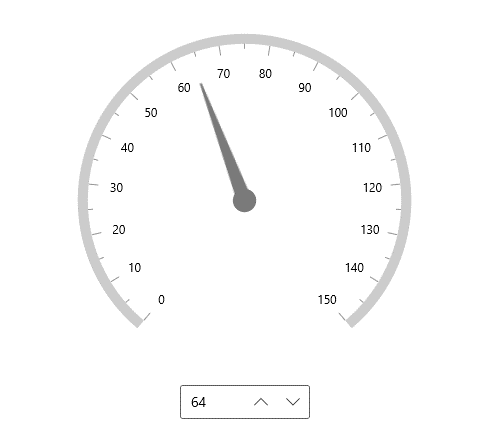
UpDown Button (SpinButton) Support in Syncfusion® WinUI NumberBox
18 Nov 20185 minutes to read
This section describes how to change the value in the NumberBox control using keys, mouse scrolling, and the up-down button.
To get started, refer to the Getting Started with WinUI NumberBox documentation.
Increase or decrease value
You can increment or decrement the value in the NumberBox control by using UpArrow, DownArrow, PageUp, and PageDown keys. You can change the increment or decrement value when Arrow keys are pressed using the SmallChange property, and for Page keys using the LargeChange property. By default, the value of the SmallChange property is 1, and the value of the LargeChange property is 10.
The value in the
NumberBoxcan also be changed by mouse scrolling. The mouse scrolling increases or decreases the value based on theSmallChangeproperty.
Keyboard and mouse input respect the
MinimumandMaximumbounds — the value will not increment or decrement beyond those limits.
<editors:SfNumberBox HorizontalAlignment="Center"
                     VerticalAlignment="Center"
                     SmallChange="5"
                     Value="10"
                     LargeChange="10" />
using Syncfusion.UI.Xaml.Editors;
SfNumberBox sfNumberBox = new SfNumberBox();
SfNumberBox.PlaceholderText = "Enter input here...";
sfNumberBox.HorizontalAlignment = HorizontalAlignment.Center;
sfNumberBox.VerticalAlignment = VerticalAlignment.Center;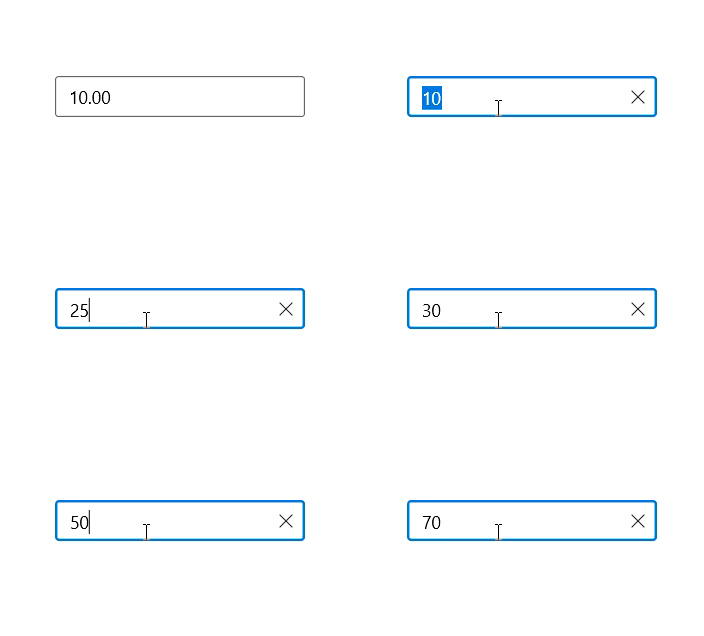
UpDown button placement
You can increase or decrease the value of the NumberBox control using the up-down button. By default, the value of the UpDownPlacementMode property is Hidden. You can change the up-down button position by setting the UpDownPlacementMode property to one of the following values:
- Hidden - The up-down buttons are not displayed.
- Inline - The up-down buttons are displayed next to the text box.
- Compact - The up-down buttons are displayed in a compact position.
When using the up-down button, the
NumberBoxcontrol value changes based on the value of theSmallChangeproperty.
<editors:SfNumberBox x:Name="sfNumberBox"
                     HorizontalAlignment="Center"
                     VerticalAlignment="Center"
                     UpDownPlacementMode="Inline" />
using Syncfusion.UI.Xaml.Editors;
SfNumberBox sfNumberBox = new SfNumberBox();
sfNumberBox.HorizontalAlignment = HorizontalAlignment.Center;
sfNumberBox.VerticalAlignment = VerticalAlignment.Center;
sfNumberBox.UpDownPlacementMode = NumberBoxUpDownPlacementMode.Inline;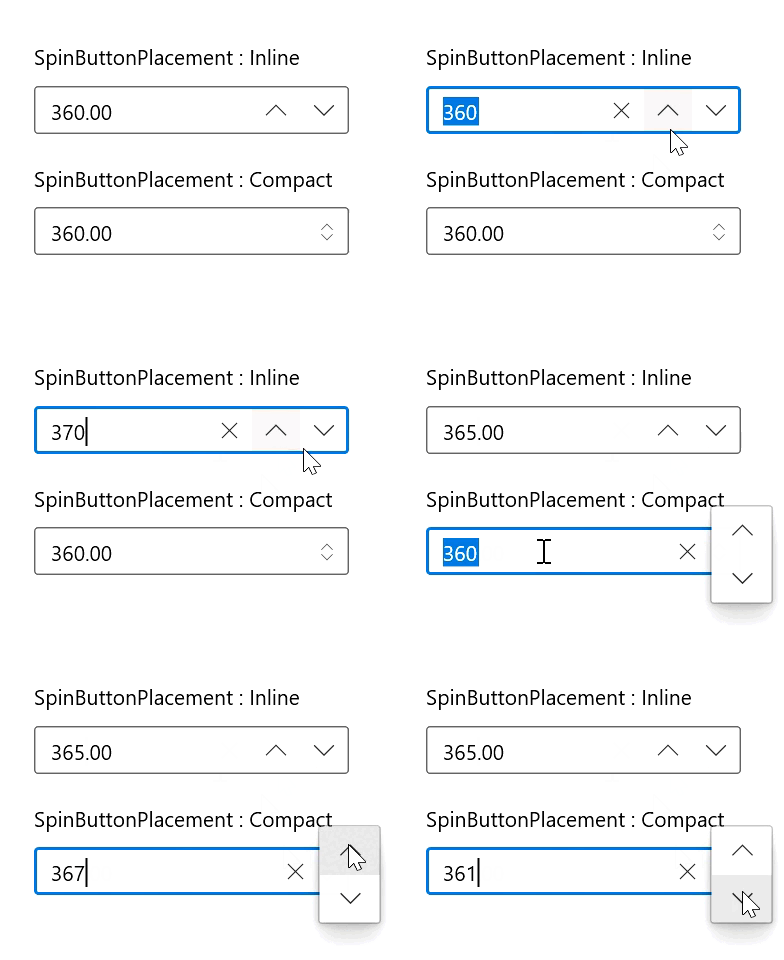
TextBox visibility
The TextBoxVisibility property can be used to show or hide the text box in the NumberBox control. When the text box visibility is collapsed, only the up-down buttons are visible. You can change the control values by using the up-down buttons.
This feature is enabled when the
UpDownPlacementModevalue is Inline.
The following example hides the text box:
<editors:SfNumberBox x:Name="numberBox"
                     Height="75"
                     Width="300"
                     TextBoxVisibility="Collapsed"
                     UpDownPlacementMode="Inline"/>
using Syncfusion.UI.Xaml.Editors;
SfNumberBox sfNumberBox = new SfNumberBox();
sfNumberBox.TextBoxVisibility = Visibility.Collapsed;
sfNumberBox.UpDownPlacementMode = NumberBoxUpDownPlacementMode.Inline;When TextBoxVisibility is Collapsed:
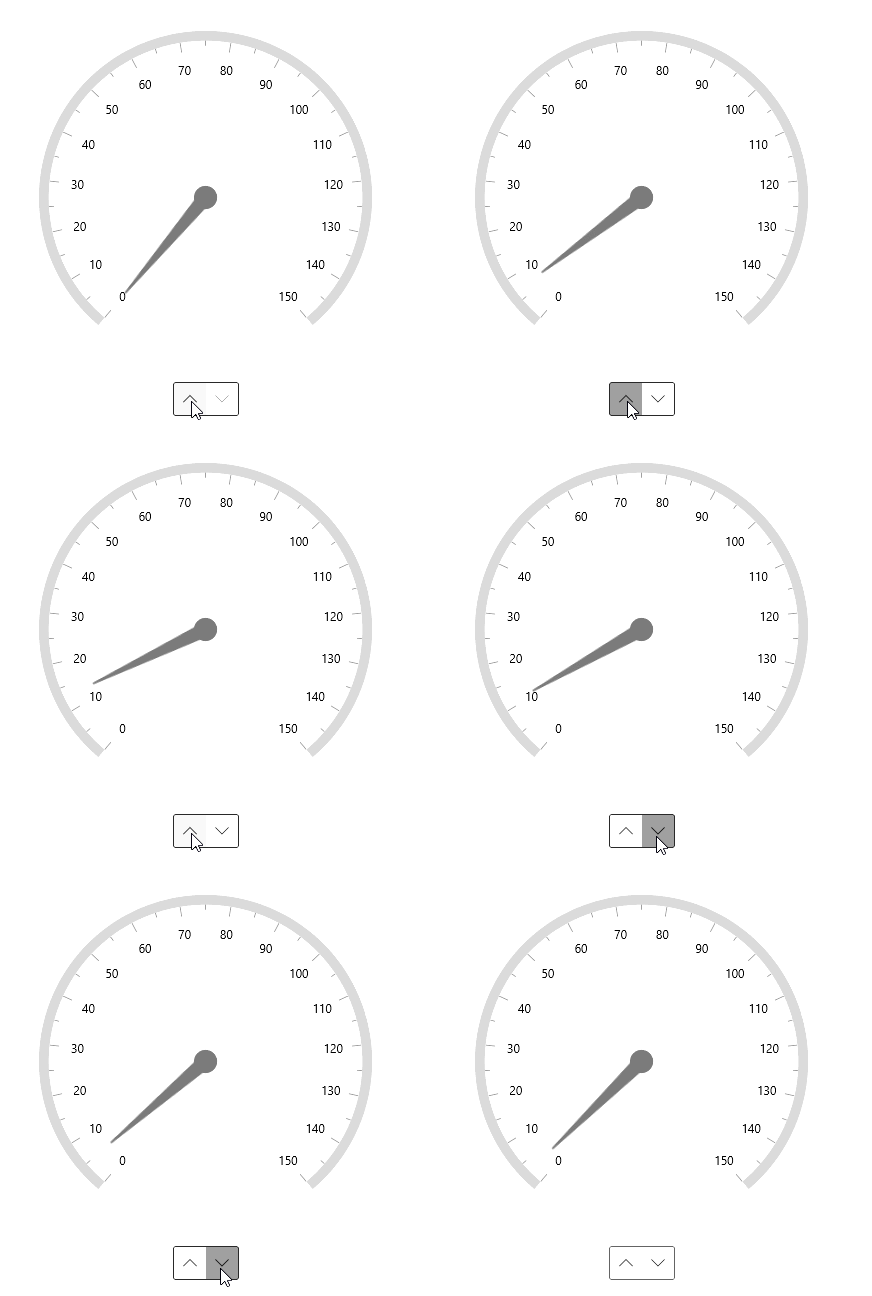
The following example shows the text box:
<editors:SfNumberBox x:Name="numberBox"
                     Height="75"
                     Width="300"
                     TextBoxVisibility="Visible"
                     UpDownPlacementMode="Inline"/>
using Syncfusion.UI.Xaml.Editors;
SfNumberBox sfNumberBox = new SfNumberBox();
sfNumberBox.Height = 75;
sfNumberBox.Width = 300;
sfNumberBox.TextBoxVisibility = Visibility.Visible;
sfNumberBox.UpDownPlacementMode = NumberBoxUpDownPlacementMode.Inline;When TextBoxVisibility is Visible: