Value Change Restriction in Syncfusion® WinUI NumberBox
18 Nov 20185 minutes to read
This section describes how to restrict the change in value of the NumberBox control using AllowNull, Minimum, and Maximum properties.
To get started, refer to the Getting Started documentation.
Restrict null value
By default, an empty or null value is set in the NumberBox control when the input is cleared, as the default value of the AllowNull property is true. When the AllowNull property value is false, the NumberBox control returns the value to 0 in the editor after clearing the input.
When the value of the
Minimumproperty is 15 and theAllowNullproperty is true, a null value is returned in theNumberBoxcontrol after clearing the input.
When the value of the
Minimumproperty is 15 and theAllowNullproperty is false, the minimum value is returned in theNumberBoxcontrol after clearing the input.
<editors:SfNumberBox HorizontalAlignment="Center"
                     VerticalAlignment="Center"
                     Value="10"
                     AllowNull="False" />
using Syncfusion.UI.Xaml.Editors;
SfNumberBox sfNumberBox = new SfNumberBox();
sfNumberBox.HorizontalAlignment = HorizontalAlignment.Center;
sfNumberBox.VerticalAlignment = VerticalAlignment.Center;
sfNumberBox.Value = 10;
sfNumberBox.AllowNull = false;The following example demonstrates the combined behavior of Minimum and AllowNull:
<editors:SfNumberBox HorizontalAlignment="Center"
                     VerticalAlignment="Center"
                     Value="20"
                     Minimum="15"
                     AllowNull="True" />
using Syncfusion.UI.Xaml.Editors;
SfNumberBox sfNumberBox = new SfNumberBox();
sfNumberBox.HorizontalAlignment = HorizontalAlignment.Center;
sfNumberBox.VerticalAlignment = VerticalAlignment.Center;
sfNumberBox.Value = 20;
sfNumberBox.Minimum = 15;
sfNumberBox.AllowNull = true;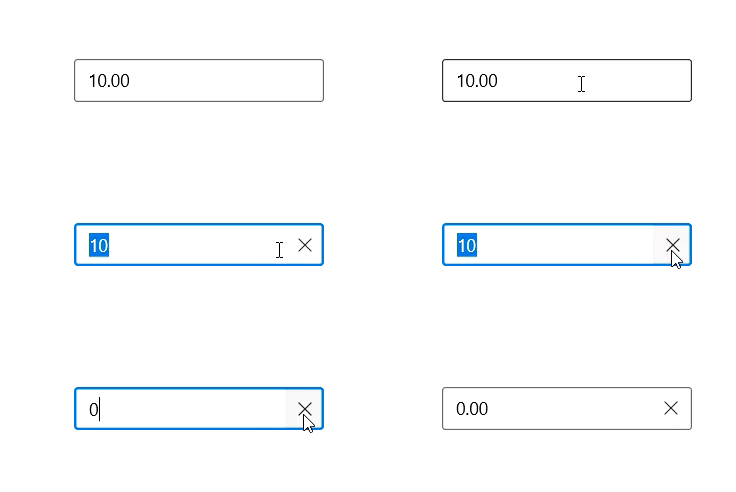
Restrict value within range
You can restrict users from entering input outside a minimum and maximum range in the NumberBox control using the Minimum and Maximum properties. The range is inclusive — a value equal to Minimum or Maximum is accepted. The default values of both Minimum and Maximum are null.
If
Minimumis greater thanMaximum, theMaximumvalue is treated as the effectiveMinimumfor validation.
<editors:SfNumberBox HorizontalAlignment="Center"
                     VerticalAlignment="Center"
                     Value="50"
                     Minimum="10"
                     Maximum="30" />
using Syncfusion.UI.Xaml.Editors;
SfNumberBox sfNumberBox = new SfNumberBox();
sfNumberBox.HorizontalAlignment = HorizontalAlignment.Center;
sfNumberBox.VerticalAlignment = VerticalAlignment.Center;
sfNumberBox.Minimum = 10;
sfNumberBox.Maximum = 30;
sfNumberBox.Value = 50;
Restrict text editing
You can prevent users from editing the numerical value in the editor by setting the IsEditable property to false. However, you can still change the value by using the up-down buttons, mouse scroll, keyboard arrows, and page keys. By default, the value of the IsEditable property is true. For more details on IsEditable, refer to Getting Started.
<editors:SfNumberBox x:Name="sfNumberBox"
                     HorizontalAlignment="Center"
                     VerticalAlignment="Center"
                     IsEditable="True" />
using Syncfusion.UI.Xaml.Editors;
SfNumberBox sfNumberBox = new SfNumberBox();
sfNumberBox.HorizontalAlignment = HorizontalAlignment.Center;
sfNumberBox.VerticalAlignment = VerticalAlignment.Center;
sfNumberBox.IsEditable = true;