Add Volume Annotations in Blazor PDF Viewer
17 Aug 202610 minutes to read
Volume measurement annotations allow users to draw cubic regions and calculate the volume visually.
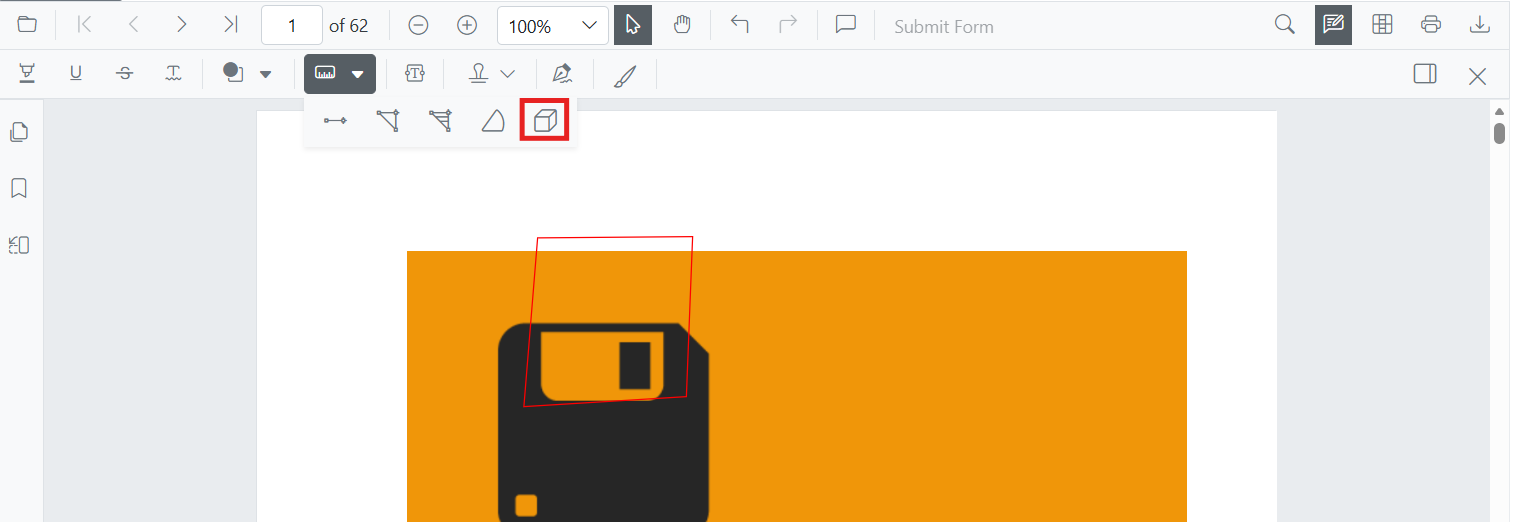
Enable Volume Annotation
The SfPdfViewer component supports Volume measurement annotations by default. To enable the annotation toolbar and measurement functionality, simply add the SfPdfViewer component to your Blazor page:
@using Syncfusion.Blazor.SfPdfViewer

<SfPdfViewer2 DocumentPath="@DocumentPath"
              EnableAnnotationToolbar="true"
              Width="100%"
              Height="100%">
</SfPdfViewer2>

@code {
    private string DocumentPath { get; set; } = "wwwroot/Data/PDF_Succinctly.pdf";
}
Add Volume Annotation
Draw Volume Annotation Using the Toolbar
- Click the Edit Annotation button in the SfPdfViewer toolbar. A secondary toolbar appears below it.
- Click the Measurement Annotation dropdown. A list of measurement annotation types appears.
- Select Volume to enter Volume measurement mode.
- Click on the page to place the first corner of the cube, then drag diagonally to set the base dimensions, and release the mouse to finalize the shape.

If Pan mode is active, selecting the Volume tool automatically switches the viewer into Volume drawing mode.
Enable Volume Annotation Mode
Programmatically switch the viewer into Volume mode using SetAnnotationModeAsync.
@using Syncfusion.Blazor.SfPdfViewer
@using Syncfusion.Blazor.Buttons

<SfButton OnClick="EnableVolumeMode">Enable Volume Mode</SfButton>
<SfPdfViewer2 DocumentPath="@DocumentPath"
              @ref="viewer"
              Width="100%"
              Height="100%">
</SfPdfViewer2>

@code {
    private SfPdfViewer2 viewer;
    private string DocumentPath { get; set; } = "wwwroot/Data/PDF_Succinctly.pdf";

    private async Task EnableVolumeMode(MouseEventArgs args)
    {
        await viewer.SetAnnotationModeAsync(AnnotationType.Volume);
    }
}
Exit Volume Annotation Mode
Switch back to the default mode by calling SetAnnotationModeAsync with annotation type None.
@using Syncfusion.Blazor.SfPdfViewer
@using Syncfusion.Blazor.Buttons

<SfButton OnClick="ExitVolumeMode">Exit Volume Mode</SfButton>
<SfPdfViewer2 DocumentPath="@DocumentPath"
              @ref="viewer"
              Width="100%"
              Height="100%">
</SfPdfViewer2>

@code {
    private SfPdfViewer2 viewer;
    private string DocumentPath { get; set; } = "wwwroot/Data/PDF_Succinctly.pdf";

    private async Task ExitVolumeMode(MouseEventArgs args)
    {
        await viewer.SetAnnotationModeAsync(AnnotationType.None);
    }
}
Add Volume Annotation Programmatically
Use the AddAnnotationAsync API to add a volume annotation.
@using Syncfusion.Blazor.SfPdfViewer
@using Syncfusion.Blazor.Buttons

<SfButton OnClick="AddVolume">Add Volume</SfButton>
<SfPdfViewer2 DocumentPath="@DocumentPath"
              @ref="viewer"
              Width="100%"
              Height="100%">
</SfPdfViewer2>

@code {
    private SfPdfViewer2 viewer;
    private string DocumentPath { get; set; } = "wwwroot/Data/PDF_Succinctly.pdf";

    private async Task AddVolume(MouseEventArgs args)
    {
        PdfAnnotation annotation = new PdfAnnotation
        {
            Type = AnnotationType.Volume,
            PageNumber = 1
        };
        annotation.Bound = new Bound
        {
            X = 200,
            Y = 810,
            Width = 90,
            Height = 90
        };
        await viewer.AddAnnotationAsync(annotation);
    }
}
Customize Volume Annotation Appearance
Configure default properties — fill color, stroke color, thickness, opacity, and measurement unit — using the VolumeSettings property.
VolumeSettingsis applied only at component initialization. To change defaults at runtime, update the bound object and re-render the viewer (for example, by toggling a render flag).
Available PdfViewerVolumeSettings members include FillColor, StrokeColor, Thickness, Opacity, MeasurementUnit, and LeaderLineStyle.
@using Syncfusion.Blazor.SfPdfViewer

<SfPdfViewer2 DocumentPath="@DocumentPath"
              @ref="viewer"
              Width="100%"
              Height="100%"
              VolumeSettings="@VolumeSettings">
</SfPdfViewer2>

@code {
    private SfPdfViewer2 viewer;
    private string DocumentPath { get; set; } = "wwwroot/Data/PDF_Succinctly.pdf";

    private PdfViewerVolumeSettings VolumeSettings = new PdfViewerVolumeSettings
    {
        FillColor = "yellow",
        StrokeColor = "orange",
        Opacity = 0.6,
        Thickness = 2
    };
}
Manage Volume Annotation
Move Volume Annotation
Drag inside the cube to reposition the entire annotation on the page.
Reshape Volume Annotation
Drag any edge handle to adjust the volume dimensions (length, width, or depth depending on which edge is selected).
Edit Volume Annotation
Edit Volume Annotation (UI)
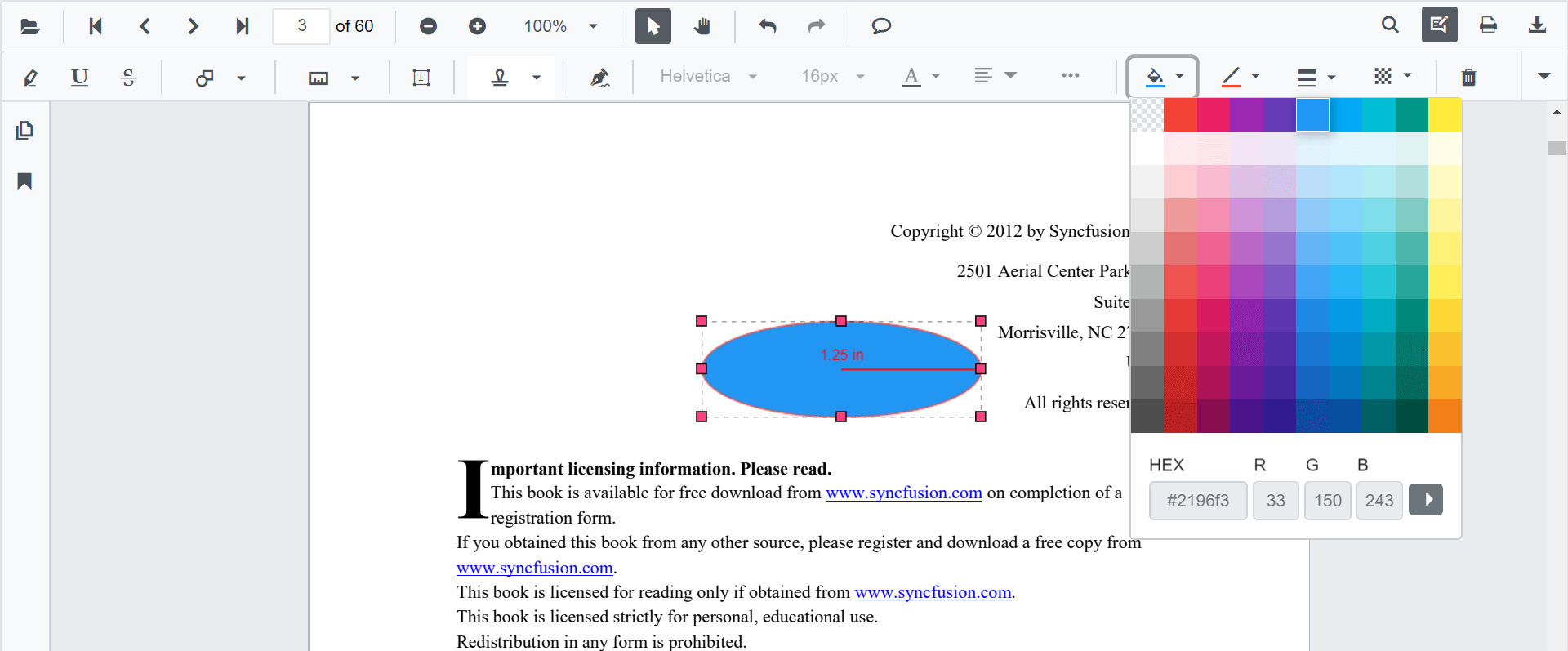
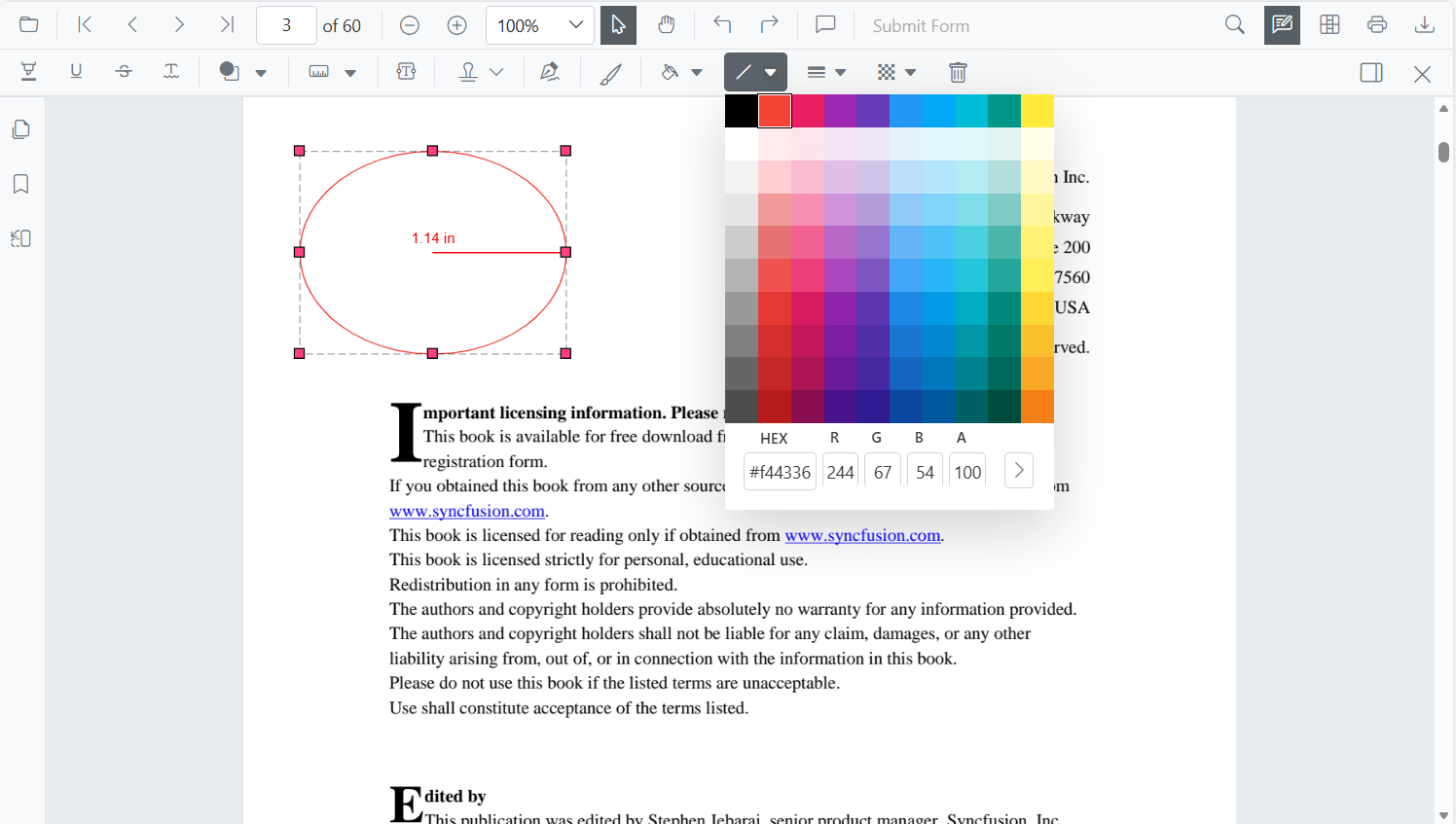
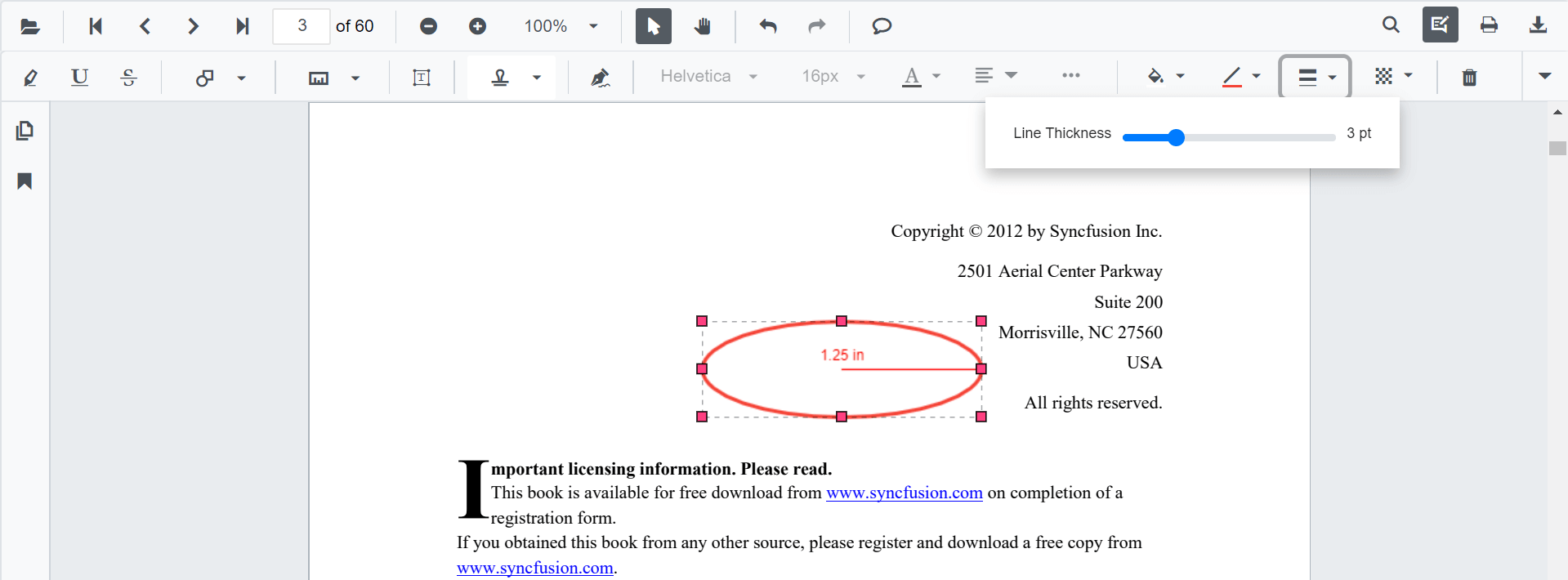
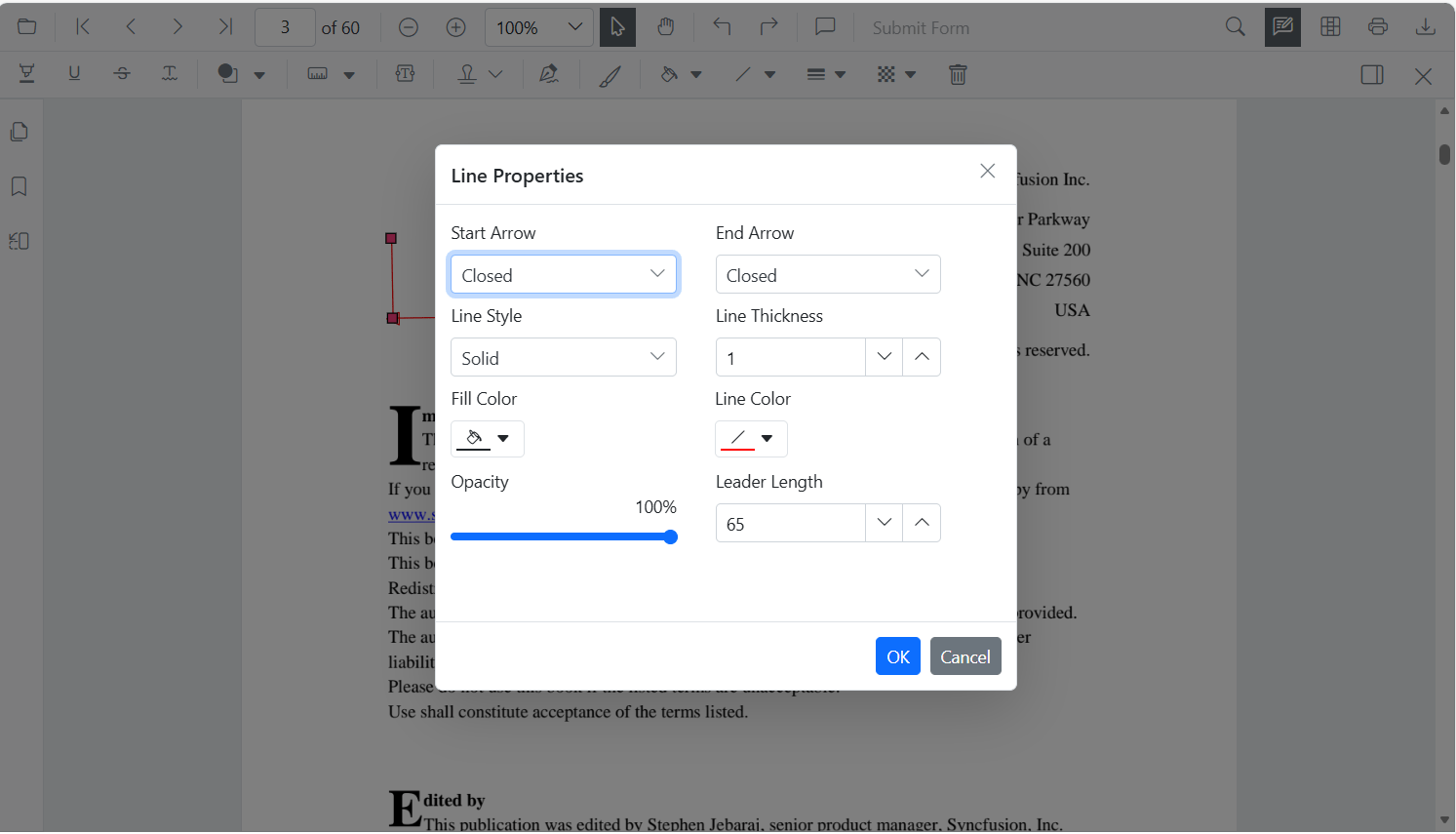
Select the Volume annotation first — the annotation toolbar appears below the main toolbar. Use it to change:
-
Fill Color: pick a new color with the Edit Color tool.
-
Stroke Color: change the line color with the Edit Stroke Color tool.
-
Thickness: adjust the line width with the Edit Thickness tool.
-
Opacity: change transparency with the Edit Opacity tool.

-
Line properties: change the leader style (line only, with arrows, or full dimension lines) with the Edit Property tool.
Edit Volume Annotation Programmatically
Update properties and call EditAnnotationAsync.
@using Syncfusion.Blazor.SfPdfViewer
@using Syncfusion.Blazor.Buttons

<SfButton OnClick="EditVolumeProgrammatically">Edit Volume</SfButton>
<SfPdfViewer2 DocumentPath="@DocumentPath"
              @ref="viewer"
              Width="100%"
              Height="100%">
</SfPdfViewer2>

@code {
    private SfPdfViewer2 viewer;
    private string DocumentPath { get; set; } = "wwwroot/Data/PDF_Succinctly.pdf";

    private async Task EditVolumeProgrammatically(MouseEventArgs args)
    {
        List<PdfAnnotation> annotationCollection = await viewer.GetAnnotationsAsync();

        if (annotationCollection == null || annotationCollection.Count == 0)
        {
            return;
        }

        PdfAnnotation target = annotationCollection
            .FirstOrDefault(a => a.Type == AnnotationType.Volume);

        if (target == null)
        {
            return;
        }

        target.StrokeColor = "#0000FF";
        target.Thickness = 2;
        target.Opacity = 0.8;

        await viewer.EditAnnotationAsync(target);
    }
}
Delete Volume Annotation
Delete a Volume annotation through the UI (right-click → Delete, click Delete on the annotation toolbar, or press the Delete key while the annotation is selected) or programmatically:
@code {
    private async Task DeleteFirstVolume()
    {
        List<PdfAnnotation> annotations = await viewer.GetAnnotationsAsync();
        PdfAnnotation target = annotations.FirstOrDefault(a => a.Type == AnnotationType.Volume);
        if (target != null)
        {
            await viewer.DeleteAnnotationAsync(target);
        }
    }
}
For additional deletion patterns, see Delete Annotation.
Set Properties While Adding an Individual Annotation
Pass per-annotation values directly when calling AddAnnotationAsync.
@using Syncfusion.Blazor.SfPdfViewer
@using Syncfusion.Blazor.Buttons

<SfButton OnClick="AddStyledVolume">Add Styled Volume</SfButton>
<SfPdfViewer2 DocumentPath="@DocumentPath"
              @ref="viewer"
              Width="100%"
              Height="100%">
</SfPdfViewer2>

@code {
    private SfPdfViewer2 viewer;
    private string DocumentPath { get; set; } = "wwwroot/Data/PDF_Succinctly.pdf";

    private async Task AddStyledVolume(MouseEventArgs args)
    {
        PdfAnnotation annotation = new PdfAnnotation
        {
            Type = AnnotationType.Volume,
            PageNumber = 1,
            FillColor = "yellow",
            Opacity = 0.6,
            StrokeColor = "orange",
            Thickness = 2
        };
        annotation.Bound = new Bound
        {
            X = 200,
            Y = 810,
            Width = 90,
            Height = 90
        };
        await viewer.AddAnnotationAsync(annotation);
    }
}
Scale Ratio and Units
The Scale Ratio controls how many page units equal one real-world unit. Open it from the context menu of any measurement annotation to recalibrate.

Supported CalibrationUnit values: Inch, Millimeter, Centimeter (Cm), Point, Pica, and Feet.

ScaleRatiomust be greater than0. The default value is1.
Set Default Scale Ratio During Initialization
Configure scale defaults using MeasurementSettings.
@using Syncfusion.Blazor.SfPdfViewer

<SfPdfViewer2 @ref="@viewer"
              DocumentPath="@DocumentPath"
              MeasurementSettings="@MeasurementSettings"
              Height="100%"
              Width="100%">
</SfPdfViewer2>

@code {
    private SfPdfViewer2 viewer;
    private string DocumentPath { get; set; } = "wwwroot/Data/PDF_Succinctly.pdf";

    private PdfViewerMeasurementSettings MeasurementSettings = new PdfViewerMeasurementSettings
    {
        ScaleRatio = 2,
        ConversionUnit = CalibrationUnit.Cm
    };
}
Handle Volume Annotation Events
Listen to annotation life-cycle events (Added, Modified, Selected, Removed) and use the AnnotationEventArgs payload — which includes the affected PdfAnnotation, the page number, and the action that triggered the event.
For the full list of events and their payloads, see Annotation Events.
Export and Import
Volume measurements are exported and imported with the rest of the annotations in JSON or XFDF format. You can programmatically export and import these annotations using the ExportAnnotationAsync and ImportAnnotationAsync methods.
For the full export/import workflow and additional formats, see Export and Import Annotations.