Import and Export annotations in Blazor PDF Viewer
14 Aug 20265 minutes to read
The SfPdfViewer component supports importing and exporting annotations as a JSON or XFDF object in the loaded PDF document. The following sections describe how to perform these actions through the built-in toolbar and programmatically using the API.
Displaying the comment panel
The import and export actions in the toolbar are reached through the comment panel. Use the following steps to display it before performing either action.
- Select Edit Annotation in the SfPdfViewer toolbar to enable the annotation tools.
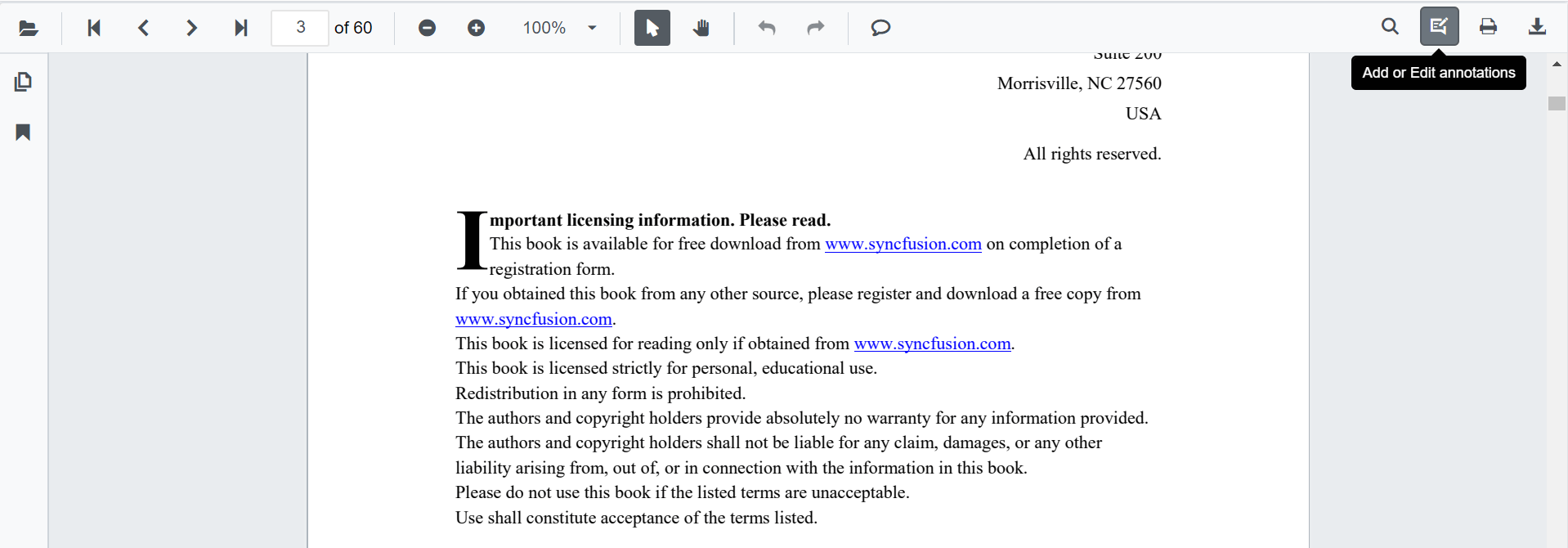
- The annotation toolbar appears.
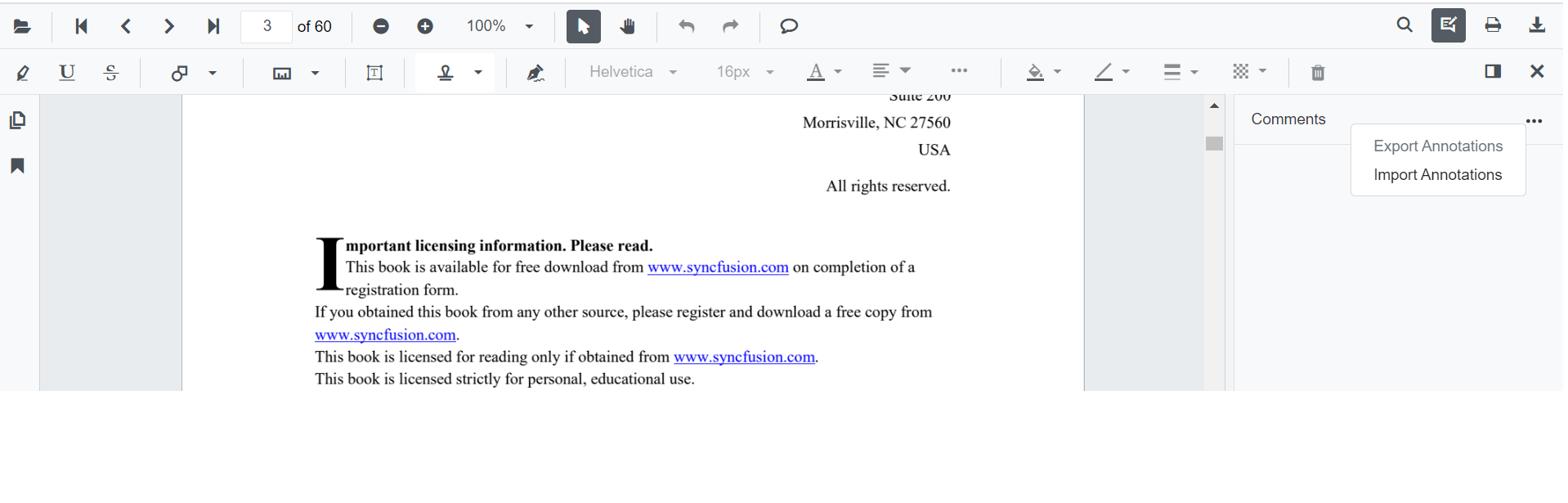
- Select Comment Panel in the annotation toolbar.

- The comment panel is displayed.
- Select More Options in the comment panel container.
Importing annotations from the PDF document
Follow the steps below to import annotations into the loaded PDF document through the toolbar.
- Display the comment panel as described in Displaying the comment panel.
- Choose Import Annotations.
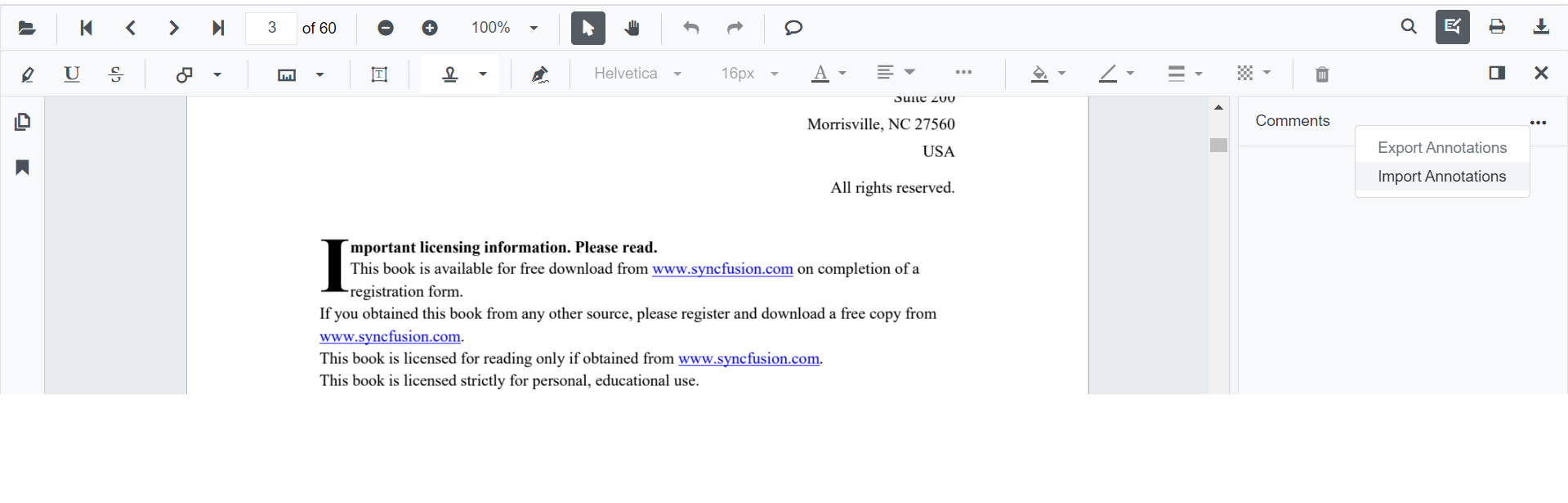
- A file explorer dialog opens. Choose the JSON or XFDF file to import into the loaded PDF document.
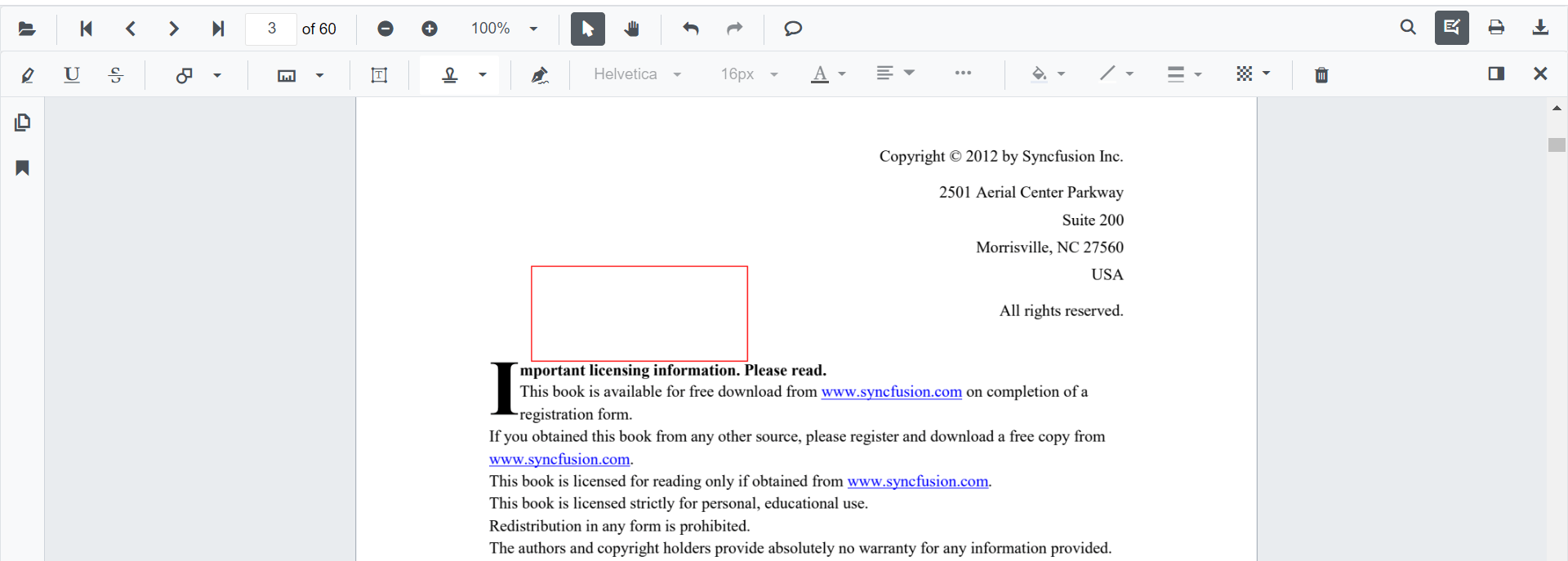
The file you import must follow the Syncfusion annotation JSON schema. Use Export Annotations to generate a reference file, or see the sample on GitHub.
Importing annotations using SfPdfViewer API
Annotations can be imported from a JSON or XFDF file, or from an in-memory stream, in code-behind using the ImportAnnotationAsync method. The following examples use the SfPdfViewer component.
The AnnotationDataFormat parameter accepts the following values:
- Json — annotations stored as a Syncfusion JSON document.
- Xfdf — annotations stored in the XFDF (XML Forms Data Format) used by PDF readers.
Importing from a file
@using Syncfusion.Blazor.Buttons
@using Syncfusion.Blazor.SfPdfViewer

<SfButton OnClick="@OnImportAnnotationsJson">Import Annotation JSON</SfButton>
<SfButton OnClick="@OnImportAnnotationsXfdf">Import Annotation XFDF</SfButton>
<SfPdfViewer2 Width="100%" Height="100%" DocumentPath="@DocumentPath" @ref="@Viewer" />

@code {
    private SfPdfViewer2 viewer;
    private string DocumentPath { get; set; } = "wwwroot/data/PDF_Succinctly.pdf";

    private async Task OnImportAnnotationsJson(MouseEventArgs args)
    {
        // The JSON file has been placed inside the data folder.
        byte[] bytes = System.IO.File.ReadAllBytes("wwwroot/data/PDF_Succinctly.json");
        await Viewer.ImportAnnotationAsync(new MemoryStream(bytes), AnnotationDataFormat.Json);
    }

    private async Task OnImportAnnotationsXfdf(MouseEventArgs args)
    {
        // The XFDF file has been placed inside the data folder.
        byte[] bytes = System.IO.File.ReadAllBytes("wwwroot/data/PDF_Succinctly.xfdf");
        await Viewer.ImportAnnotationAsync(new MemoryStream(bytes), AnnotationDataFormat.Xfdf);
    }
}Importing from an in-memory stream
<SfButton OnClick="@OnImportFromStream">Import Annotation from Stream</SfButton>

@code {
    private SfPdfViewer2 viewer;
    private Stream? annotationStream;

    private async Task OnImportFromStream(MouseEventArgs args)
    {
        if (annotationStream is null)
        {
            // The stream must be produced by ExportAnnotationAsStreamAsync first.
            return;
        }

        // Rewind the stream before passing it to the viewer.
        annotationStream.Position = 0;
        await Viewer.ImportAnnotationAsync(annotationStream, AnnotationDataFormat.Json);
    }
}
Ensure that the JSON or XFDF file used for importing annotations is available at the specified path. Paths can be case-sensitive in some hosting environments.
Exporting annotations from the PDF document
The SfPdfViewer component supports exporting annotations as a JSON or XFDF file using the annotation toolbar.
- Display the comment panel as described in Displaying the comment panel.
- Choose Export Annotations.

- The browser saves the exported file using the default download behavior (a
<documentName>.jsonor<documentName>.xfdffile).
The Export Annotations option is disabled when the loaded PDF document does not contain any annotations.
Exporting annotations using SfPdfViewer API
Annotations can be exported as a file or as a stream in code-behind using the ExportAnnotationAsync and ExportAnnotationAsStreamAsync methods. The supported AnnotationDataFormat values are Json and Xfdf.
Exporting to a file
ExportAnnotationAsync triggers a browser download of the annotation file.
@using Syncfusion.Blazor.SfPdfViewer
@using Syncfusion.Blazor.Buttons

<SfButton OnClick="@OnExportAnnotationsJson">Export Annotation as JSON</SfButton>
<SfButton OnClick="@OnExportAnnotationsXfdf">Export Annotation as XFDF</SfButton>
<SfPdfViewer2 Width="100%" Height="100%" DocumentPath="@DocumentPath" @ref="@Viewer" />

@code {
    private SfPdfViewer2 viewer;
    private string DocumentPath { get; set; } = "wwwroot/data/PDF_Succinctly.pdf";

    private async Task OnExportAnnotationsJson(MouseEventArgs args)
    {
        await Viewer.ExportAnnotationAsync(AnnotationDataFormat.Json);
    }

    private async Task OnExportAnnotationsXfdf(MouseEventArgs args)
    {
        await Viewer.ExportAnnotationAsync(AnnotationDataFormat.Xfdf);
    }
}
Exporting as a stream
ExportAnnotationAsStreamAsync returns a Stream that you can save, transmit, or re-import. The following example also shows how to consume the returned stream from Blazor using JS to trigger a download.
@using Syncfusion.Blazor.SfPdfViewer
@using Syncfusion.Blazor.Buttons
@inject IJSRuntime JS

<SfButton OnClick="@OnExportAsStreamJson">Export Stream as JSON</SfButton>
<SfButton OnClick="@OnExportAsStreamXfdf">Export Stream as XFDF</SfButton>
<SfPdfViewer2 Width="100%" Height="100%" DocumentPath="@DocumentPath" @ref="@Viewer" />

@code {
    private SfPdfViewer2 viewer;
    private string DocumentPath { get; set; } = "wwwroot/data/PDF_Succinctly.pdf";

    private async Task OnExportAsStreamJson(MouseEventArgs args)
    {
        using Stream stream = await Viewer.ExportAnnotationAsStreamAsync(AnnotationDataFormat.Json);
        using var streamRef = new DotNetStreamReference(stream);
        await JS.InvokeVoidAsync("saveAsFile", "annotations.json", streamRef);
    }

    private async Task OnExportAsStreamXfdf(MouseEventArgs args)
    {
        using Stream stream = await Viewer.ExportAnnotationAsStreamAsync(AnnotationDataFormat.Xfdf);
        using var streamRef = new DotNetStreamReference(stream);
        await JS.InvokeVoidAsync("saveAsFile", "annotations.xfdf", streamRef);
    }
}