Getting Started with Angular PDF Viewer
1 Sep 20268 minutes to read
Syncfusion® Angular PDF Viewer enables you to view, annotate, and interact with PDF documents in web applications. This section guides you through the steps to get started and create a PDF Viewer in an Angular application.
Prerequisites
- Node.js 24+ (LTS recommended).
- Syncfusion CLI.
Install the Syncfusion CLI
Install the Syncfusion CLI globally using the following command:
npm install -g @syncfusion/syncfusion-cliSet up the project using Syncfusion CLI
You can create an Angular application using the Syncfusion CLI. The CLI provides two ways to create a project:
Non-interactive mode
Non-interactive mode allows you to create a project directly using a single command with the required command-line arguments.
sf new syncfusion-angular-app --framework angular --template pdf-viewerIn this mode, the project configuration is passed directly in the command. The above command creates an Angular application configured with the Syncfusion® PDF Viewer component.
Interactive mode
Interactive mode guides you through the project creation process with step-by-step prompts.
sfWhen you run the sf command, the CLI prompts you to select the required project configuration. To create an Angular application with the Syncfusion® PDF Viewer component, select the following options:
√ Project name? ... syncfusion-angular-app
√ Choose Framework: » Angular
√ Choose Build Tool: » Webpack
√ Choose Language: » TypeScript
√ Choose Template: » PDF Viewer
√ Choose Theme: » Tailwind3
√ Choose Style Format: » CSS
√ Would you like to integrate the Syncfusion MCP Server (AI Assistant) into this project? ... no
√ Would you like to install Syncfusion Component Skills for AI-powered development? ... no
√ Install dependencies and start app now? ... no
The above selections generate an Angular application configured with the Syncfusion® PDF Viewer component. You can choose different values for language, theme, style format, MCP setup, and skills installation based on your project requirements.
The Syncfusion® CLI creates the project with a predefined template. After the project is generated, you can customize or replace the component code based on your application requirements.
Run the project
Once the project is created, navigate to the project directory and run the following commands in your terminal.
cd syncfusion-angular-app
npm install
npm start
The output will appear as follows:
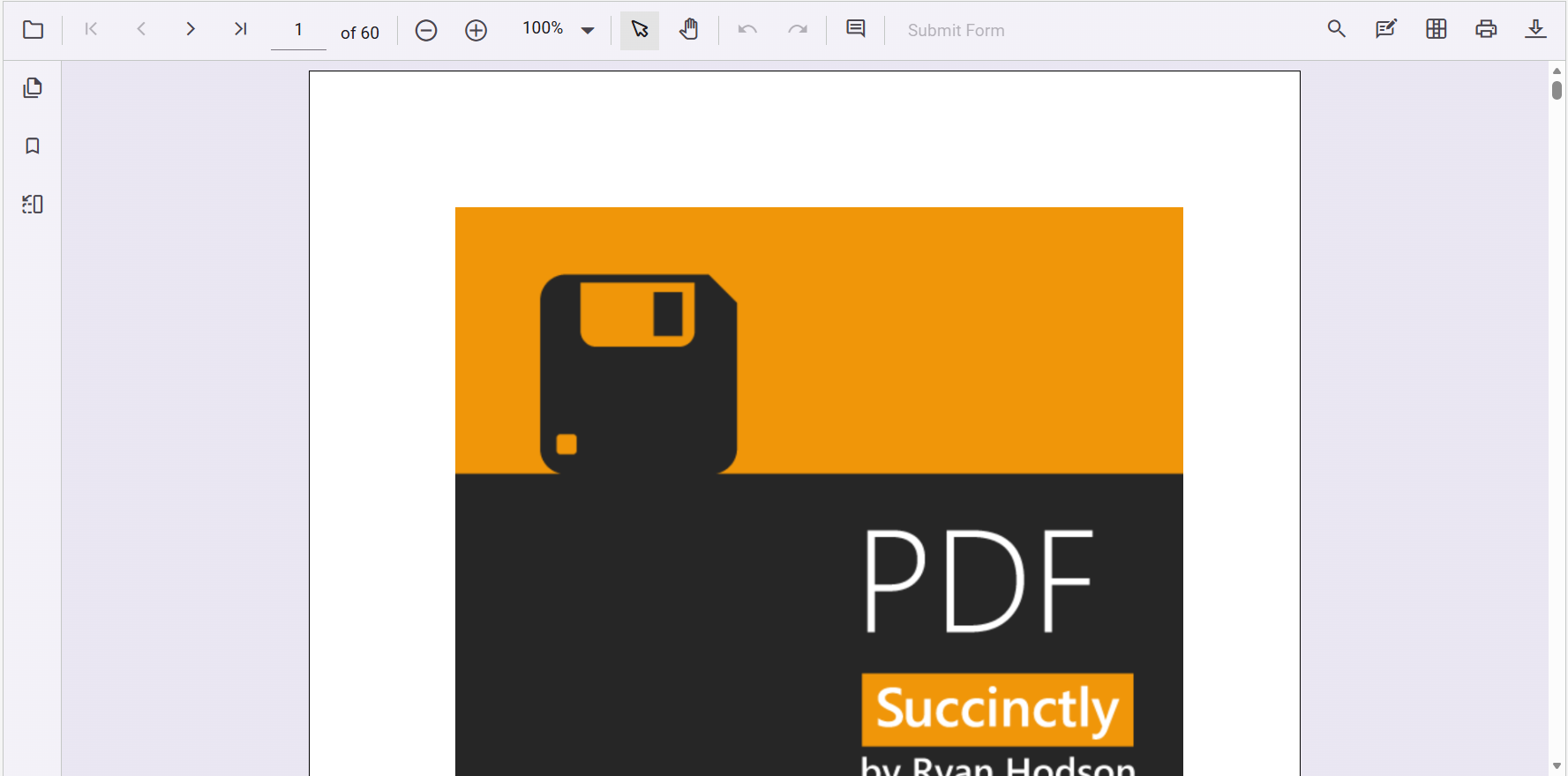
You can also explore the PDF Viewer interactively using the live sample below.
Prerequisites
System requirements for Syncfusion® Angular components
Create an Angular application
Use Angular CLI to create a new Angular application, as it provides a standardized project structure, built-in testing tools, and simplified deployment. Use an Angular CLI version that matches the target Angular version (e.g., Angular CLI 17 for Angular 17 projects).
Install Angular CLI globally using the following command:
npm install -g @angular/cliCreate a new Angular application using the following commands:
ng new pdfviewer-app
cd pdfviewer-app
When prompted during project creation, select the default options: CSS for stylesheet, No for SSR/SSG, and None for AI tools. The available prompts may vary by Angular CLI version; accept the default values for any prompts not listed here.
Install the Syncfusion® Angular PDF Viewer package
Install the Syncfusion Angular PDF Viewer package from npm:
npm install @syncfusion/ej2-angular-pdfviewer --saveImport the required CSS styles
Themes for PDF Viewer can be applied using CSS or SASS files from the npm theme packages, CDN, CRG, or Theme Studio. For more information, see the themes documentation.
This guide uses the Tailwind 3 theme as an example, sourced from the theme package. In this package, each component includes an index.css file that automatically loads all the required dependency styles. To install the Tailwind 3 theme package, use the following command:
npm install @syncfusion/ej2-tailwind3-themeAdd the required PDF Viewer theme style reference to the src/styles.css file:
@import '../node_modules/@syncfusion/ej2-tailwind3-theme/styles/pdfviewer/index.css';The
index.cssfile automatically includes all required dependent component styles for the PDF Viewer. You do not need to import individual dependency styles such as Base, Buttons, Dropdowns, Inputs, Navigations, Popups, SplitButtons, and Notifications separately.
Refer to the Themes topic to learn more about built-in themes and different ways to refer to themes in an Angular project.
Initialize the PDF Viewer
Add the PDF Viewer component to your application. The component requires the PdfViewerModule and its associated services (for full functionality).
Update src/app/app.ts as shown below:
import { Component } from '@angular/core';
import { PdfViewerModule, LinkAnnotationService, BookmarkViewService,
         MagnificationService, ThumbnailViewService, ToolbarService,
         NavigationService, TextSearchService, TextSelectionService,
         PrintService, FormDesignerService, FormFieldsService,
         AnnotationService, PageOrganizerService } from '@syncfusion/ej2-angular-pdfviewer';

@Component({
  selector: 'app-root',
  standalone: true,
  imports: [PdfViewerModule],
  providers: [ LinkAnnotationService, BookmarkViewService, MagnificationService,
               ThumbnailViewService, ToolbarService, NavigationService,
               TextSearchService, TextSelectionService, PrintService,
               FormDesignerService, FormFieldsService, AnnotationService, PageOrganizerService],
  template: `
    <ejs-pdfviewer
      id="pdfViewer"
      [documentPath]="documentPath"
      [resourceUrl]="resourcesUrl"
      style="height:640px; display:block">
    </ejs-pdfviewer>
  `
})
export class App {
  public documentPath: string =
    'https://cdn.syncfusion.com/content/pdf/pdf-succinctly.pdf';
  public resourcesUrl: string =
    'https://cdn.syncfusion.com/ej2/31.2.2/dist/ej2-pdfviewer-lib';
}
The
documentPathproperty sets the PDF file path to be loaded. You can provide a remote URL, Base64 string, or local file path (e.g.,'assets/sample.pdf') and theresourceUrlproperty specifies the PDFium library resources path required for PDF rendering. This example uses CDN-hosted resources. For local resources, refer to Load PDF Viewer with Local Resources.
Run the application
Run the following command to start the Angular application:
ng serve --openAfter the application starts, open http://localhost (the default dev server URL) in the browser. The Angular PDF Viewer is rendered in the browser with a toolbar and an interactive PDF area, as shown below.
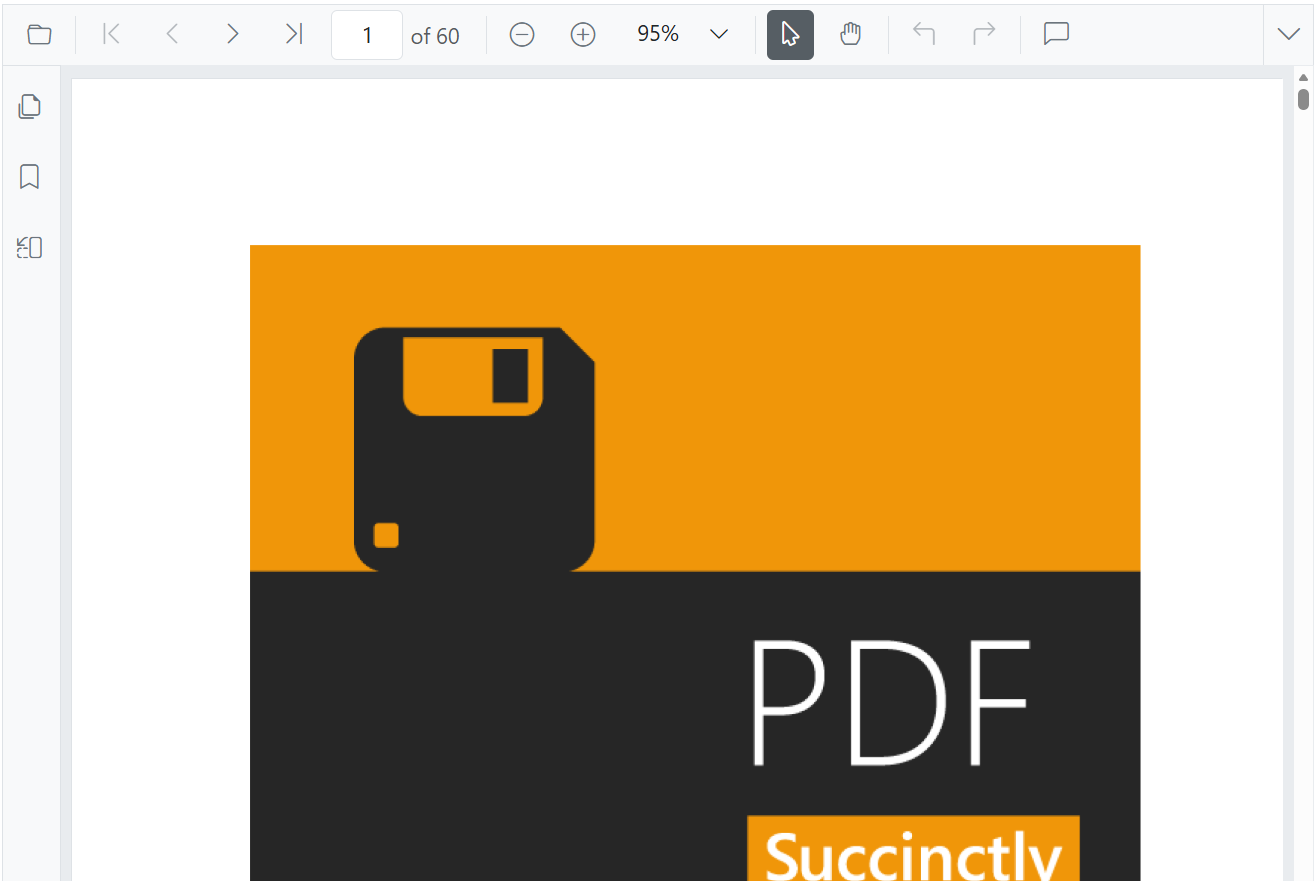
You can also explore the PDF Viewer interactively using the live sample below.
Video tutorial
To get started quickly with the Angular PDF Viewer, you can watch this video:
Angular version compatibility
For detailed compatibility information, refer to the Angular version support matrix.
Older versions
For older Angular versions, refer to the following guides:
- Create a Standalone PDF Viewer in Angular 17 and above with the –no-standalone flag.
- Create a Standalone PDF Viewer in Angular 17 and above without the –no-standalone flag.
- Create a Standalone PDF Viewer in Angular 12
Looking for the full Angular PDF Viewer component overview, features, pricing, and documentation? Visit the Angular PDF Viewer page.