Positioning a node in Vue Diagram control
Position
-
Position of a node is controlled by using its
offsetXandoffsetYproperties. By default, these offset properties represent the distance between the origin of the diagram’s page and node’s center point. -
You may expect this offset values to represent the distance between page origin and node’s top-left corner instead of center. The Pivot property helps to solve this problem. Default value of node’s
pivotpoint is (0.5, 0.5), that means center of the node. -
The size of the node can be controlled by using its
widthandheightproperties. -
Rotation of a node is controlled by using its
rotateAngleproperty.
The following table illustrates how pivot relates offset values with node boundaries.
| Pivot | Offset |
|---|---|
| (0.5,0.5) | offsetX and offsetY values are considered as the node’s center point. |
| (0,0) | offsetX and offsetY values are considered as the top-left corner of the node. |
| (1,1) | offsetX and offsetY values are considered as the bottom-right corner of the node. |
The following code illustrates how to change the pivot value.
<template>
    <div id="app">
        <ejs-diagram id="diagram" ref="diagram" :width='width' :height='height' :nodes='nodes'></ejs-diagram>
    </div>
</template>
<script setup>
import { onMounted, ref } from "vue";
import { DiagramComponent as EjsDiagram } from '@syncfusion/ej2-vue-diagrams';

const diagram = ref(null);
const nodes = [{
    // Position of the node
    offsetX: 250,
    offsetY: 250,
    // Size of the node
    width: 100,
    height: 100,
    pivot: {
        x: 0,
        y: 0
    },
    style: {
        fill: '#6BA5D7',
        strokeColor: 'white'
    },
    // Text(label) added to the node
}];

const width = "100%";
const height = "700px";

onMounted(function () {
    const diagramInstance = diagram.value.ej2Instances;
    diagramInstance.select([diagramInstance.nodes[0]]);
})
</script>
<style>
@import "../node_modules/@syncfusion/ej2-vue-diagrams/styles/tailwind3.css";
@import "../node_modules/@syncfusion/ej2-base/styles/tailwind3.css";
@import "../node_modules/@syncfusion/ej2-popups/styles/tailwind3.css";
@import "../node_modules/@syncfusion/ej2-splitbuttons/styles/tailwind3.css";
@import "../node_modules/@syncfusion/ej2-navigations/styles/tailwind3.css";
</style><template>
<div id="app">
<ejs-diagram id="diagram" ref="diagram" :width='width' :height='height' :nodes='nodes'></ejs-diagram>
</div>
</template>
<script>
import { DiagramComponent } from '@syncfusion/ej2-vue-diagrams';
let nodes = [{
// Position of the node
offsetX: 250,
offsetY: 250,
// Size of the node
width: 100,
height: 100,
pivot: {
x: 0,
y: 0
},
style: {
fill: '#6BA5D7',
strokeColor: 'white'
},
// Text(label) added to the node
}];
export default {
name: "App",
components: {
"ejs-diagram": DiagramComponent
},
data() {
return {
width: "100%",
height: "700px",
nodes: nodes,
}
},
mounted: function () {
const diagramInstance = this.$refs.diagram.ej2Instances;
diagramInstance.select([diagramInstance.nodes[0]]);
}
}
</script>
<style>
@import "../node_modules/@syncfusion/ej2-vue-diagrams/styles/tailwind3.css";
@import "../node_modules/@syncfusion/ej2-base/styles/tailwind3.css";
@import "../node_modules/@syncfusion/ej2-popups/styles/tailwind3.css";
@import "../node_modules/@syncfusion/ej2-splitbuttons/styles/tailwind3.css";
@import "../node_modules/@syncfusion/ej2-navigations/styles/tailwind3.css";
</style>Minimum and maximum size for nodes.
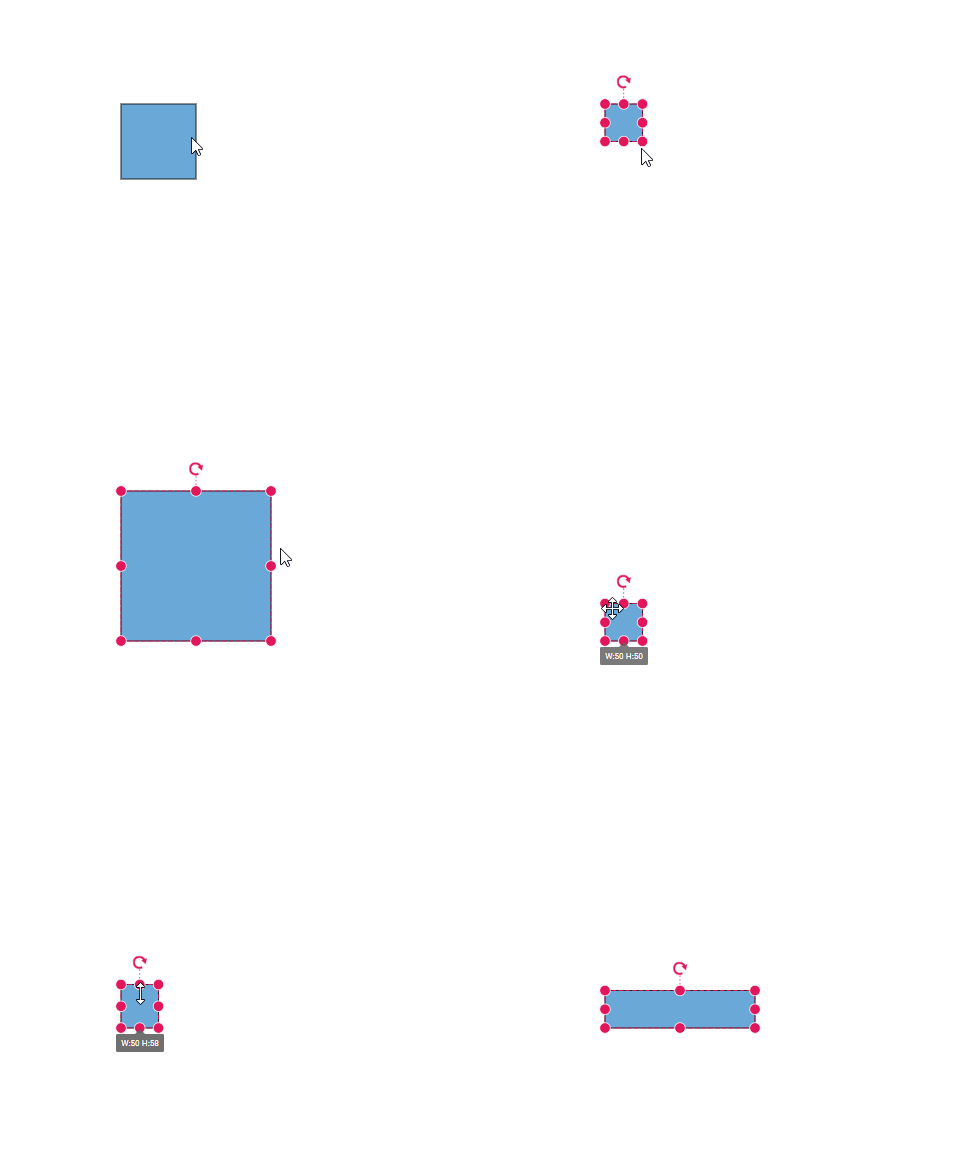
The minWidth and minHeight properties of node allows you to control the minimum size of the node while resizing. Similarly, the maxWidth and maxHeight properties of node allows you to control the maximum size of the node while resizing.
<template>
    <div id="app">
        <ejs-diagram id="diagram" ref="diagram" :width='width' :height='height' :nodes='nodes'></ejs-diagram>
    </div>
</template>
<script setup>
import { onMounted, ref } from "vue";
import { DiagramComponent as EjsDiagram } from '@syncfusion/ej2-vue-diagrams';

const diagram = ref(null);
const nodes = [
  {
    // Position of the node
    offsetX: 250,
    offsetY: 250,
    // Size of the node
    width: 100,
    height: 100,
    visible: true,
    minWidth: 50,
    minHeight: 50,
    maxWidth: 200,
    maxHeight: 200,
    style: { fill: '#6AA8D7' },
    // Text(label) added to the node
  },
];

const width = "100%";
const height = "700px";

onMounted(function () {
    const diagramInstance = diagram.value.ej2Instances;
    diagramInstance.select([diagramInstance.nodes[0]]);
})
</script>
<style>
@import "../node_modules/@syncfusion/ej2-vue-diagrams/styles/tailwind3.css";
@import "../node_modules/@syncfusion/ej2-base/styles/tailwind3.css";
@import "../node_modules/@syncfusion/ej2-popups/styles/tailwind3.css";
@import "../node_modules/@syncfusion/ej2-splitbuttons/styles/tailwind3.css";
@import "../node_modules/@syncfusion/ej2-navigations/styles/tailwind3.css";
</style><template>
<div id="app">
<ejs-diagram id="diagram" ref="diagram" :width='width' :height='height' :nodes='nodes'></ejs-diagram>
</div>
</template>
<script>
import { DiagramComponent } from '@syncfusion/ej2-vue-diagrams';
let nodes = [
{
// Position of the node
offsetX: 250,
offsetY: 250,
// Size of the node
width: 100,
height: 100,
visible: true,
minWidth: 50,
minHeight: 50,
maxWidth: 200,
maxHeight: 200,
style: { fill: '#6AA8D7' },
// Text(label) added to the node
},
];
export default {
name: "App",
components: {
"ejs-diagram": DiagramComponent
},
data() {
return {
width: "100%",
height: "700px",
nodes: nodes,
}
},
mounted: function () {
const diagramInstance = this.$refs.diagram.ej2Instances;
diagramInstance.select([diagramInstance.nodes[0]]);
}
}
</script>
<style>
@import "../node_modules/@syncfusion/ej2-vue-diagrams/styles/tailwind3.css";
@import "../node_modules/@syncfusion/ej2-base/styles/tailwind3.css";
@import "../node_modules/@syncfusion/ej2-popups/styles/tailwind3.css";
@import "../node_modules/@syncfusion/ej2-splitbuttons/styles/tailwind3.css";
@import "../node_modules/@syncfusion/ej2-navigations/styles/tailwind3.css";
</style>