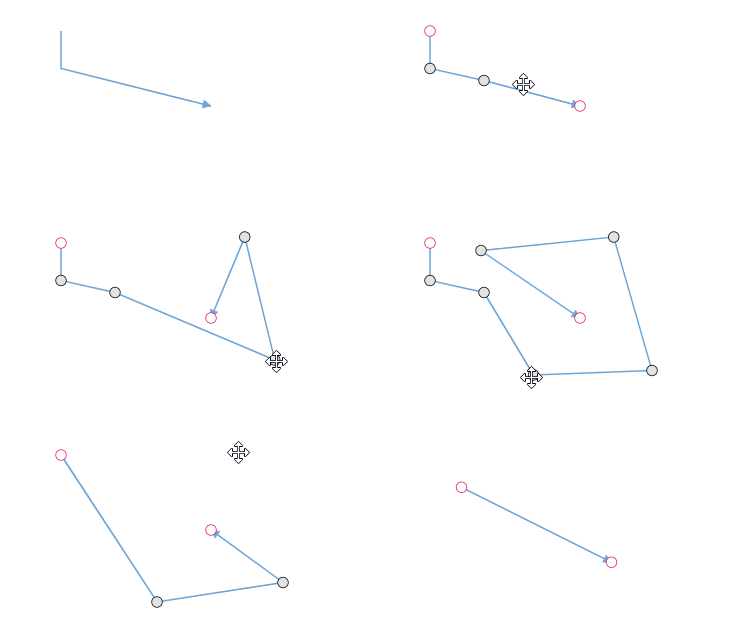
Straight
To create a straight line, specify the type of the segment as straight and add a straight segment to segments collection and need to specify type for the connector. The following code example illustrates how to create a default straight segment.
var connectors = {
    // Unique name for the connector
    id: "connector1",
    segments: [{
        type: 'Straight'
    }],
    style: {
        strokeColor: '#6BA5D7',
        fill: '#6BA5D7',
        strokeWidth: 2
    },
    targetDecorator: {
        style: {
            fill: '#6BA5D7',
            strokeColor: '#6BA5D7'
        }
    },
    sourcePoint: {
        x: 100,
        y: 100
    },
    targetPoint: {
        x: 200,
        y: 200
    }
}

var diagram = new ej.diagrams.Diagram({
    width: '100%',
    height: '600px',
    connectors: [connectors]
}, '#element');
<!DOCTYPE html><html lang="en"><head>
<title>EJ2 Diagram</title>
<meta charset="utf-8">
<meta name="viewport" content="width=device-width, initial-scale=1.0">
<meta name="description" content="Typescript UI Controls">
<meta name="author" content="Syncfusion">
<link href="index.css" rel="stylesheet">
<link href="https://cdn.syncfusion.com/ej2/33.2.3/ej2-base/styles/tailwind3.css" rel="stylesheet">
<link href="https://cdn.syncfusion.com/ej2/33.2.3/ej2-buttons/styles/tailwind3.css" rel="stylesheet">
<link href="https://cdn.syncfusion.com/ej2/33.2.3/ej2-popups/styles/tailwind3.css" rel="stylesheet">
<link href="https://cdn.syncfusion.com/ej2/33.2.3/ej2-splitbuttons/styles/tailwind3.css" rel="stylesheet">
<link href="https://cdn.syncfusion.com/ej2/33.2.3/ej2-diagrams/styles/tailwind3.css" rel="stylesheet">
<link href="https://cdn.syncfusion.com/ej2/33.2.3/ej2-navigations/styles/tailwind3.css" rel="stylesheet">
<script src="https://cdn.syncfusion.com/ej2/33.2.3/dist/ej2.min.js" type="text/javascript"></script>
</head>
<body>
<div id="container">
<div id="element"></div>
</div>
<script>
var ele = document.getElementById('container');
if(ele) {
ele.style.visibility = "visible";
}
</script>
<script src="index.js" type="text/javascript"></script>
</body></html>The point property of straight segment allows you to define the end point of it. The following code example illustrates how to define the end point of a straight segment.
var connectors = {
    // Unique name for the connector
    id: "connector1",
    type: 'Straight',
    segments: [{
        type: 'Straight',
        point: {
            x: 100,
            y: 150
        }
    }],
    style: {
        strokeColor: '#6BA5D7',
        fill: '#6BA5D7',
        strokeWidth: 2
    },
    targetDecorator: {
        style: {
            fill: '#6BA5D7',
            strokeColor: '#6BA5D7'
        }
    },
    sourcePoint: {
        x: 100,
        y: 100
    },
    targetPoint: {
        x: 300,
        y: 200
    }
}

var diagram = new ej.diagrams.Diagram({
    width: '100%',
    height: '600px',
    connectors: [connectors]
}, '#element');
<!DOCTYPE html><html lang="en"><head>
<title>EJ2 Diagram</title>
<meta charset="utf-8">
<meta name="viewport" content="width=device-width, initial-scale=1.0">
<meta name="description" content="Typescript UI Controls">
<meta name="author" content="Syncfusion">
<link href="index.css" rel="stylesheet">
<link href="https://cdn.syncfusion.com/ej2/33.2.3/ej2-base/styles/tailwind3.css" rel="stylesheet">
<link href="https://cdn.syncfusion.com/ej2/33.2.3/ej2-buttons/styles/tailwind3.css" rel="stylesheet">
<link href="https://cdn.syncfusion.com/ej2/33.2.3/ej2-popups/styles/tailwind3.css" rel="stylesheet">
<link href="https://cdn.syncfusion.com/ej2/33.2.3/ej2-splitbuttons/styles/tailwind3.css" rel="stylesheet">
<link href="https://cdn.syncfusion.com/ej2/33.2.3/ej2-diagrams/styles/tailwind3.css" rel="stylesheet">
<link href="https://cdn.syncfusion.com/ej2/33.2.3/ej2-navigations/styles/tailwind3.css" rel="stylesheet">
<script src="https://cdn.syncfusion.com/ej2/33.2.3/dist/ej2.min.js" type="text/javascript"></script>
</head>
<body>
<div id="container">
<div id="element"></div>
</div>
<script>
var ele = document.getElementById('container');
if(ele) {
ele.style.visibility = "visible";
}
</script>
<script src="index.js" type="text/javascript"></script>
</body></html>Straight segment editing
End point of each straight segment is represented by a thumb that enables to edit the segment.
Any number of new segments can be inserted into a straight line by clicking when Shift and Ctrl keys are pressed (Ctrl+Shift+Click).
Straight segments can be removed by clicking the segment end point when Ctrl and Shift keys are pressed (Ctrl+Shift+Click). You can also add/remove segments by using the editSegment method of diagram.
The following example shows how to add segments at runtime for the straight connector.
ej.diagrams.Diagram.Inject(ej.diagrams.ConnectorEditing);
var connectors = {
  // Unique name for the connector
  id: 'connector1',
  type: 'Straight',
  constraints:
    ej.diagrams.ConnectorConstraints.Default |
    ej.diagrams.ConnectorConstraints.DragSegmentThumb,
  segments: [
    {
      type: 'Straight',
      point: {
        x: 100,
        y: 150,
      },
    },
  ],
  style: {
    strokeColor: '#6BA5D7',
    fill: '#6BA5D7',
    strokeWidth: 2,
  },
  targetDecorator: {
    style: {
      fill: '#6BA5D7',
      strokeColor: '#6BA5D7',
    },
  },
  sourcePoint: { x: 150, y: 100 },
  targetPoint: { x: 340, y: 200 },
};

var diagram = new ej.diagrams.Diagram(
  {
    width: '100%',
    height: '600px',
    connectors: [connectors],
  },
  '#element'
);

diagram.select(diagram.connectors);

document.getElementById('addOrRemoveSegment').onclick = () => {
  let options = {};
  options.SegmentEditing = 'Toggle';
  options.point = { x: 220, y: 150 };
  options.connector = diagram.connectors[0];
  options.hitPadding = diagram.connectors[0].hitPadding;

  diagram.editSegment(options);
};
<!DOCTYPE html><html lang="en"><head>
<title>EJ2 Diagram</title>
<meta charset="utf-8">
<meta name="viewport" content="width=device-width, initial-scale=1.0">
<meta name="description" content="Typescript UI Controls">
<meta name="author" content="Syncfusion">
<link href="index.css" rel="stylesheet">
<link href="https://cdn.syncfusion.com/ej2/33.2.3/ej2-base/styles/tailwind3.css" rel="stylesheet">
<link href="https://cdn.syncfusion.com/ej2/33.2.3/ej2-buttons/styles/tailwind3.css" rel="stylesheet">
<link href="https://cdn.syncfusion.com/ej2/33.2.3/ej2-popups/styles/tailwind3.css" rel="stylesheet">
<link href="https://cdn.syncfusion.com/ej2/33.2.3/ej2-splitbuttons/styles/tailwind3.css" rel="stylesheet">
<link href="https://cdn.syncfusion.com/ej2/33.2.3/ej2-diagrams/styles/tailwind3.css" rel="stylesheet">
<link href="https://cdn.syncfusion.com/ej2/33.2.3/ej2-navigations/styles/tailwind3.css" rel="stylesheet">
<script src="https://cdn.syncfusion.com/ej2/33.2.3/dist/ej2.min.js" type="text/javascript"></script>
</head>
<body>
<div id="container">
<input type="button" value="addOrRemoveSegment" id="addOrRemoveSegment" />
<div id="element"></div>
</div>
<script>
var ele = document.getElementById('container');
if(ele) {
ele.style.visibility = "visible";
}
</script>
<script src="index.js" type="text/javascript"></script>
</body></html>