Getting Started with WinForms Sparkline
18 Nov 20183 minutes to read
This section provides the details that you need to know about getting started with our Sparkline control.
Assembly deployment
Refer to the control dependencies section to get the list of assemblies or the NuGet package that needs to be added as reference to use the control in any application.
Find more details on how to install the NuGet packages in the Windows Forms application in the following link:
Adding WinForms Sparkline to the form
To add the WinForms Sparkline to your form, follow these steps:
-
Open your form in the designer. Add the Syncfusion® controls to your Visual Studio toolbox if you have not done it already (the installation would have automatically done this unless you selected not to complete the toolbox integration during installation).
-
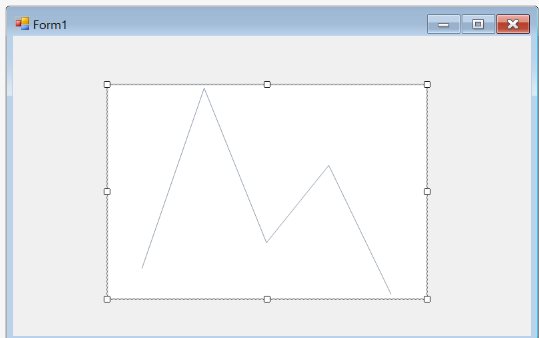
Drag the sparkline control from the toolbox and drop it into the form. The default appearance of the WinForms Sparkline will be rendered.
Customizing WinForms Sparkline appearance
The appearance of the WinForms Sparkline can be customized by using the LineStyle property.
this.sparkLine1.LineStyle.LineColor = System.Drawing.Color.Maroon;Me.sparkLine1.LineStyle.LineColor = System.Drawing.Color.Maroon
Adding marker to WinForms Sparkline
The markers are visual indicators; they are used to represent the location of data points in the WinForms Sparkline graph by using the Markers property. This customization is applicable for all WinForms Sparklines. To enable the markers, set the ShowMarker property to true.
this.sparkLine1.Markers.ShowMarker = true;Me.sparkLine1.Markers.ShowMarker = true
Highlighting high/low values
The marker feature supports HighPoint, LowPoint, StartPoint, EndPoint, and NegativePoint of WinForms Sparkline. The colors for these points can be customized by using the HighPointColor, LowPointColor, StartPointColor, EndPointColor, and NegativePointColor properties.
this.sparkLine1.Markers.ShowHighPoint = true;

this.sparkLine1.Markers.ShowLowPoint = true;

this.sparkLine1.Markers.ShowStartPoint = true;

this.sparkLine1.Markers.ShowEndPoint = true;

this.sparkLine1.Markers.ShowNegativePoint = true;

this.sparkLine1.Markers.HighPointColor = new BrushInfo(Color.Blue);

this.sparkLine1.Markers.LowPointColor = new BrushInfo(Color.Green);

this.sparkLine1.Markers.StartPointColor = new BrushInfo(Color.Maroon);

this.sparkLine1.Markers.EndPointColor = new BrushInfo(Color.Purple);

this.sparkLine1.Markers.NegativePointColor = new BrushInfo(Color.Red);Me.sparkLine1.Markers.ShowHighPoint = true
Me.sparkLine1.Markers.ShowLowPoint = true
Me.sparkLine1.Markers.ShowStartPoint = true
Me.sparkLine1.Markers.ShowEndPoint = true
Me.sparkLine1.Markers.ShowNegativePoint = true
Me.sparkLine1.Markers.HighPointColor = New BrushInfo(Color.Blue)
Me.sparkLine1.Markers.LowPointColor = New BrushInfo(Color.Green)
Me.sparkLine1.Markers.StartPointColor = New BrushInfo(Color.Maroon)
Me.sparkLine1.Markers.EndPointColor = New BrushInfo(Color.Purple)
Me.sparkLine1.Markers.NegativePointColor = New BrushInfo(Color.Red)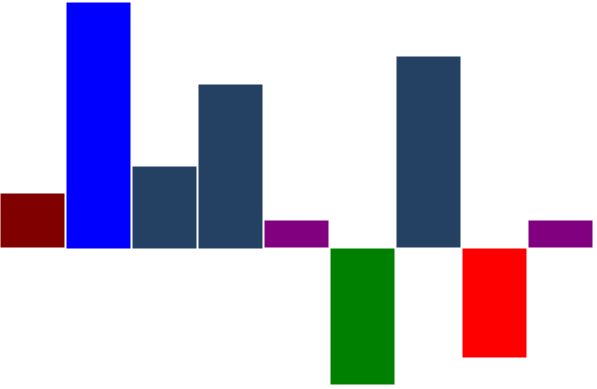
You can find the complete getting started sample from this link.