Convert Word to PDF in Azure Functions v1
13 Aug 20267 minutes to read
Syncfusion® DocIO is a .NET Word library used to create, read, edit and convert Word documents programmatically without Microsoft Word or interop dependencies. Using this library, you can convert a Word document to PDF in Azure Functions v1.
Prerequisites
- An active Azure subscription.
- Visual Studio 2022 or later with the Azure Development workload installed.
- Azure Functions Tools for Visual Studio.
- .NET Framework 4.6.2 or later (required for Azure Functions v1 runtime).
Steps to convert a Word document to PDF in Azure Functions v1
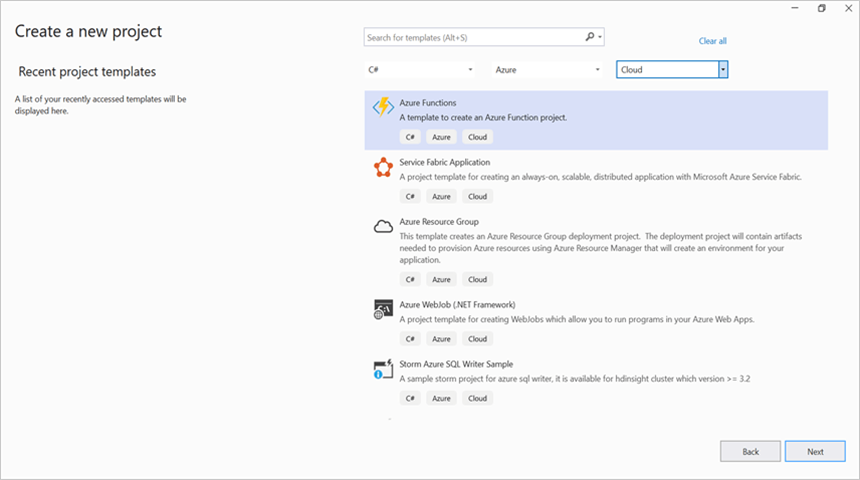
Step 1: Create a new Azure Functions project. When prompted, select the HttpTrigger trigger and set the authorization level to Anonymous for easy testing.
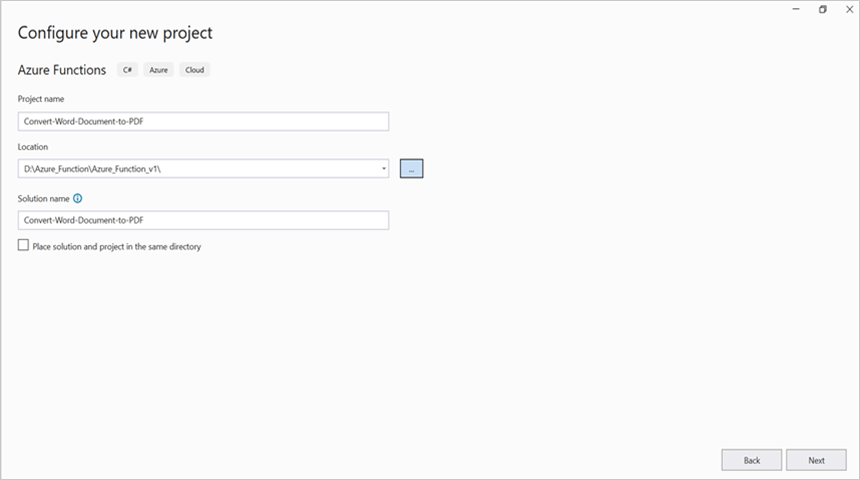
Step 2: Enter a project name and select the location.
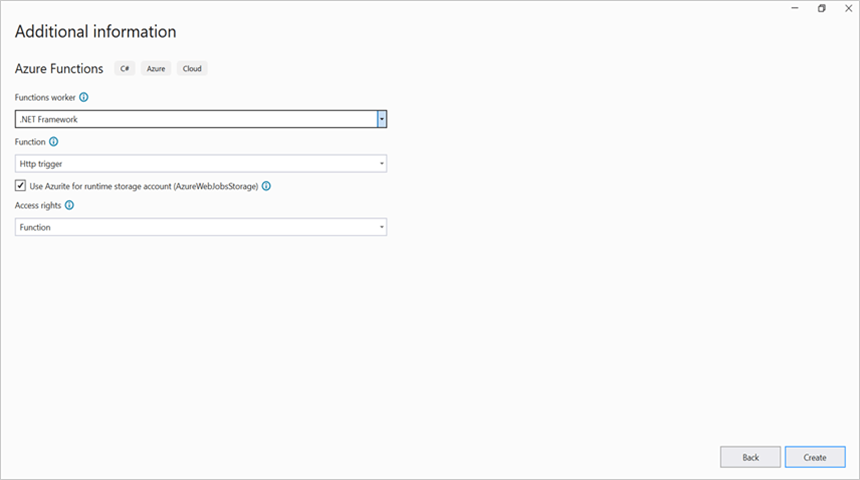
Step 3: Select the function worker as .NET Framework and the Azure Functions runtime version as Azure Functions v1 (.NET Framework).
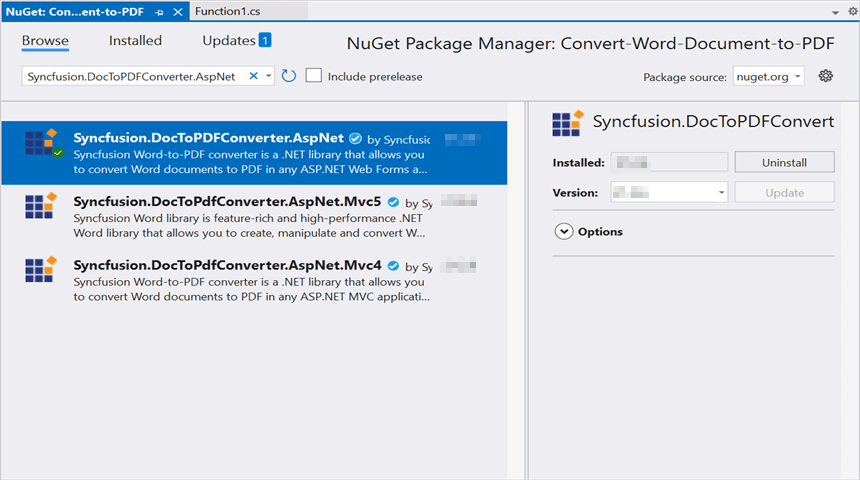
Step 4: Install the Syncfusion.DocToPDFConverter.AspNet NuGet package (v20.x or later) as a reference to your project from NuGet.org.
Starting with v16.2.0.x, if you reference Syncfusion® assemblies from trial setup or from the NuGet feed, you also have to add “Syncfusion.Licensing” assembly reference and include a license key in your projects. Please refer to this link to know about registering Syncfusion® license key in your application to use our components.
Step 5: Include the following namespaces in the Function1.cs file.
using System.IO;
using System.Net;
using System.Net.Http;
using System.Net.Http.Headers;
using Syncfusion.DocIO;
using Syncfusion.DocIO.DLS;
using Syncfusion.DocToPDFConverter;
using Syncfusion.Pdf;
Step 6: Add the following code snippet in the Run method of the Function1 class to perform Word to PDF conversion in Azure Functions and return the resultant PDF document to the client end.
//Gets the input Word document as stream from request
Stream stream = req.Content.ReadAsStreamAsync().Result;
//Loads an existing Word document
using (WordDocument document = new WordDocument(stream))
{
    //Creates an instance of the DocToPDFConverter
    using (DocToPDFConverter converter = new DocToPDFConverter())
    {
        //Converts Word document into PDF document
        using (PdfDocument pdfDocument = converter.ConvertToPDF(document))
        {
            MemoryStream memoryStream = new MemoryStream();
            //Saves the PDF file
            pdfDocument.Save(memoryStream);
            //Reset the memory stream position
            memoryStream.Position = 0;
            //Create the response to return
            HttpResponseMessage response = new HttpResponseMessage(HttpStatusCode.OK);
            //Set the PDF document saved stream as content of response
            response.Content = new ByteArrayContent(memoryStream.ToArray());
            //Set the contentDisposition as attachment
            response.Content.Headers.ContentDisposition = new ContentDispositionHeaderValue("attachment")
            {
                FileName = "Sample.Pdf"
            };
            //Set the content type as PDF document mime type
            response.Content.Headers.ContentType = new System.Net.Http.Headers.MediaTypeHeaderValue("application/pdf");
            //Return the response with output PDF document stream
            return response;
        }
    }
}
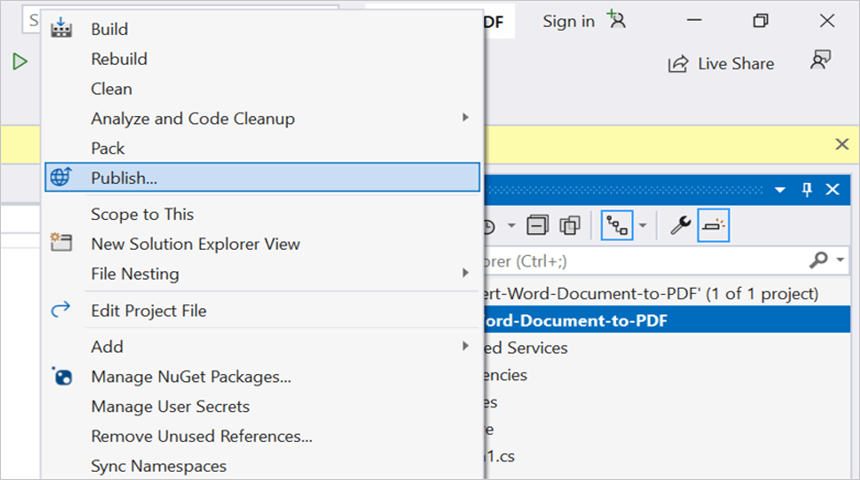
Step 7: Right-click the project and select Publish. Then, create a new publishing profile in the Publish Window.
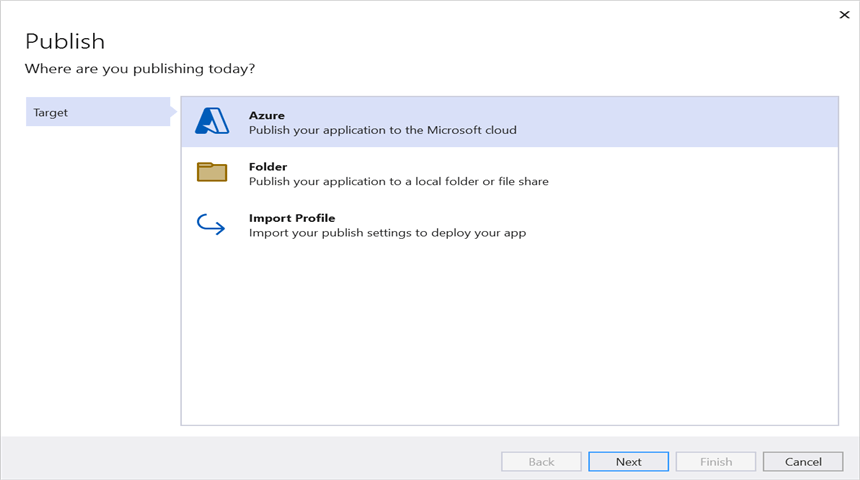
Step 8: Select the target as Azure and click the Next button.
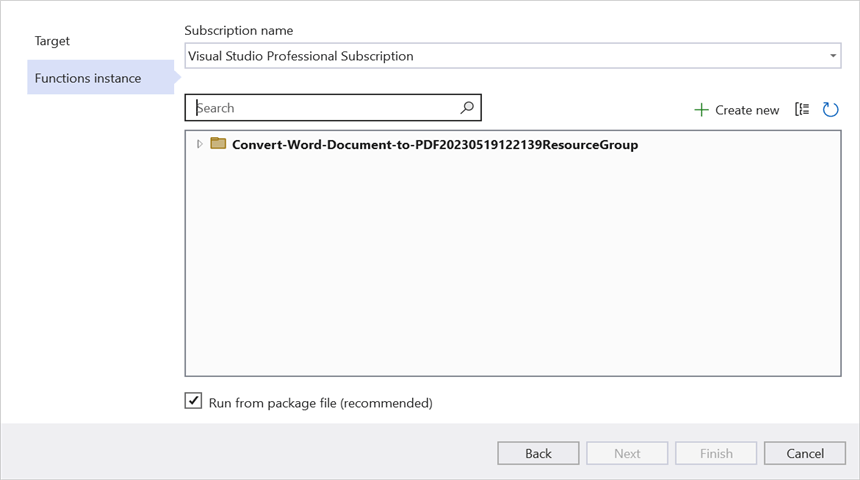
Step 9: Click the Create new button.
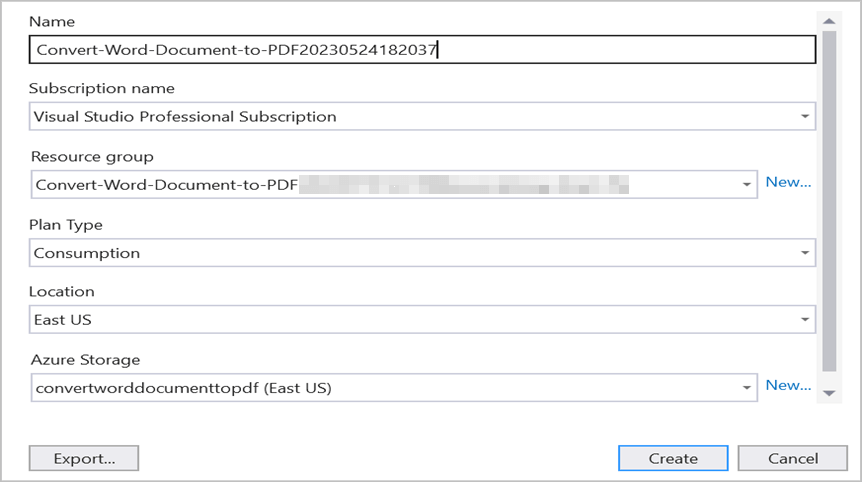
Step 10: Click the Create button.
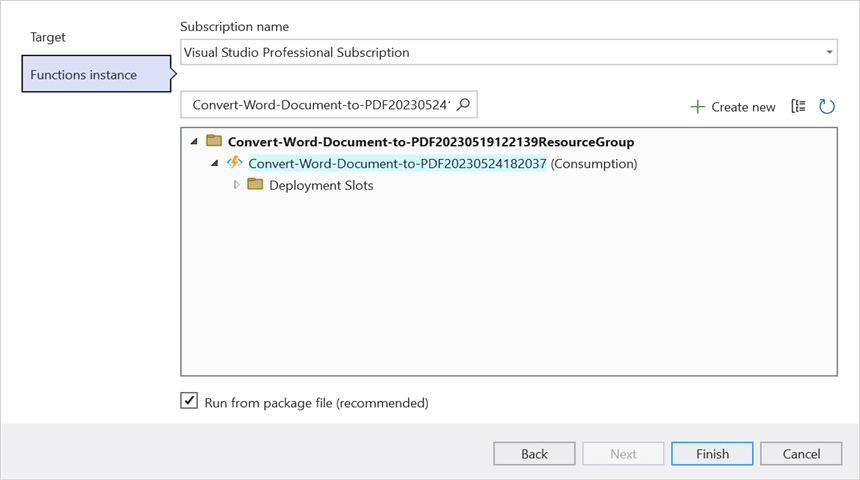
Step 11: After creating the app service, click the Finish button.
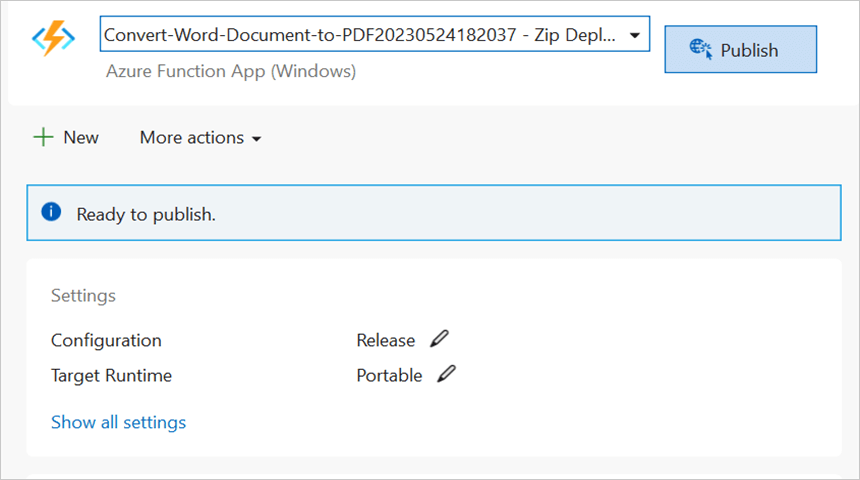
Step 12: Click the Publish button.
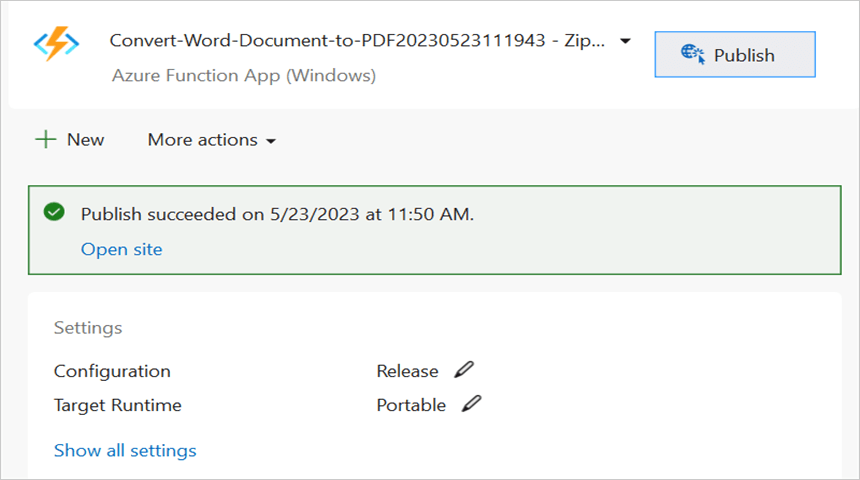
Step 13: Wait until publishing succeeds.
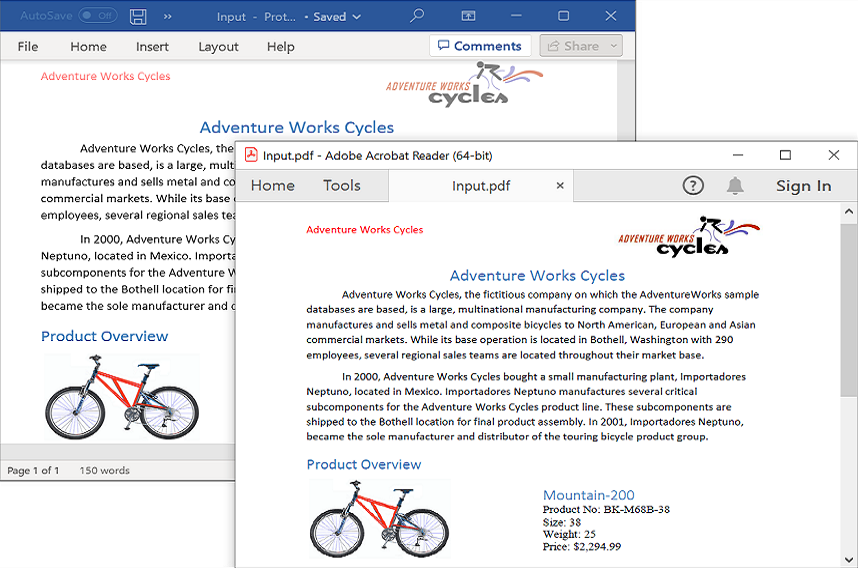
Step 14: Go to the Azure portal and select App Services. After the function is running, click Get function URL to copy it. Then, paste it into the client sample in the next section. The client sample will request the Azure Functions endpoint to perform Word to PDF conversion using the template Word document. You will get the output PDF document as follows.
Steps to post the request to Azure Functions
Step 1: Create a console application to request the Azure Functions API.
Step 2: Add the following code snippet into Main method to post the request to Azure Functions with template Word document and get the resultant PDF document.
//Reads the template Word document.
FileStream fs = new FileStream(@"../../Data/Input.docx", FileMode.Open, FileAccess.ReadWrite, FileShare.ReadWrite);
fs.Position = 0;
//Saves the Word document in memory stream.
MemoryStream inputStream = new MemoryStream();
fs.CopyTo(inputStream);
inputStream.Position = 0;
try
{
    Console.WriteLine("Please enter your Azure Functions URL :");
    string functionURL = Console.ReadLine();
    //Create HttpWebRequest with hosted azure functions URL.
    HttpWebRequest req = (HttpWebRequest)WebRequest.Create(functionURL);
    //Set request method as POST
    req.Method = "POST";
    //Get the request stream to save the Word document stream
    Stream stream = req.GetRequestStream();
    //Write the Word document stream into request stream
    stream.Write(inputStream.ToArray(), 0, inputStream.ToArray().Length);
    //Gets the responce from the Azure Functions.
    HttpWebResponse res = (HttpWebResponse)req.GetResponse();
    //Saves the PDF document stream.
    FileStream fileStream = File.Create("DocToPDF.pdf");
    res.GetResponseStream().CopyTo(fileStream);
    //Dispose the streams
    inputStream.Dispose();
    fileStream.Dispose();
}
catch (Exception ex)
{
    throw;
}
From GitHub, you can download the console application and Azure Functions v1.
Looking for the full .NET Word Library overview, features, pricing, and documentation? Visit the .NET Word Library page.
An online sample link to convert Word document to PDF in ASP.NET Core.