Getting Started with Server-Backed React PDF Viewer
25 Aug 20267 minutes to read
This section explains how to create a simple React application and add the server-backed React PDF Viewer component with the minimum required setup.
Starting with the 2026 Vol 2 main release (July 6, 2026), no new features will be added to the Server PDF Viewer, as almost all of the PDF Viewer functionalities are now available in the Standalone PDF Viewer. If you are currently using the server-backed PDF Viewer, please refer to the migration documentation to transition to the Standalone PDF Viewer.
Prerequisites
Create a React application
Use Vite to create a new React application for a faster development environment, smaller bundle sizes, and optimized production builds.
To create a new React application, run one of the following commands based on your preferred environment.
npm create vite@latest pdf-viewer-app -- --template react
cd pdf-viewer-app
npm create vite@latest pdf-viewer-app -- --template react-ts
cd pdf-viewer-appInstall the Syncfusion® React PDF Viewer packages
Install the React PDF Viewer package from npm using the following command:
npm install @syncfusion/ej2-react-pdfviewer --saveImport the required CSS styles
Themes for PDF Viewer can be applied using CSS or SASS files from the npm theme packages, CDN, CRG, or Theme Studio. For more information, see the themes documentation.
This guide uses the Tailwind 3 theme as an example, sourced from the theme package. In this package, each component includes an index.css file that automatically loads all the required dependency styles. To install the Tailwind 3 theme package, use the following command:
npm install @syncfusion/ej2-tailwind3-themeBy default, Vite projects include a src/index.css file with default styles. These default styles may conflict with Syncfusion component styles. Clear all content from the src/index.css file to prevent style conflicts.
The required styles for the PDF Viewer are imported in the src/index.css file:
@import '../node_modules/@syncfusion/ej2-tailwind3-theme/styles/pdfviewer/index.css';The
index.cssfile automatically includes all required dependent component styles for the PDF Viewer. You do not need to import individual dependency styles such as Base, Buttons, Dropdowns, Inputs, Navigations, Popups, and SplitButtons separately.
Add the React PDF Viewer component to the application
Add the React PDF Viewer component to your src/App.jsx or src/App.tsx file.
The key props and services used in the following samples are:
-
documentPath: URL or Base64 string of the PDF to load. -
serviceUrl: Back end web service URL that processes and streams PDF data to the viewer. See How to Create and Run a Custom PDF Viewer Web Service. -
Inject services={[...]}: Registers the optional modules (toolbar, navigation, annotations, search, form fields, etc.) you want to enable.
import { PdfViewerComponent, Toolbar, Magnification, Navigation, LinkAnnotation, BookmarkView,
         ThumbnailView, Print, TextSelection, Annotation, TextSearch, FormFields, FormDesigner,
         PageOrganizer, Inject } from '@syncfusion/ej2-react-pdfviewer';

export default function App() {
    return (
      <PdfViewerComponent id="container"
        // Specifies the path or Base64 string of the PDF document to be loaded in the PDF Viewer.
        documentPath="https://cdn.syncfusion.com/content/pdf/pdf-succinctly.pdf"
        // Specifies the backend service URL that processes and streams PDF data
        serviceUrl="https://document.syncfusion.com/web-services/pdf-viewer/api/pdfviewer">
         // Specifies the modules required for the PDF Viewer
         <Inject services={[ Toolbar, Magnification, Navigation, Annotation, LinkAnnotation,
                             BookmarkView, ThumbnailView, Print, TextSelection, TextSearch,
                             FormFields, FormDesigner, PageOrganizer ]}/>
      </PdfViewerComponent>
    );
}
import { PdfViewerComponent, Toolbar, Magnification, Navigation, LinkAnnotation, BookmarkView,
ThumbnailView, Print, TextSelection, Annotation, TextSearch, FormFields, FormDesigner,
PageOrganizer, Inject } from '@syncfusion/ej2-react-pdfviewer';
export default function App() {
return (
<PdfViewerComponent id="container"
// Specifies the path or Base64 string of the PDF document to be loaded in the PDF Viewer.
documentPath="https://cdn.syncfusion.com/content/pdf/pdf-succinctly.pdf"
// Specifies the backend service URL that processes and streams PDF data
serviceUrl="https://document.syncfusion.com/web-services/pdf-viewer/api/pdfviewer">
<Inject services={[ Toolbar, Magnification, Navigation, Annotation, LinkAnnotation,
BookmarkView, ThumbnailView, Print, TextSelection, TextSearch,
FormFields, FormDesigner, PageOrganizer ]}/>
</PdfViewerComponent>
);
}The Web API hosted link https://document.syncfusion.com/web-services/pdf-viewer/api/pdfviewer utilized in the PDF viewer’s
serviceUrlproperty is intended solely for demonstration and evaluation purposes. For production deployment, please host your own web service with your required server configurations. You can refer and reuse the GitHub Web Service example or the Docker image for hosting your own web service to use as theserviceUrl. We strongly recommend using the standalone mode.
How to Create and Run a Custom PDF Viewer Web Service
Run the application
Run the following command to start the React application:
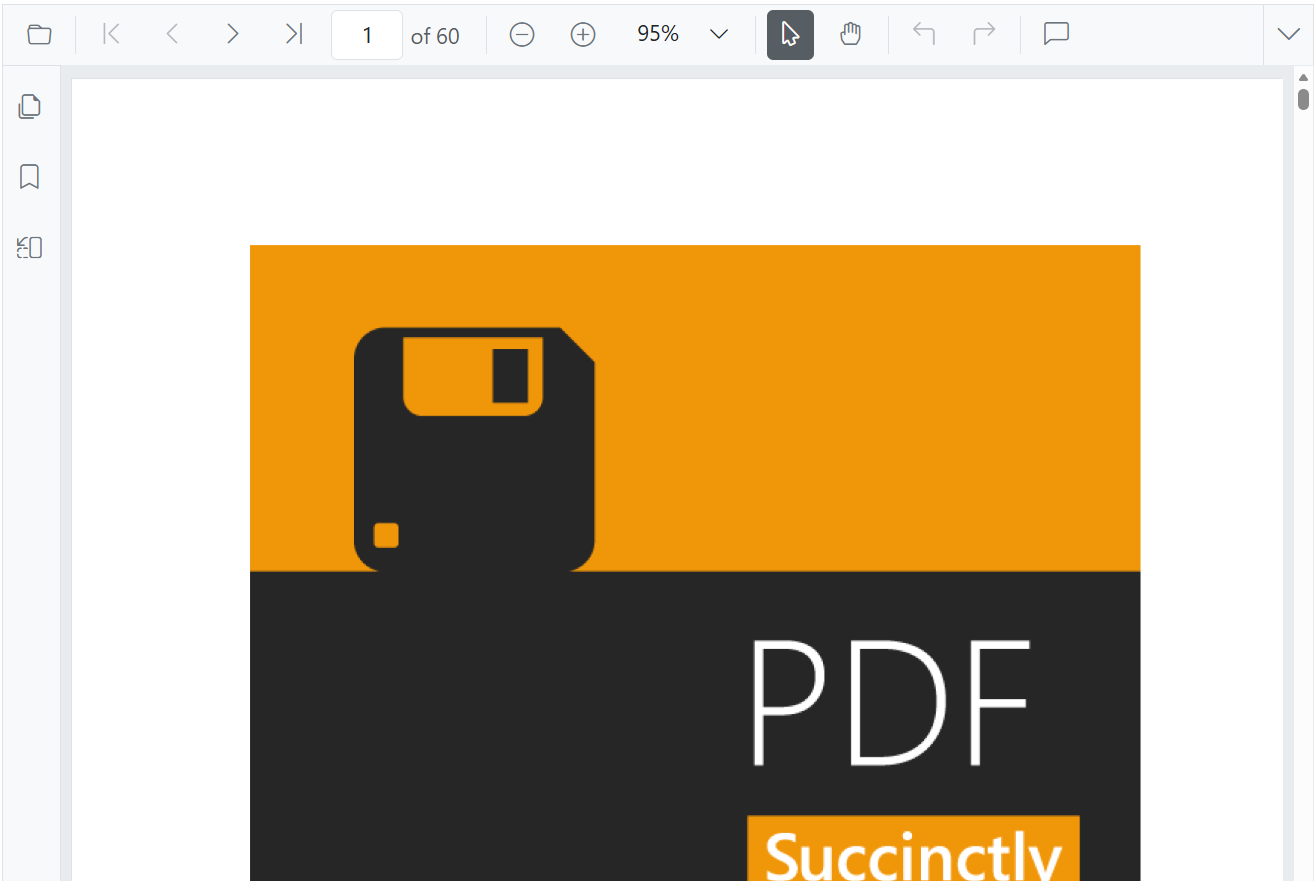
npm run devAfter the application starts, open the localhost URL shown in the terminal to view the React PDF Viewer in the browser. The output will appear as follows:
You can also explore the PDF Viewer interactively using the live sample below.
When configuring the server-backed PDF viewer, it’s essential to understand that there is no need to include the
pdfium.jsandpdfium.wasmfiles. Unlike the standalone PDF viewer, which relies on these files for local rendering, the server-backed PDF viewer fetches and renders PDFs directly from the server. As a result, you can skip the PDFium asset copy step described in the standalone deployment flow; these files are not required to load and display PDFs in this context.
For hosting the web service on Linux, the server-side PDF rendering pipeline uses SkiaSharp, which requires platform-specific native assets. Include SkiaSharp.NativeAssets.Linux v3.119.1 for standard Linux hosts. Additionally, for AWS environments, utilize the following packages:
| Amazon Web Services (AWS) | NuGet package name |
|---|---|
| AWS Lambda | SkiaSharp.NativeAssets.Linux v3.119.1 |
| AWS Elastic Beanstalk | SkiaSharp.NativeAssets.Linux.NoDependencies v3.119.1 |