Open and save PowerPoint presentation in AWS Lambda
3 Aug 20267 minutes to read
Syncfusion® PowerPoint is a .NET Core PowerPoint library used to create, read, edit and convert PowerPoint documents programmatically without Microsoft PowerPoint or interop dependencies. Using this library, you can open and save a PowerPoint presentation in AWS Lambda.
Prerequisites
- An active Amazon Web Services (AWS) account. If you do not have one, create an account before starting.
- Visual Studio with the AWS Toolkit for Visual Studio extension installed.
- A Syncfusion license key. Refer to this link to know about registering a Syncfusion® license key in your application.
- A sample input file (for example,
Template.pptx) placed in the project as described in Step 4.
Steps to open and save a PowerPoint presentation in AWS Lambda
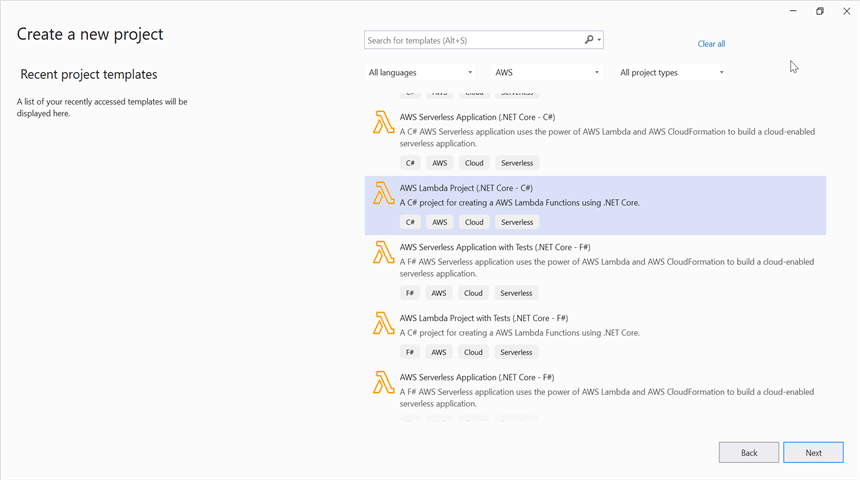
Step 1: In Visual Studio, create a new AWS Lambda project (.NET Core) using the AWS Lambda Project template. In the project creation dialog, name the project (for example, OpenAndSavePowerPointLambda) and click Create.
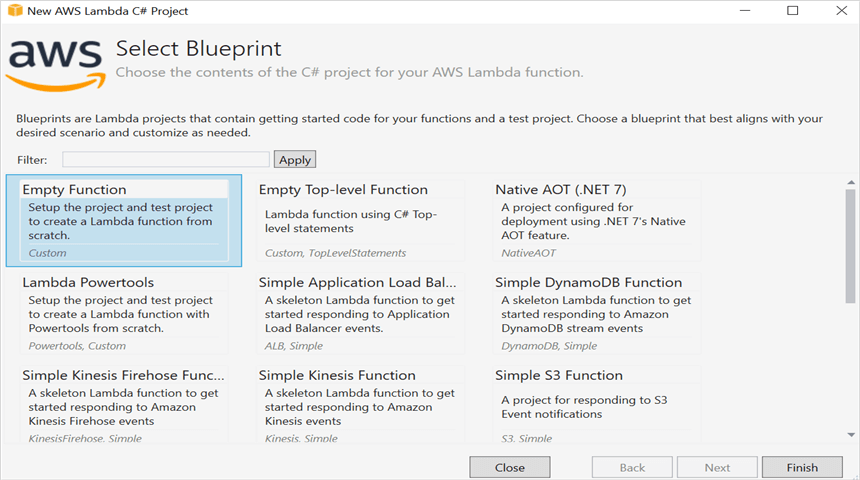
Step 2: Select Blueprint as Empty Function and click Finish.
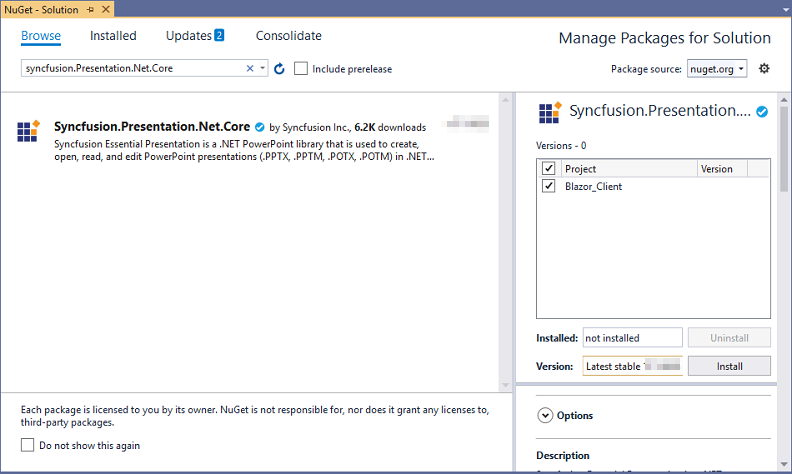
Step 3: Install the Syncfusion.Presentation.Net.Core NuGet package as a reference to your project from NuGet.org.
Starting with v16.2.0.x, if you reference Syncfusion® assemblies from trial setup or from the NuGet feed, you also have to add the
Syncfusion.Licensingassembly reference and include a license key in your projects. Please refer to this link to know about registering a Syncfusion® license key in your application to use our components.
Register the Syncfusion license key at the beginning of the
FunctionHandlerin Function.cs before performing any Syncfusion library operations. Refer to the license key generation and application registration guides for details. A minimal registration is shown below.
//Register the Syncfusion license key before using any Syncfusion types.
Syncfusion.Licensing.SyncfusionLicenseProvider.RegisterLicense("YOUR_LICENSE_KEY");
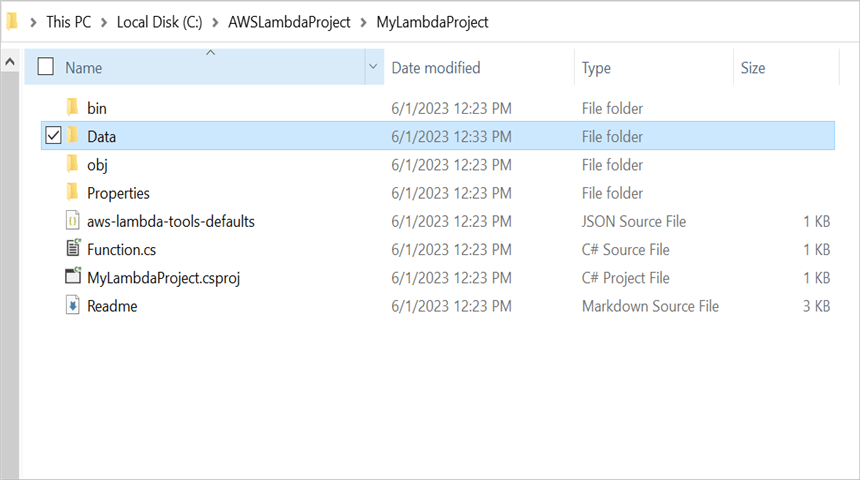
Step 4: Create a folder (for example, Data) in the project, copy the required input files (for example, Template.pptx) into it, and include those files in the project. The files are bundled with the Lambda deployment package.
Step 5: Set the copy to output directory to Copy if newer to all the data files.

Step 6: Include the following namespaces in Function.cs file.
using System;
using System.IO;
using Syncfusion.Presentation;
using Syncfusion.Licensing;
Step 7: Add the following complete code in Function.cs to open, edit, and save a PowerPoint presentation in AWS Lambda.
public string FunctionHandler(string input)
{
    //Register the Syncfusion license before using any Syncfusion types.
    SyncfusionLicenseProvider.RegisterLicense("YOUR_LICENSE_KEY");

    //Get the input file from the bundled Data folder in the deployment package.
    string filePath = Path.GetFullPath(@"Data/Template.pptx");
    //Open an existing PowerPoint presentation.
    using IPresentation pptxDoc = Presentation.Open(filePath);

    //Get the first slide from the PowerPoint presentation.
    ISlide slide = pptxDoc.Slides[0];
    //Get the first shape of the slide and update its text.
    if (slide.Shapes[0] is IShape shape && shape.TextBody != null)
    {
        if (shape.TextBody.Text == "Company History")
            shape.TextBody.Text = "Company Profile";
    }

    //Save the PowerPoint presentation to a memory stream and return it as a base64 string.
    using MemoryStream stream = new MemoryStream();
    pptxDoc.Save(stream);
    return Convert.ToBase64String(stream.ToArray());
}
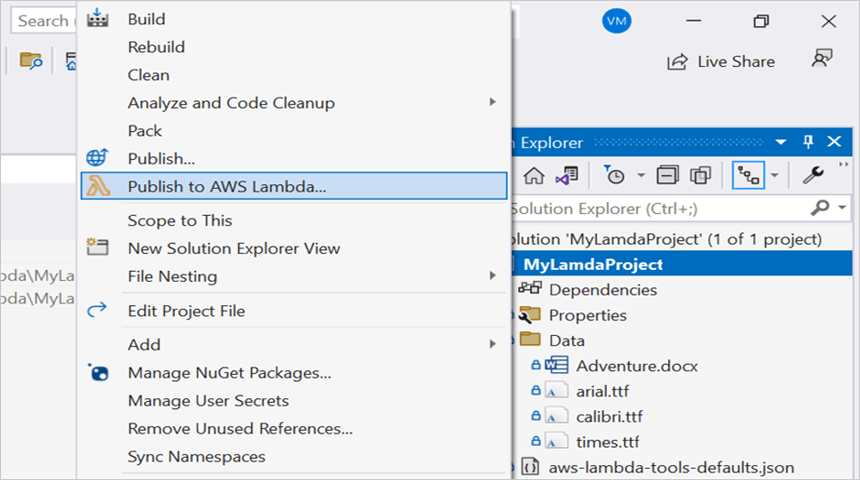
Step 8: Right-click the project and select Publish to AWS Lambda.
Before publishing, ensure that an IAM execution role with the AWSLambdaBasicExecutionRole managed policy (or equivalent) is available in your AWS account so Step 10 can attach it. See AWS Lambda execution role for setup.
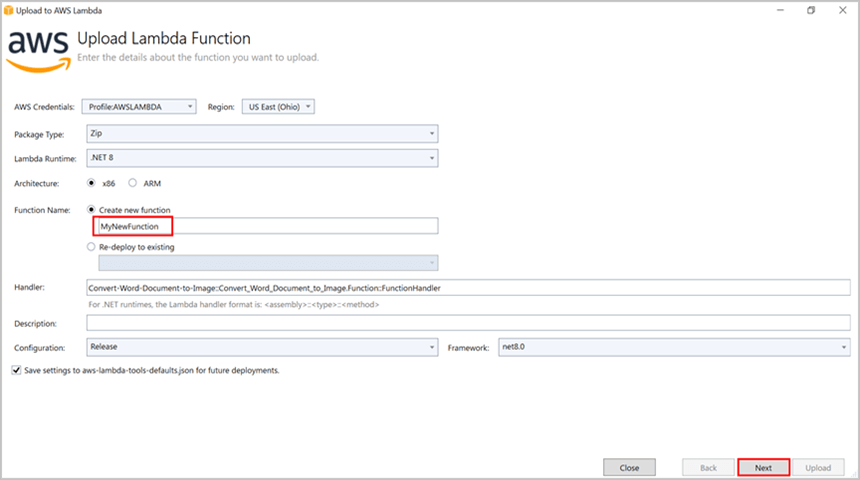
Step 9: In the Upload Lambda Function window, create a new AWS profile (or select an existing one), enter a name for the Lambda function to publish, and then click Next.
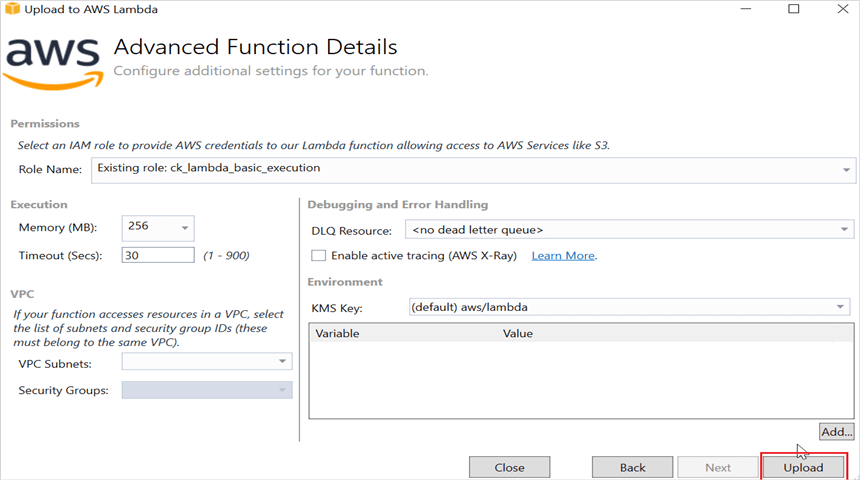
Step 10: In the Advanced Function Details window, select a Role Name based on an AWS managed policy. After selecting the role, click the Upload button to deploy your application.
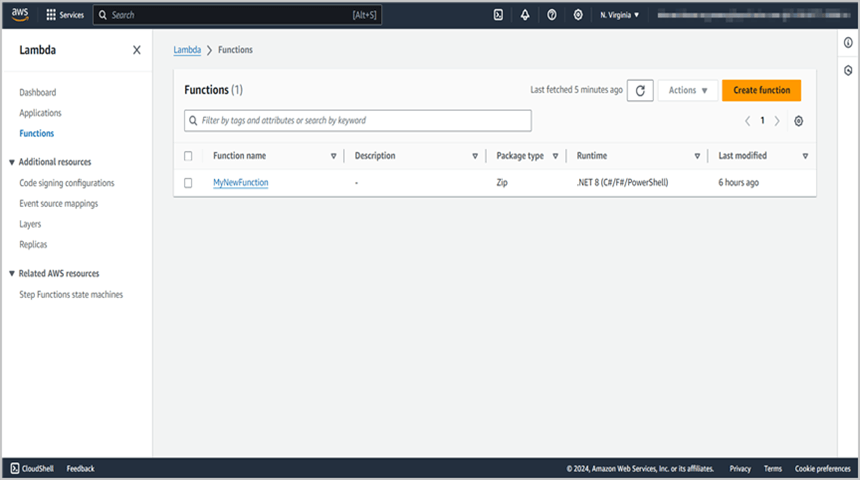
Step 11: After deploying the application, you can see the published Lambda function in the AWS console.
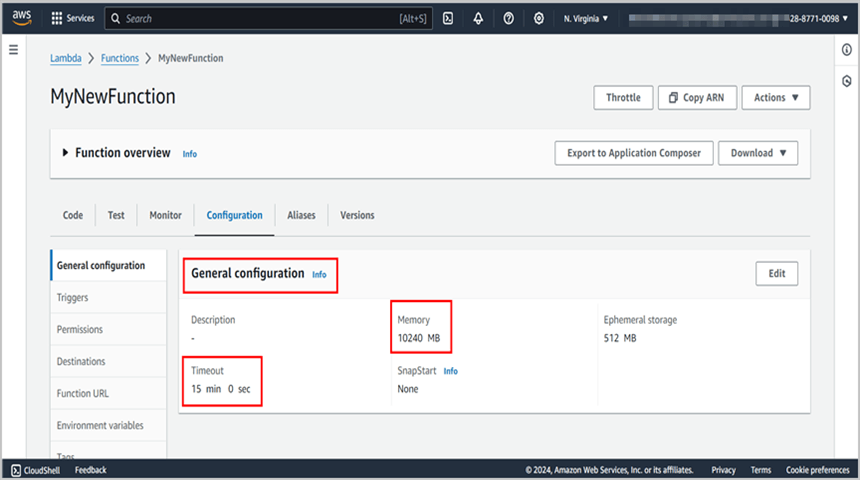
Step 12: In the AWS console, open the Lambda function’s General configuration and increase the Memory (recommended at least 512 MB) and Timeout (for example, 1-5 minutes) so that PowerPoint operations have enough resources and time to complete.
Steps to post the request to AWS Lambda
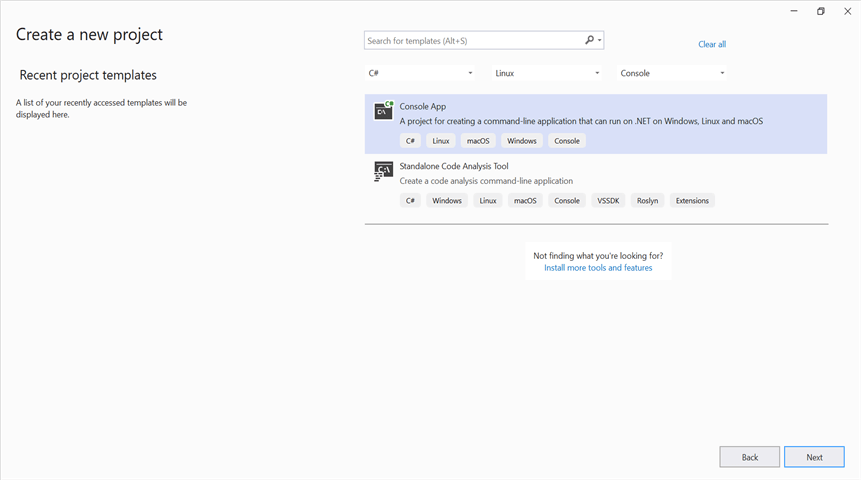
Step 1: Create a new Console App (.NET) project in Visual Studio.
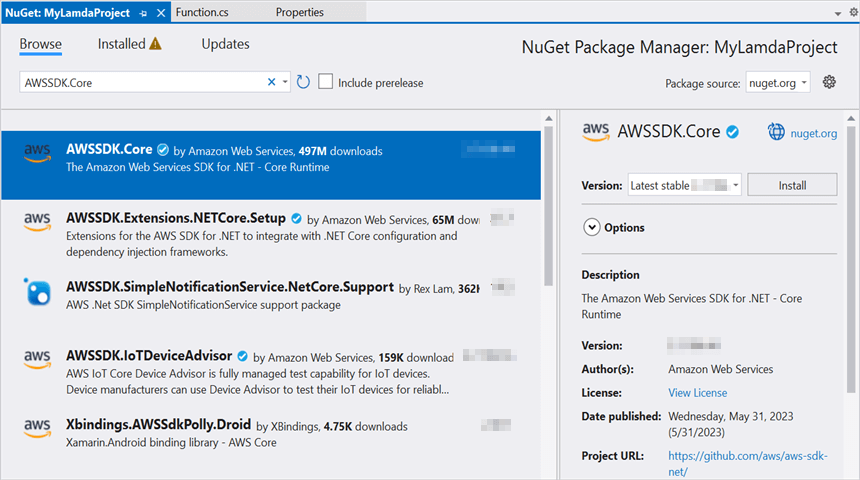
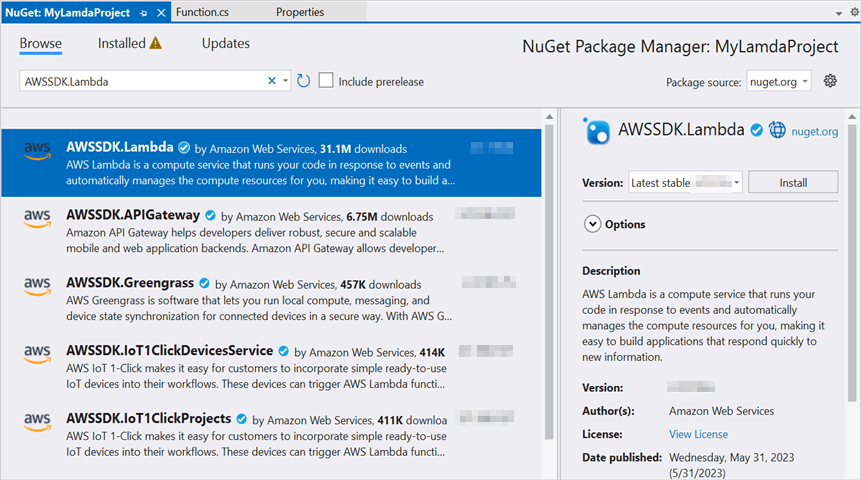
Step 2: Install the following NuGet packages in your application from NuGet.org.
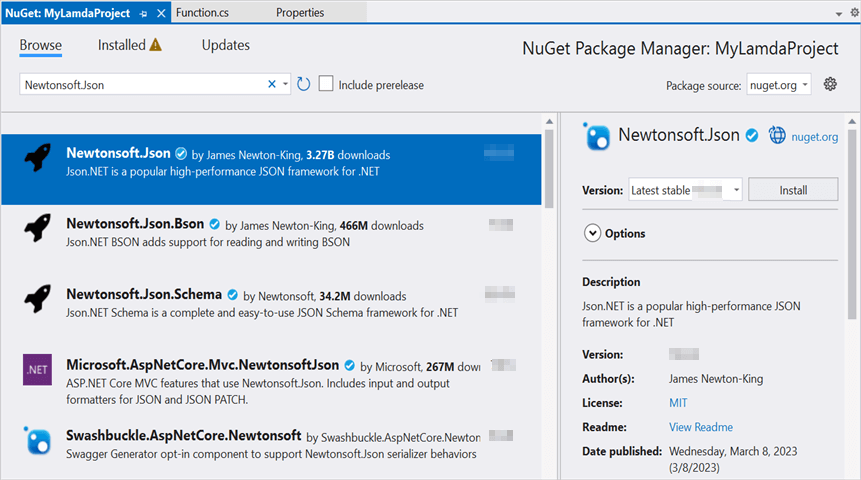
For production use, do not hard-code AWS credentials in source. Instead, load them from environment variables, the AWS shared credentials file, or an IAM role attached to the host. See AWS credentials best practices for details.
Step 3: Include the following namespaces in Program.cs file.
using System;
using System.IO;
using Amazon;
using Amazon.Lambda;
using Amazon.Lambda.Model;
using Newtonsoft.Json;
Step 4: Add the following code snippet in Program.cs to invoke the published AWS Lambda function using the function name and access keys. Replace "awsaccessKeyID" and "awsSecretAccessKey" with your own credentials, and update MyNewFunction and RegionEndpoint.USEast2 to match your deployment.
//Create a new AmazonLambdaClient.
AmazonLambdaClient client = new AmazonLambdaClient("awsaccessKeyID", "awsSecretAccessKey", RegionEndpoint.USEast2);
//Create a new InvokeRequest with the published function name.
InvokeRequest invoke = new InvokeRequest
{
    FunctionName = "MyNewFunction",
    InvocationType = InvocationType.RequestResponse,
    Payload = "\"Test\""
};
//Get the InvokeResponse from the client InvokeRequest.
InvokeResponse response = client.Invoke(invoke);
//Read the response stream.
using var stream = new StreamReader(response.Payload);
using JsonReader reader = new JsonTextReader(stream);
var serializer = new JsonSerializer();
var responseText = serializer.Deserialize(reader);
//Convert the base64 string into a PowerPoint document.
byte[] bytes = Convert.FromBase64String(responseText.ToString());
using (FileStream fileStream = new FileStream("Sample.pptx", FileMode.Create))
{
    using BinaryWriter writer = new BinaryWriter(fileStream);
    writer.Write(bytes, 0, bytes.Length);
}
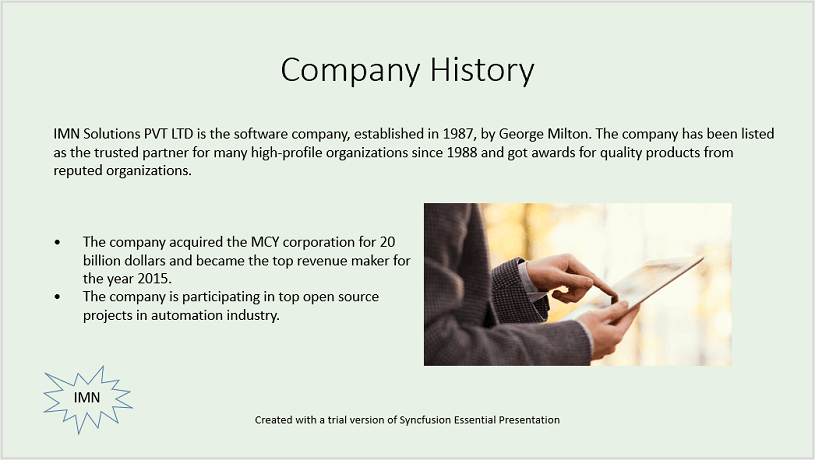
Step 5: Build and run the console project (press F5 in Visual Studio, or run dotnet run from the project folder). On Windows, you can open the saved Sample.pptx from the output directory; on Linux/macOS or in headless environments, copy the file locally and open it manually.
By executing the program, you will get the PowerPoint document as follows.
See also
From GitHub, you can download the console application and AWS Lambda project.
Looking for the full .NET PowerPoint library component overview, features, pricing, and documentation? Visit the .NET PowerPoint library page.