Getting Started with Angular Spreadsheet
27 Aug 20265 minutes to read
This section explains how to create a simple Angular application and add the Angular Spreadsheet Editor component with the minimum required setup.
Prerequisites
- Node.js 24+ (LTS recommended).
- Syncfusion CLI.
Install the Syncfusion CLI
Install the Syncfusion CLI globally using the following command:
npm install -g @syncfusion/syncfusion-cliCreate a new Angular application using Syncfusion CLI
You can create a Angular application using the Syncfusion CLI. The CLI provides two ways to create a project:
Non-interactive mode
Non-interactive mode allows you to create a project directly using a single command with the required command-line arguments.
sf new syncfusion-angular-app --framework angular --template spreadsheet-editor --theme tailwind3In this mode, the project configuration is passed directly in the command. The above command creates a Angular application configured with the Syncfusion® Spreadsheet Editor component.
Interactive mode
Interactive mode guides you through the project creation process with step-by-step prompts.
sfWhen you run the sf command, the CLI prompts you to select the required project configuration. To create a Angular application with the Syncfusion® Spreadsheet Editor component, select the following options:
√ Project name? ... syncfusion-angular-app
√ Choose Framework: » Angular
√ Choose Template: » Spreadsheet Editor
√ Choose Theme: » Tailwind3
√ Choose Style Format: » CSS
√ Would you like to integrate the Syncfusion MCP Server (AI Assistant) into this project? ... no
√ Would you like to install Syncfusion Component Skills for AI-powered development? ... no
√ Install dependencies and start app now? ... no
The above selections generate a Angular application configured with the Syncfusion® Spreadsheet Editor component. You can choose different values for language, theme, style format, MCP setup, and skills installation based on your project requirements.
The Syncfusion® CLI creates the project with a predefined template. After the project is generated, you can customize or replace the component code based on your application requirements.
Run the project
Once the project is created, navigate to the project directory and run the following commands in your terminal.
cd syncfusion-angular-app
npm install
ng serve
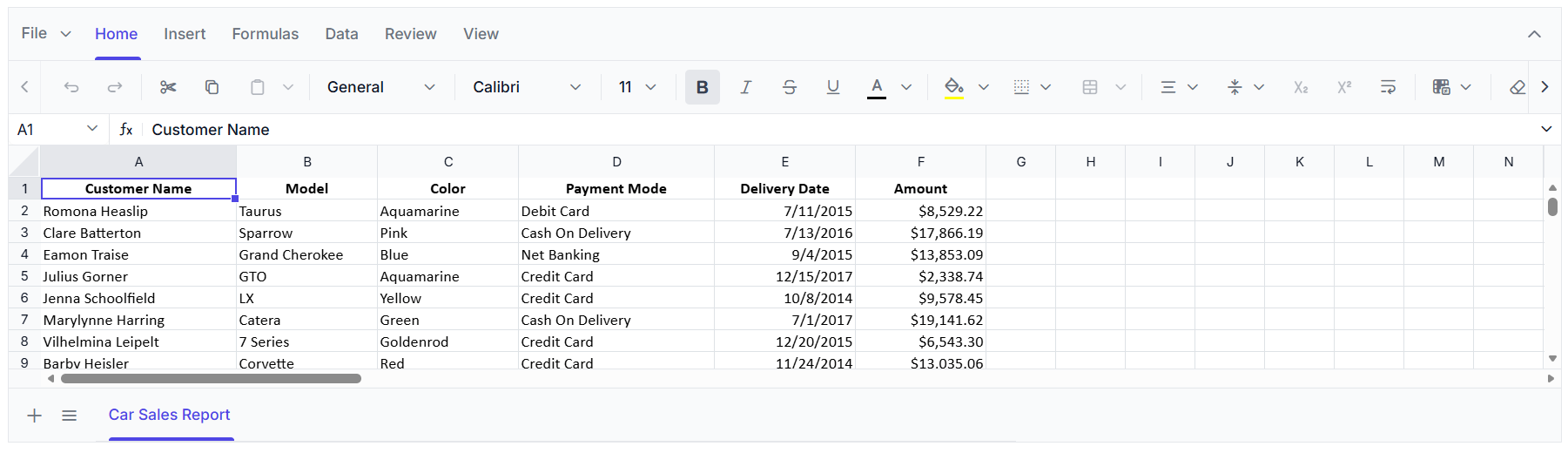
The output will appear as follows:
Prerequisites
System requirements for Syncfusion® Angular components
Create an Angular application
Use Angular CLI to create a new Angular application, as it provides a standardized project structure, built-in testing tools, and simplified deployment.
Install Angular CLI globally, using the following command:
npm install -g @angular/cli
Create a new Angular application using the following commands:
ng new spreadsheet-app
cd spreadsheet-app
Note: When prompted during project creation, select the default options: CSS for stylesheet, No for SSR/SSG, and None for AI tools.
Install the Syncfusion® Angular Spreadsheet package
The Angular Spreadsheet Editor package uses the Ivy-based Angular library distribution format and is compatible with Angular 12 and above. Use the following command to install the package:
npm install @syncfusion/ej2-angular-spreadsheet --save
For Angular versions below 12, use the legacy ngcc package instead:
npm install @syncfusion/ej2-angular-spreadsheet@ngcc --save
Register a Syncfusion License Key
Before initializing the Syncfusion Angular Spreadsheet component, generate a Syncfusion license key and register it in the application.
Import the required CSS styles
Themes for Spreadsheet can be applied using CSS or SASS files from the npm theme packages, CDN, CRG, or Theme Studio. For more information, see the themes documentation.
This guide uses the Tailwind 3 theme as an example, sourced from the theme package. In this package, each component includes an index.css file that automatically loads all the required dependency styles. To install the Tailwind 3 theme package, use the following command:
npm install @syncfusion/ej2-tailwind3-theme
Add the required Spreadsheet theme style reference to src/styles.css file. Replace the existing content with the theme import code below.
@import '../node_modules/@syncfusion/ej2-tailwind3-theme/styles/spreadsheet/index.css';
Add the Syncfusion® Angular Spreadsheet component
Import and render the Spreadsheet in src/app/app.ts. Replace the existing content with the following code.
import { SpreadsheetAllModule } from '@syncfusion/ej2-angular-spreadsheet'
import { Component } from '@angular/core';

@Component({
  imports: [SpreadsheetAllModule],
  standalone: true,
  selector: 'app-root',
  template: '<ejs-spreadsheet openUrl="https://document.syncfusion.com/web-services/spreadsheet-editor/api/spreadsheet/open" saveUrl="https://document.syncfusion.com/web-services/spreadsheet-editor/api/spreadsheet/save"></ejs-spreadsheet>'
})
export class App { }
Note: The
openUrlandsaveUrlendpoints used in this example are provided only for demonstration purposes. For development and production use, we strongly recommend configuring your own local or hosted web service for the Open and Save actions instead of relying on the online demo service. For more information, refer to theHost Spreadsheet Open and Save Services.
Run the application
Run the following command to start the development server:
ng serve
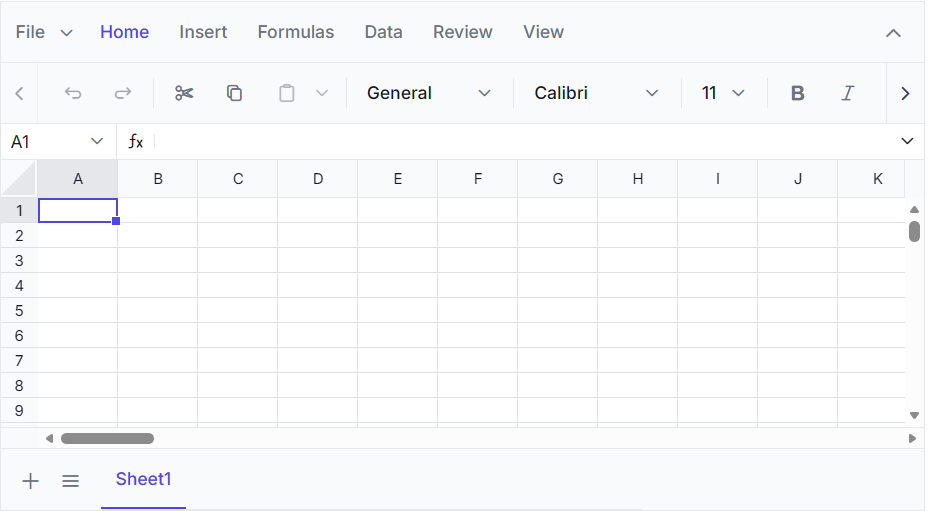
After the application starts, open the localhost URL shown in the terminal to view the Angular Spreadsheet Editor in the browser. The output will appear as follows:
You can also explore the Spreadsheet interactively using the live sample below.
Video tutorial
To get started quickly with Angular Spreadsheet, you can watch this video: