Getting Started with Azure Vision OCR Processor
14 Aug 202613 minutes to read
The .NET OCR library supports external OCR engines such as Azure Computer Vision to process OCR on images and PDF documents.
Prerequisites
Version Compatibility
- Syncfusion.PDF.OCR.Net.Core supports .NET 8.0 and later versions.
Supported Inputs
The OCR processor supports the following input formats:
- Single-page and multi-page PDF documents
- Scanned images in common formats (JPEG, PNG, TIFF)
- Recommended DPI: 200 DPI or higher for optimal OCR accuracy
Required Software
- .NET 8 SDK or later
- Azure subscription with Computer Vision API access
- Azure subscription key and endpoint
Register the License Key
Starting with v16.2.0.x, if you reference Syncfusion® assemblies from trial setup or from the NuGet feed, you must add the Syncfusion.Licensing assembly reference and register a license key in your application. For more information, see the licensing documentation.
Include the following code in the Program.cs file to register the license key:
using Syncfusion.Licensing;

// Register Syncfusion license at application startup
SyncfusionLicenseProvider.RegisterLicense("YOUR LICENSE KEY");
- Beginning from version 21.1.x, the TesseractBinaries and Tesseract language data folders are now included by default; you no longer have to set these paths explicitly.
- The current NuGet package includes Tesseract 5.0, which provides support for 100+ languages.
Steps to perform OCR with Azure Computer Vision
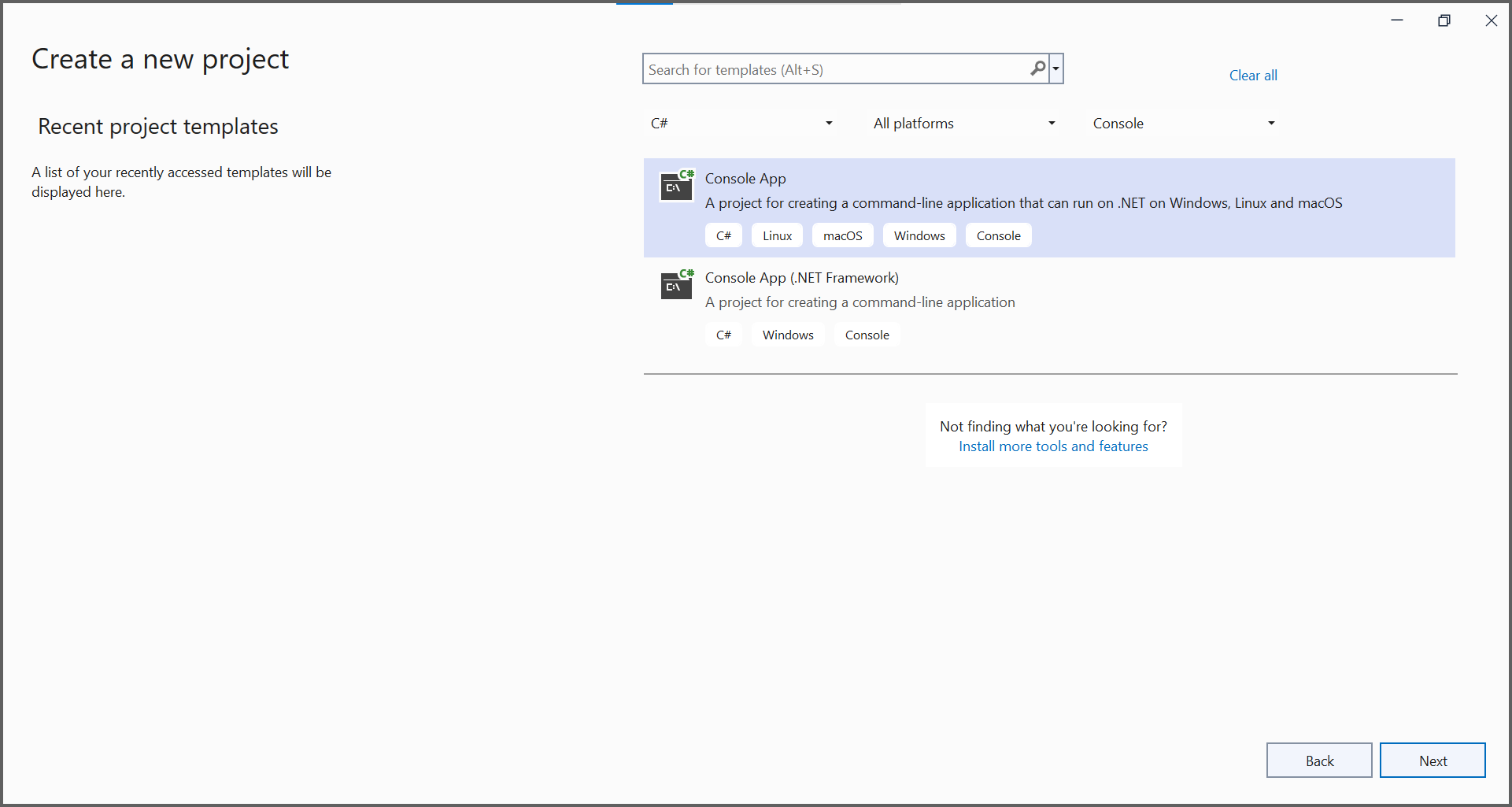
Step 1: Create a new .NET Console application project targeting .NET Framework 4.6.2 or .NET 8 or later:
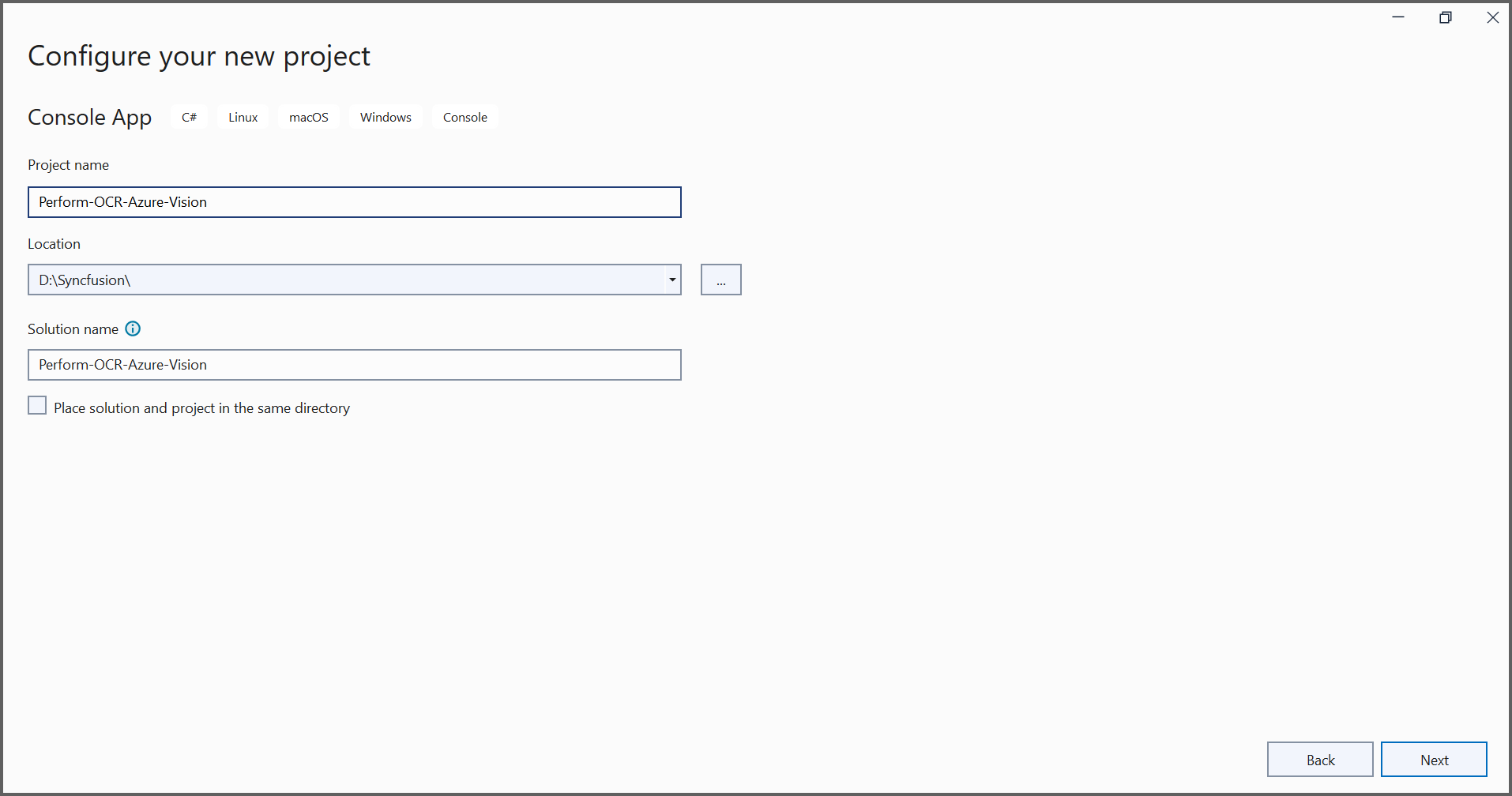
Step 2: In the project configuration window, name your project and select Next:
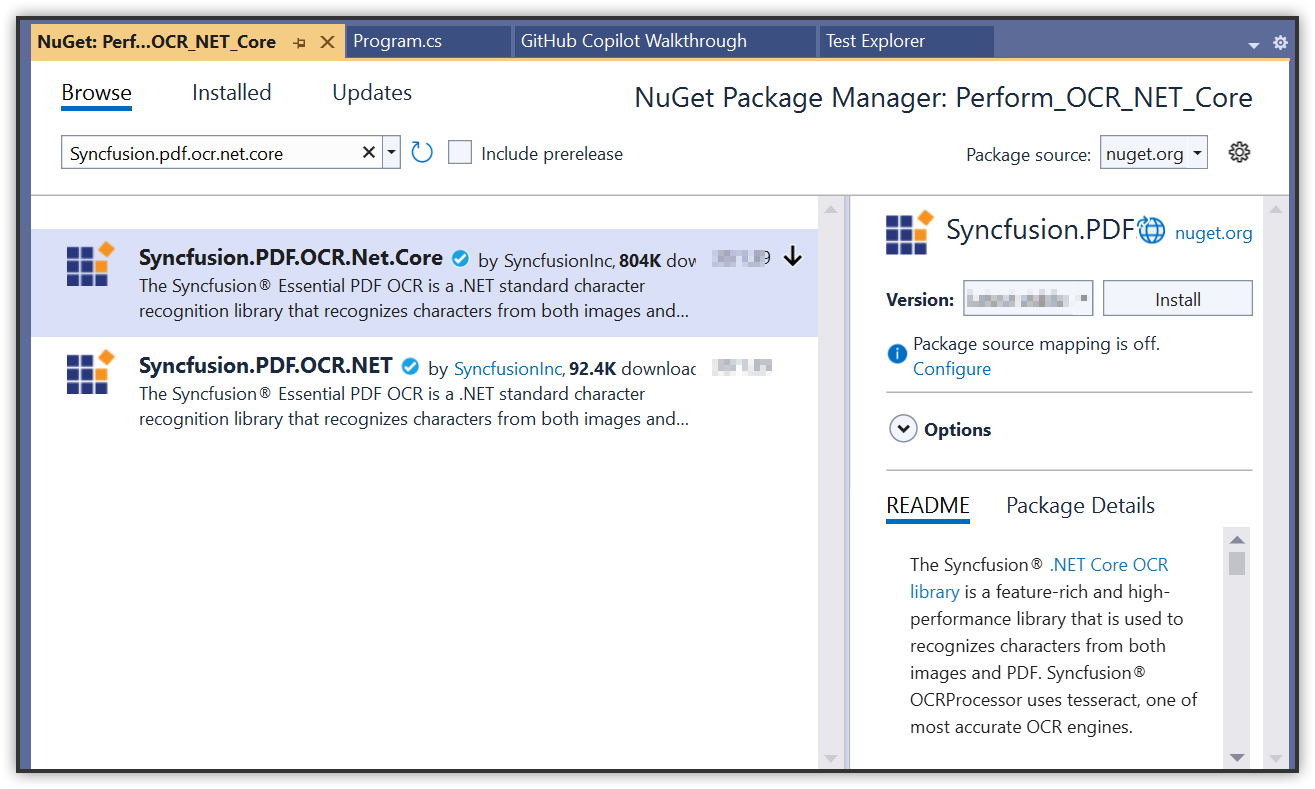
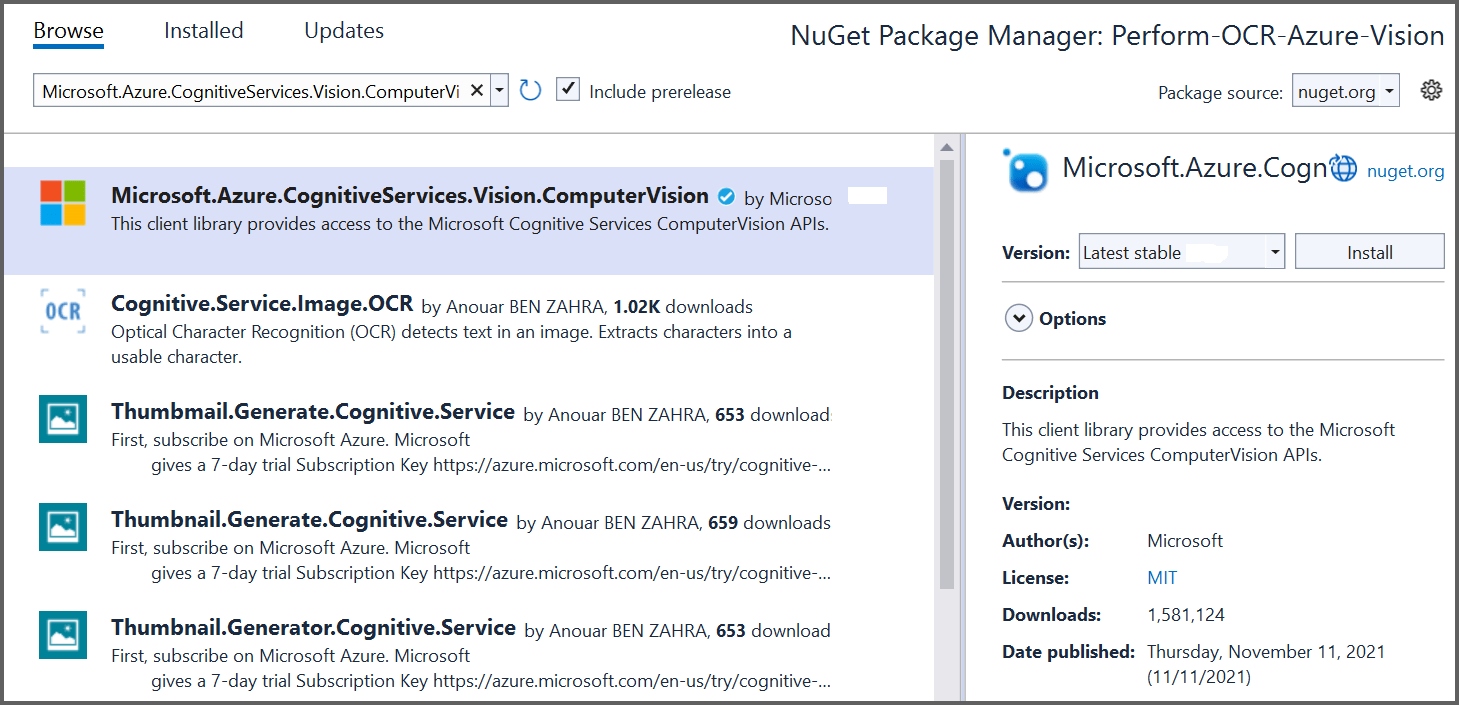
Step 3: Install the Syncfusion.PDF.OCR.Net.Core and Microsoft.Azure.CognitiveServices.Vision.ComputerVision NuGet packages into your application from nuget.org:
Step 4: Include the following namespaces in the Program.cs file:
using Syncfusion.OCRProcessor;
using Syncfusion.Pdf.Parsing;
Step 5: Use the following code sample to perform OCR on a PDF document using the PerformOCR method of the OCRProcessor class with Azure Vision:
// Initialize the OCR processor
using (OCRProcessor processor = new OCRProcessor())
{
    // Load an existing PDF document
    FileStream stream = new FileStream("Input.pdf", FileMode.Open);
    PdfLoadedDocument lDoc = new PdfLoadedDocument(stream);
    // Set OCR language
    processor.Settings.Language = Languages.English;
    // Initialize the Azure Vision OCR external engine
    IOcrEngine azureOcrEngine = new AzureExternalOcrEngine();
    processor.ExternalEngine = azureOcrEngine;
    // Perform OCR using Azure Vision
    processor.PerformOCR(lDoc);
    // Create file stream for the output
    FileStream outputStream = new FileStream("OCR.pdf", FileMode.CreateNew);
    // Save the document to the output stream
    lDoc.Save(outputStream);
    // Reset stream position to ensure the file is not empty
    outputStream.Position = 0;
    // Close the document
    lDoc.Close(true);
    outputStream.Close();
}
Step 6: Create a new class named AzureExternalOcrEngine to handle the image stream from the PerformOCR method and process it with Azure Computer Vision. It returns the OCRLayoutResult for the image:
Provide a valid Azure subscription key and endpoint to work with Azure Computer Vision API.
class AzureExternalOcrEngine : IOcrEngine
{
    private string subscriptionKey = "SubscriptionKey";
    private string endpoint = "Endpoint link";

    public OCRLayoutResult PerformOCR(Stream imgStream)
    {
        // Authenticate with Azure Computer Vision API
        ComputerVisionClient client = Authenticate();
        // Read the image stream and get OCR results
        ReadResult azureOcrResult = ReadFileUrl(client, imgStream).Result;
        // Convert Azure OCR result to the OCRLayoutResult format
        OCRLayoutResult result = ConvertAzureVisionOcrToOcrLayoutResult(azureOcrResult);
        return result;
    }

    public ComputerVisionClient Authenticate()
    {
        ComputerVisionClient client = new ComputerVisionClient(new ApiKeyServiceClientCredentials(subscriptionKey))
        {
            Endpoint = endpoint
        };
        return client;
    }

    public async Task<ReadResult> ReadFileUrl(ComputerVisionClient client, Stream stream)
    {
        stream.Position = 0;
        var textHeaders = await client.ReadInStreamAsync(stream);
        string operationLocation = textHeaders.OperationLocation;
        const int numberOfCharsInOperationId = 36;
        string operationId = operationLocation.Substring(operationLocation.Length - numberOfCharsInOperationId);
        // Extract the text from Azure Vision results
        ReadOperationResult results;
        do
        {
            results = await client.GetReadResultAsync(Guid.Parse(operationId));
        }
        while ((results.Status == OperationStatusCodes.Running || results.Status == OperationStatusCodes.NotStarted));
        ReadResult azureOcrResult = results.AnalyzeResult.ReadResults[0];
        return azureOcrResult;
    }

    private OCRLayoutResult ConvertAzureVisionOcrToOcrLayoutResult(ReadResult azureVisionOcr)
    {
        Syncfusion.OCRProcessor.Line ocrLine;
        Syncfusion.OCRProcessor.Word ocrWord;
        OCRLayoutResult ocrlayoutResult = new OCRLayoutResult();
        ocrlayoutResult.ImageWidth = (float)azureVisionOcr.Width;
        ocrlayoutResult.ImageHeight = (float)azureVisionOcr.Height;
        // Create page from Azure OCR result
        Syncfusion.OCRProcessor.Page normalPage = new Syncfusion.OCRProcessor.Page();
        // Process lines from Azure OCR result
        foreach (var line in azureVisionOcr.Lines)
        {
            ocrLine = new Syncfusion.OCRProcessor.Line();
            // Process words in each line
            foreach (var word in line.Words)
            {
                ocrWord = new Syncfusion.OCRProcessor.Word();
                Rectangle rect = GetAzureVisionBounds(word.BoundingBox);
                ocrWord.Text = word.Text;
                ocrWord.Rectangle = rect;
                ocrLine.Add(ocrWord);
            }
            normalPage.Add(ocrLine);
        }
        ocrlayoutResult.Add(normalPage);
        return ocrlayoutResult;
    }

    private Rectangle GetAzureVisionBounds(IList<double?> bbox)
    {
        Rectangle rect = Rectangle.Empty;
        PointF[] pointCollection = new PointF[bbox.Count / 2];
        int count = 0;
        // Convert Azure bounding box points to PointF array
        for (int i = 0; i < bbox.Count; i = i + 2)
        {
            pointCollection[count] = new PointF((float)bbox[i], (float)bbox[i + 1]);
            count++;
        }
        float xMin = 0;
        float yMin = 0;
        float xMax = 0;
        float yMax = 0;
        bool first = true;

        foreach (PointF point in pointCollection)
        {
            if (first)
            {
                xMin = point.X;
                yMin = point.Y;
                first = false;
            }
            else
            {
                if (point.X < xMin)
                    xMin = point.X;
                else if (point.X > xMax)
                    xMax = point.X;
                if (point.Y < yMin)
                    yMin = point.Y;
                else if (point.Y > yMax)
                    yMax = point.Y;
            }
        }
        int x = Convert.ToInt32(xMin);
        int y = Convert.ToInt32(yMin);
        int w = Convert.ToInt32(xMax);
        int h = Convert.ToInt32(yMax);
        return new Rectangle(x, y, w, h);
    }
}
By executing the program, you will obtain a PDF document with extracted text as follows:
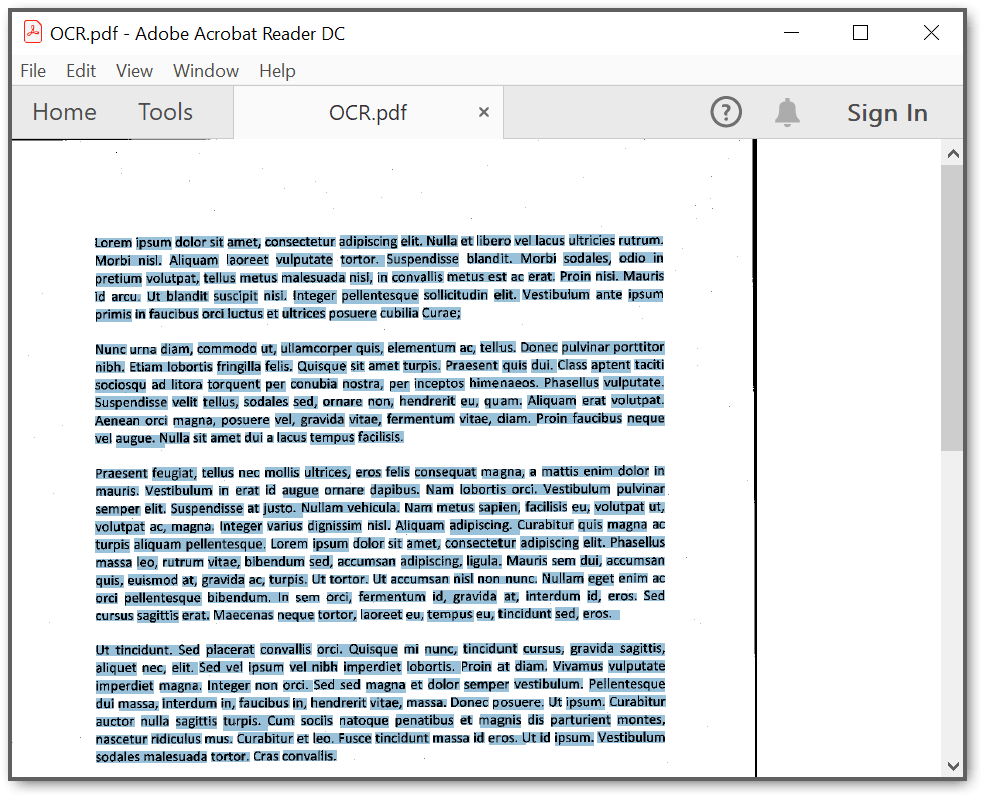
A complete working sample can be downloaded from GitHub.
Click here to explore the rich set of Syncfusion® PDF library features.